Notorious Historical Figures Who Almost Had Completely Different Lives
- July 3, 2025
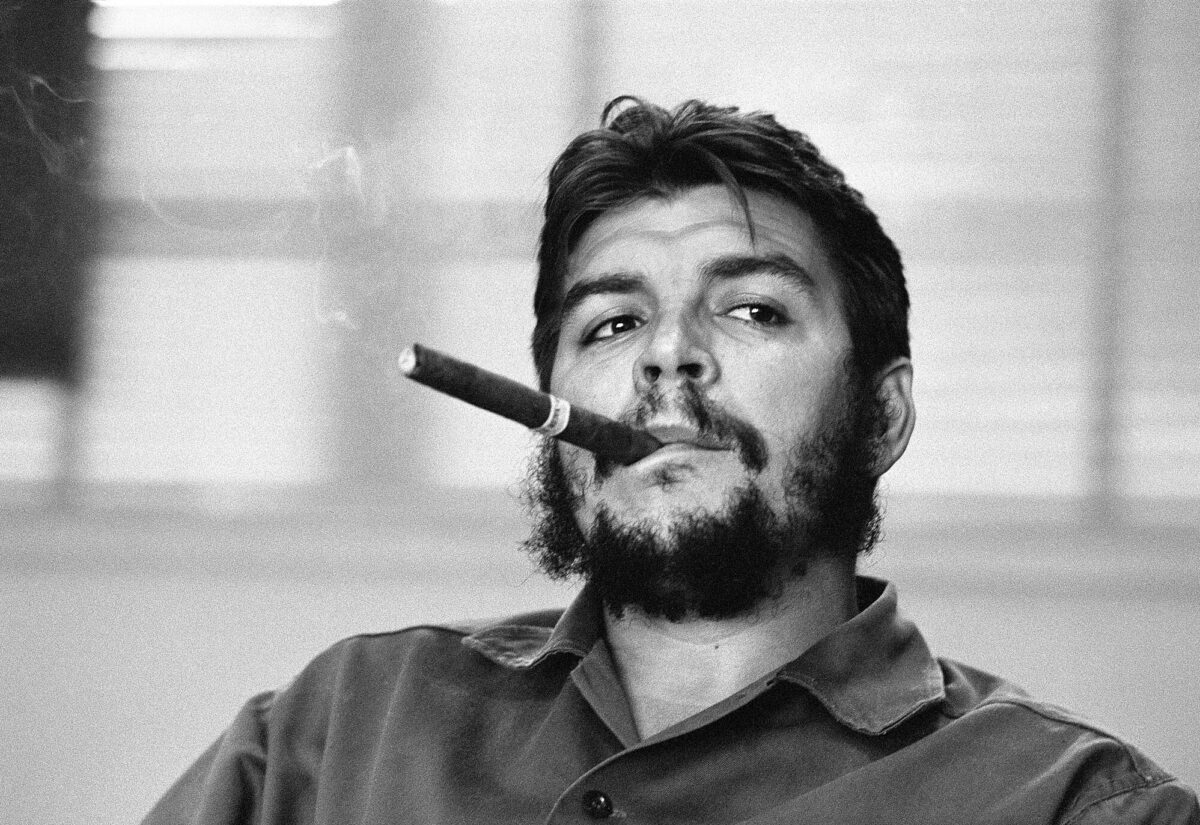 René Burri (1933-2014), Public domain, via Wikimedia Commons
History often treats notorious figures as if they were destined to do what they did. But many of the most infamous names in history very nearly walked a different path. Some were set for religious life, others were almost artists, musicians, or anonymous bureaucrats before fate, war, or ambition diverted them. These stories remind us that reputation isn’t always inevitable—and that sometimes the world only narrowly missed a very different version of events.
Adolf Hitler nearly became a professional artist.
Before he led Nazi Germany into war and genocide, Adolf Hitler spent years trying to make it as a painter. In his late teens and early twenties, he applied twice to the Academy of Fine Arts in Vienna but was rejected both times. His portfolio, mostly of architectural drawings, lacked the human form and creative flair the school was looking for.
Hitler spent several years in Vienna living in men’s hostels, selling postcard paintings to tourists. It’s likely he would have stayed a struggling artist or drifted into obscurity had he not later found purpose in German nationalist politics and military service during World War I. The failure of his artistic ambitions arguably helped shape the resentment and disillusionment that fuelled his later ideology.
Joseph Stalin studied to become a priest.
Long before he became the Soviet Union’s feared dictator, Joseph Stalin was enrolled at a theological seminary in Tiflis (modern-day Tbilisi, Georgia). Raised in a devout household, he was reportedly a good student, excelling in religious studies and poetry.
However, in his late teens, Stalin began reading radical literature and became involved with underground revolutionary groups. He was eventually expelled from the seminary, officially for failing to attend exams, though his growing Marxist leanings likely played a role. Had he remained in the Church, Stalin might have lived out his life as a provincial priest rather than reshaping 20th-century history through repression and terror.
Rasputin was once a farmer with no ambitions of power.
Grigori Rasputin, the mystic who gained extraordinary influence over Russia’s royal family, started life in rural Siberia as a poorly educated peasant. For much of his early life, he worked on the land and was known mainly for petty theft and rowdy behaviour. It wasn’t until a supposed religious awakening in his twenties that he began wandering as a self-styled holy man.
Had he remained on his farm, Rasputin would likely have been forgotten by history. But his charisma, reputation for healing, and connections to mystic sects brought him into elite circles. He eventually became a trusted adviser to Tsarina Alexandra, a position that sowed distrust and contributed to the fall of the Romanovs.
Napoleon Bonaparte wanted to be a writer.
Napoleon is remembered for his military genius and imperial ambitions, but in his youth, he was more focused on intellectual pursuits. As a teenager, he wrote essays, short stories, and even a romantic novella. He was fascinated by philosophy and admired the writings of Rousseau and Voltaire.
Even while attending military school, he seemed more drawn to reading and writing than strategy. His early letters and manuscripts reveal a moody, introspective young man more inclined toward brooding essays on society than battlefield manoeuvres. Had political turmoil not pulled him into power, it’s not unthinkable he might have ended up as a revolutionary pamphleteer rather than an emperor.
Benito Mussolini worked as a schoolteacher and writer.
Before founding Fascism and allying himself with Hitler, Mussolini was a schoolteacher and a journalist. He taught in a primary school and later became a socialist writer and editor. In fact, for years, he was a vocal critic of militarism and nationalism, writing scathing critiques of Italy’s colonial policies.
His dramatic ideological switch came during World War I, when he broke with the Socialist Party and embraced war as a tool for national renewal. His ability to communicate through newspapers and speeches became a key part of his rise. If he’d stuck to teaching or remained within socialism, he might have lived out his life on the margins instead of dominating Italian politics.
Che Guevara was trained as a doctor.
Ernesto “Che” Guevara, the revolutionary icon of Latin America, earned a medical degree in Argentina and was originally planning to specialise in dermatology. In fact, his early writings show a sincere interest in treating leprosy and working in under-resourced clinics.
It was during a motorcycle journey through South America that he saw widespread poverty and injustice, which radicalised him politically. The trip changed his worldview, leading him away from medicine and toward Marxist guerrilla movements. He could have spent his life as a compassionate physician, perhaps even a humanitarian hero, had that journey not shifted his path so sharply.
Kim Il-sung fought as a guerrilla and nearly died in obscurity.
Before founding North Korea and turning it into a secretive dictatorship, Kim Il-sung was a guerrilla fighter against Japanese occupation in Manchuria. His early life was marked by exile, hardship, and long periods of obscurity. He narrowly escaped death multiple times and might have remained an unknown footnote in resistance history.
But when Soviet forces liberated Korea at the end of World War II, Kim was chosen, partly for his political reliability and ties to the USSR, to lead the new state in the north. Had the Soviets backed someone else, it’s entirely possible Kim’s life would’ve ended in exile or anonymous service, rather than spawning a dynastic regime.
Heinrich Himmler almost became a chicken farmer.
Before becoming one of the key architects of the Holocaust, Heinrich Himmler trained in agronomy and had plans to run a poultry farm. He was fascinated by farming and even kept detailed records on breeding techniques and animal welfare.
In his early years, Himmler worked as a fertiliser salesman and seriously pursued a career in agriculture. But post-World War I chaos in Germany led him to far-right political circles, where his ambitions gradually shifted. It’s a chilling thought—someone responsible for mass murder once wanted nothing more than to manage livestock and grow crops.
Francisco Franco considered a naval career.
Spain’s future dictator Francisco Franco initially hoped to join the Spanish Navy, but a shortage of places meant he had to opt for the army instead. He joined the infantry academy and quickly rose through the ranks.
Had the navy accepted him, his career might have taken a different course entirely, potentially limiting his influence during Spain’s internal conflicts. Instead, his military trajectory put him in a prime position to lead Nationalist forces during the Spanish Civil War, eventually becoming head of state for nearly four decades.
Many of the people we think of as destined for notoriety had lives that could have gone a completely different way. Circumstance, failure, opportunity, and war all played their part in diverting their paths. It’s a reminder that history is full of near-misses, and that the most famous names in textbooks were often just one rejection or decision away from vanishing into obscurity.