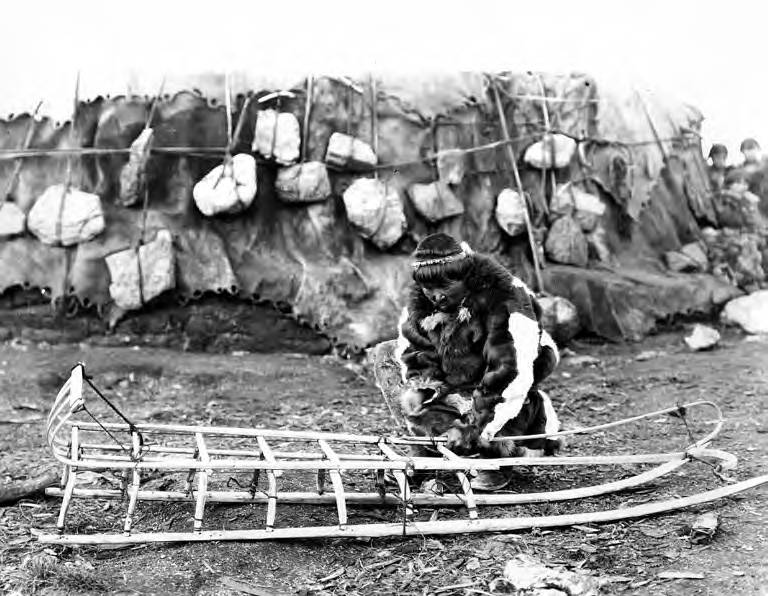
 Charles W. Scarborough, Public domain, via Wikimedia Commons
For thousands of years, Indigenous communities across Siberia have lived in some of the most punishing environments on Earth. Temperatures regularly plunge below -40 °C in winter, and resources can be scarce for months at a time. Yet despite these extremes, Siberian Indigenous peoples such as the Evenki, Chukchi, Nenets, and Yakuts developed ingenious ways to not only survive but maintain vibrant, self-sufficient cultures. Long before modern science caught up, they had already mastered the skills and knowledge needed to thrive in one of the world’s harshest climates.
Portable homes that resisted the worst of the weather
One of the most iconic pieces of Siberian survival was the use of the chum—a conical, tent-like structure used by the Nenets and other nomadic groups. Made from reindeer hides stretched over wooden poles, the chum was designed for both portability and warmth. Its circular shape prevented snow from piling up dangerously on top, while the thick hides provided insulation against the brutal cold.
What made the chum particularly effective was its clever internal layout. A central hearth warmed the space, and bedding made of fur kept body heat in. It could be quickly dismantled and transported when herders needed to move with their reindeer, making it ideal for a nomadic lifestyle in a land where staying still could be fatal.
Clothing that worked better than any modern parka
Surviving in Siberia meant keeping body heat in and moisture out. Indigenous groups perfected the art of cold-weather clothing by using natural materials in smart combinations. The Nenets, for instance, used reindeer fur with the hollow hairs facing inward for insulation and outward to repel moisture. Layers were loose-fitting to trap warm air but snug enough to avoid wind getting through.
Boots, mittens, and coats were all made from reindeer skin, with designs that evolved through generations of trial and error. These clothes weren’t just practical—they were life-saving. In modern studies, they’ve often been shown to outperform synthetic gear in subarctic conditions.
Diets tailored to extreme needs
A diet rich in fat and protein was essential in sub-zero climates. The Yakuts and Chukchi traditionally consumed a diet heavy in meat—particularly reindeer, fish, and marine mammals—alongside foraged plants when available. In areas where vegetables were scarce, raw fish and meat (sometimes frozen and shaved like ice cream) provided necessary vitamins.
Fermented foods, dried fish, and preserved meat meant that supplies could be stored for months. Seal and whale blubber also provided vital nutrients. The Chukchi, living near the coast, relied heavily on hunting sea mammals and had sophisticated techniques for preserving and preparing these resources to last through the long winter.
Reindeer herding as a mobile lifeline
Reindeer were central to survival—not just as a food source, but as transport, clothing, and economic currency. The Nenets, in particular, maintained large herds and developed intimate knowledge of reindeer behaviour, migration patterns, and breeding.
They travelled with the animals seasonally, sometimes covering thousands of kilometres a year. Sledges were constructed to glide over snow and ice, and reindeer were trained to pull them through blizzards and rough terrain. The mobility that came with reindeer herding allowed Indigenous groups to adapt quickly to environmental changes and avoid over-exploiting any one area.
Navigation without maps or compasses
In treeless tundra or vast forests, Indigenous Siberians navigated using memory, observation, and oral tradition. Trails were passed down through generations, and people could read snow patterns, wind direction, and even animal tracks to understand their surroundings.
The Evenki were especially known for their ability to traverse enormous distances using subtle landscape markers that would be invisible to the untrained eye. Navigation wasn’t just about movement—it was about maintaining connections between dispersed family groups and seasonal resources in an unforgiving environment.
Using the landscape for passive insulation
In regions where the ground was too frozen to dig deep shelters, Indigenous Siberians used snow itself as a building material. Snow walls were constructed as windbreaks, while dug-out spaces insulated with hides or sod could remain relatively warm even when outside temperatures were deadly.
In forested areas, people took advantage of natural wind shelters created by trees and hills. Camps were often chosen for their microclimates, with knowledge of how wind flowed through valleys or how snow accumulated guiding where to settle for the night. This was practical wisdom passed down orally, often through stories and rituals.
Medicinal knowledge adapted to the environment
When formal healthcare was not an option, Siberian Indigenous groups relied on plant-based medicine, ritual healing, and traditional knowledge. Pine needles, for example, were boiled to make tea rich in vitamin C, warding off scurvy in the winter months. Lichen and moss were used to dress wounds, while smoke from burning certain herbs was thought to cleanse the air and ease respiratory illness.
Many of these remedies are now being studied for their pharmacological properties. Far from superstition, these methods were based on centuries of close observation and practical use.
What looks extreme to outsiders was simply everyday life for Siberia’s Indigenous peoples.
They adapted by working with the environment rather than against it, using materials on hand and passing down skills that had been refined through generations. Their survival methods weren’t just clever—they were deeply sustainable, rooted in a respect for the land and a constant attentiveness to its changes. And in many ways, they still outperform modern alternatives when it comes to thriving in extreme cold.