 Henri Félix Emmanuel Philippoteaux, Public domain
History tends to celebrate victories and gloss over failures, especially when national pride is involved. In Britain’s long military past, not every campaign was a glorious success. Some were complete shambles, involving poor planning, political misjudgement, or outright catastrophe. Yet while names like Waterloo or Dunkirk are widely remembered, other disasters have been quietly buried. Here are some of the British military failures that history books have politely ignored, or deliberately left out.
The Walcheren Campaign (1809)
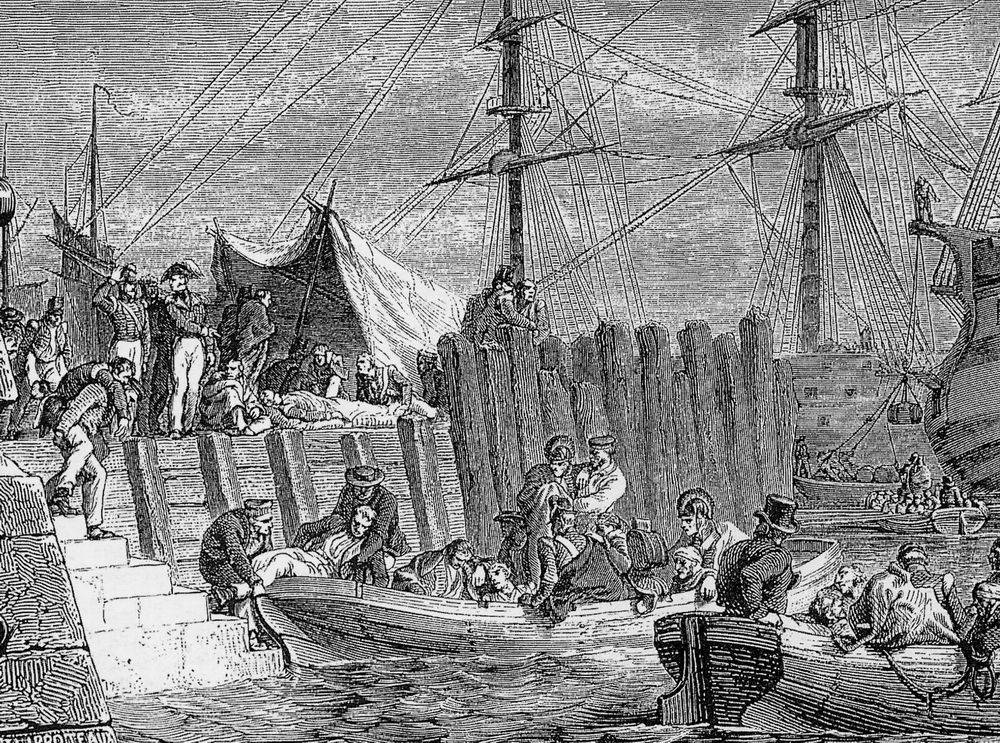
During the Napoleonic Wars, Britain launched a massive amphibious invasion of the Dutch island of Walcheren. The goal was to open a new front and put pressure on Napoleon by taking control of key ports. Instead, the operation descended into chaos. Poor intelligence, disease, and lack of coordination turned it into one of the most expensive and pointless campaigns in British history.
Roughly 40,000 troops were sent, but over 4,000 died—not from combat, but mostly from disease, particularly what became known as “Walcheren Fever,” likely a form of malaria. The campaign achieved almost nothing, and most of the troops were evacuated months later. It was such a public embarrassment that Parliament refused to discuss it at length.
The Battle of Cartagena de Indias (1741)
This was supposed to be a spectacular show of British naval power. Britain sent the largest fleet it had ever assembled at that point—around 180 ships and 27,000 men—to attack the Spanish colonial port of Cartagena (in what is now Colombia). The Spanish, under Admiral Blas de Lezo, had far fewer resources, but they outsmarted and outlasted the British assault.
Tropical disease tore through British ranks, siege tactics failed, and Lezo’s defences held. The British lost thousands of men, and the defeat was so humiliating that it was swiftly buried in official accounts. Monuments planned to commemorate the expected victory were never built. The campaign remains one of the most ambitious and disastrous operations Britain ever attempted overseas.
The Fall of Singapore (1942)
Though it’s now more widely discussed, the fall of Singapore was long considered a deeply shameful episode and downplayed in British education for decades. British forces had assured the public that Singapore was an “impregnable fortress.” When Japanese troops advanced through the Malay Peninsula and attacked from the landward side, which was something British planners hadn’t prepared for, the garrison quickly crumbled.
Over 80,000 British, Australian, and Indian troops surrendered—the largest surrender in British military history. Churchill called it the worst disaster and largest capitulation in British history. Yet for years after, British history books skimmed over the scale of the defeat, preferring to focus on later Allied victories.
The Anglo-Zulu War: The Battle of Isandlwana (1879)
Most people who know about the Anglo-Zulu War are familiar with the British victory at Rorke’s Drift, often romanticised in films and popular history. But earlier that same day, at Isandlwana, British forces suffered a massive defeat at the hands of the Zulu army. British commanders had underestimated their enemy, left their positions exposed, and failed to entrench or scout properly.
The Zulus, using disciplined and coordinated tactics, overwhelmed the British camp. Over 1,300 British and colonial troops were killed. For years, the loss was softened in historical narratives, with more attention given to the “heroic defence” of Rorke’s Drift. The disaster at Isandlwana was brushed aside or reframed as an unfortunate anomaly.
The First Anglo-Afghan War (1839–1842)
Afghanistan has a long history of being where empires go to fail, and Britain’s first attempt to control it ended in total disaster. After occupying Kabul and installing a puppet ruler, British forces faced a growing revolt. The situation became untenable, and the British garrison attempted to retreat in January 1842.
What followed was a massacre. Of the 16,000 soldiers and camp followers who set out, only a handful made it back to British lines. The most famous survivor was Dr William Brydon, who stumbled into Jalalabad alone, half-dead. The entire campaign was such a humiliation that it was largely avoided in British public discussion for decades.
The Siege of Kut (1915–1916)
During World War I, British and Indian troops were trapped by Ottoman forces in the Mesopotamian town of Kut. Poor planning, logistical failures, and underestimation of the Ottomans led to a siege that lasted several months. Attempts to break the siege failed, and supplies ran dangerously low.
Eventually, the British surrendered. Nearly 13,000 soldiers were taken prisoner, many of whom died during forced marches or in captivity. The government tried to frame it as an unfortunate setback, but internally, it was seen as a disgrace. Unlike Gallipoli, which became part of the national conversation, Kut remained largely in the shadows.
The Norway Campaign (1940)
Britain’s early attempts in World War II weren’t all about the Dunkirk spirit. The Norway campaign was a confused and poorly executed attempt to prevent Germany from securing iron ore shipments through the port of Narvik. Coordination between British naval and land forces was disjointed, and the operation was riddled with misjudgements.
Germany took control of Norway, and the British government faced harsh criticism. The campaign’s failure helped bring down Prime Minister Neville Chamberlain. Yet in many post-war histories, Norway is little more than a footnote—eclipsed by later victories and the more palatable story of Churchill’s leadership.
Britain’s military history is often framed through the lens of courage, strategy, and eventual success. However, buried within it are tales of failed invasions, terrible planning, and ignored warnings. These disasters were swept aside not just out of embarrassment, but also to preserve national narratives. Revisiting them doesn’t rewrite history—it just makes it more honest.