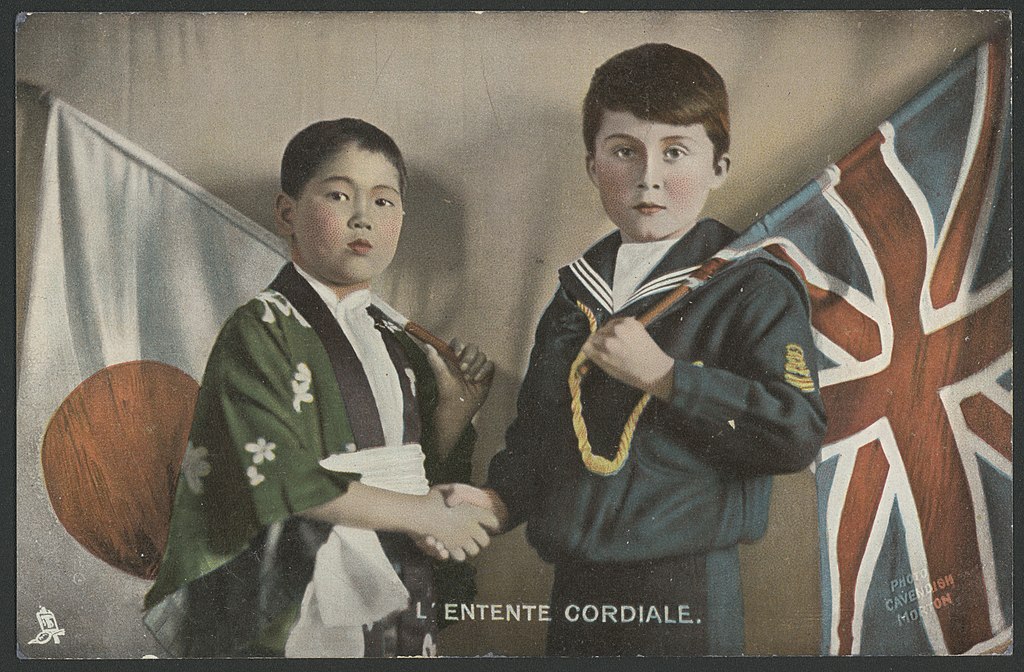
 Cavendish Morton, Public domain, via Wikimedia Commons
History has a habit of turning enemies into partners—and Britain’s past is full of examples. Some of the country’s fiercest rivals ended up standing shoulder to shoulder with British forces in later conflicts. Whether it was driven by changing political landscapes, mutual enemies, or simple necessity, former foes have often found themselves sharing common ground with Britain. Here are some of the most surprising and fascinating times Britain’s military enemies became unexpected allies.
France: from centuries of warfare to military partnership
Few nations have fought each other as consistently as Britain and France. They clashed in the Hundred Years’ War, the Napoleonic Wars, and numerous colonial skirmishes across the globe. The rivalry shaped European politics for centuries. And yet, by the 20th century, they found themselves fighting side by side.
During World War I, British and French troops fought together in the trenches of the Western Front. Despite cultural differences and strategic disagreements, the alliance held. In World War II, after the fall of France, Britain supported Free French forces under Charles de Gaulle. By 1944, the two nations were working together during the D-Day landings. In modern times, they’ve signed mutual defence agreements, run joint military exercises, and cooperated closely on intelligence and counter-terrorism operations. What began as centuries of conflict has evolved into one of Europe’s most enduring defence partnerships.
The United States: from rebellious colony to closest ally
The American Revolution wasn’t just a political disagreement—it was an outright war. British troops fought to retain control of the American colonies, while revolutionaries fought for independence. Less than four decades later, the two nations were at it again in the War of 1812. And yet, by the mid-20th century, they had formed what’s often described as the “special relationship.”
In World War I, the U.S. entered late but made a crucial impact. In World War II, the alliance deepened—with cooperation on everything from intelligence and weapons development to military strategy. The UK and the U.S. worked together on the Manhattan Project, co-planned the D-Day invasion, and jointly navigated the Cold War. Today, they are core members of NATO, regularly train together, and have fought side by side in conflicts from Korea to Iraq. The journey from rebellion to alliance is one of the most dramatic reversals in British history.
Japan: wartime enemy turned strategic partner
During World War II, Japan was one of Britain’s most formidable enemies in the East. The fall of Singapore in 1942—a moment Churchill called the worst disaster in British military history—shook the empire to its core. British and Japanese forces fought fiercely across Asia, including in Burma, Hong Kong, and the Pacific.
But in the post-war era, Japan was rebuilt as a democratic ally under U.S. oversight. Over time, Britain and Japan began to collaborate on economic and security issues. Today, they conduct joint naval exercises, share military technology, and cooperate on cyber security and international defence policy. In 2023, the UK and Japan signed a major defence agreement, allowing each country’s forces to train and operate on the other’s soil. This BBC report outlines the scope of the deal, which signals a new era of strategic alignment.
Germany: from bitter rival to key NATO ally
Twice in the 20th century, Britain and Germany found themselves at war. The First World War saw massive casualties on both sides. The Second World War escalated that even further, with the Blitz, the Battle of Britain, and the devastation of Europe. German aggression under the Nazis threatened not just Britain’s borders, but the values of democracy and human rights.
And yet, after Germany’s surrender in 1945, the country was split—and West Germany, in particular, became a frontline ally in the Cold War. British troops were stationed in West Germany for decades as part of NATO’s defence posture. Today, a unified Germany remains a core member of NATO and a close defence partner to the UK. They share intelligence, participate in joint missions, and lead peacekeeping efforts across the globe.
Italy: from fascist adversary to Western ally
Italy fought against Britain in the early years of World War II under Benito Mussolini, aligning itself with Nazi Germany. The North African campaign was one of the most intense theatres of war, with British and Italian troops fighting in deserts, mountains, and coastal cities.
However, in 1943, Mussolini was deposed, and Italy switched sides. The country joined the Allies and played a role in the final years of the war. After 1945, Italy became a founding member of NATO and embraced democracy. Since then, British and Italian forces have served together in operations across the Balkans, Afghanistan, and the Mediterranean. Their military cooperation continues through NATO and European security initiatives.
Russia/Soviet Union: temporary alliance in WWII
Britain and Russia had already been enemies during the Crimean War, but in World War I, they were allies against Germany. That relationship soured after the Russian Revolution, and for decades, the Soviet Union and Britain were at odds politically and ideologically.
Then came Operation Barbarossa—Hitler’s invasion of the Soviet Union in 1941. Britain quickly supported the Soviets, sending supplies via the dangerous Arctic convoys. Though Winston Churchill deeply distrusted Stalin, the alliance was essential to defeating Nazi Germany. Soviet troops bore the brunt of the fighting on the Eastern Front, while Britain and its allies attacked from the west. The uneasy alliance ended almost immediately after the war, but for a crucial few years, former rivals were united against a common enemy.
Spain: from Habsburg enemy to NATO collaborator
Britain and Spain were once bitter imperial rivals. The Spanish Armada’s defeat in 1588 became a foundational moment in British history. The two countries clashed repeatedly in the 16th, 17th, and 18th centuries—at sea, in Europe, and in the New World.
Spain stayed neutral during both World Wars, but during the Cold War, it gradually aligned itself with Western powers. Spain officially joined NATO in 1982 and now contributes to joint missions and defence operations. Although the issue of Gibraltar continues to spark tension, cooperation in military, counter-terrorism, and EU-border enforcement has strengthened ties.
The Zulu Kingdom: from battlefield opposition to reluctant collaboration
In 1879, Britain launched a campaign against the Zulu Kingdom in southern Africa. The Zulu victory at Isandlwana was one of the most humiliating British defeats of the 19th century. But after a series of bloody battles, the British defeated the Zulus and absorbed the territory into the colony of Natal.
Over time, many Zulu warriors were recruited into British colonial forces, and later fought alongside British troops during the Boer Wars and even the World Wars. It wasn’t a partnership built on equal terms, but it did mark a transformation from open war to military cooperation. The legacy of that relationship is still evident in South Africa’s complex colonial history.
The Ottoman Empire: enemy at Gallipoli, partner in peacekeeping
During World War I, Britain and the Ottoman Empire were enemies. The Gallipoli campaign was a brutal and costly operation that ended in failure for British and ANZAC forces. Elsewhere, British troops fought Ottoman forces in Palestine, Mesopotamia, and Arabia.
After the war and the fall of the Ottoman Empire, modern Turkey emerged. Relations were rocky in the early years, but Turkey eventually became a NATO member in 1952. British and Turkish forces have since worked together in peacekeeping operations, and the UK continues to maintain strong diplomatic and military ties with Turkey despite occasional political tensions.
In war, alliances often change with the winds of politics, power, and necessity.
Britain’s enemies have not always remained enemies. Over time, battles gave way to treaties, and rivals became partners in shared causes. These transformations show how unpredictable history can be—and how today’s adversary can become tomorrow’s ally when the world demands it.