 Getty Images
Some street names blend into the background of daily life—until you stop and ask where they came from. All over the UK, there are roads, squares, and closes that carry names tied to murky histories: slavery, public executions, violent uprisings, and brutal colonial legacies. You wouldn’t know just from glancing at a street sign, but a little digging reveals stories that aren’t just unsettling—they’re often left out entirely. Here are some British streets with names that carry far more baggage than you’d expect.
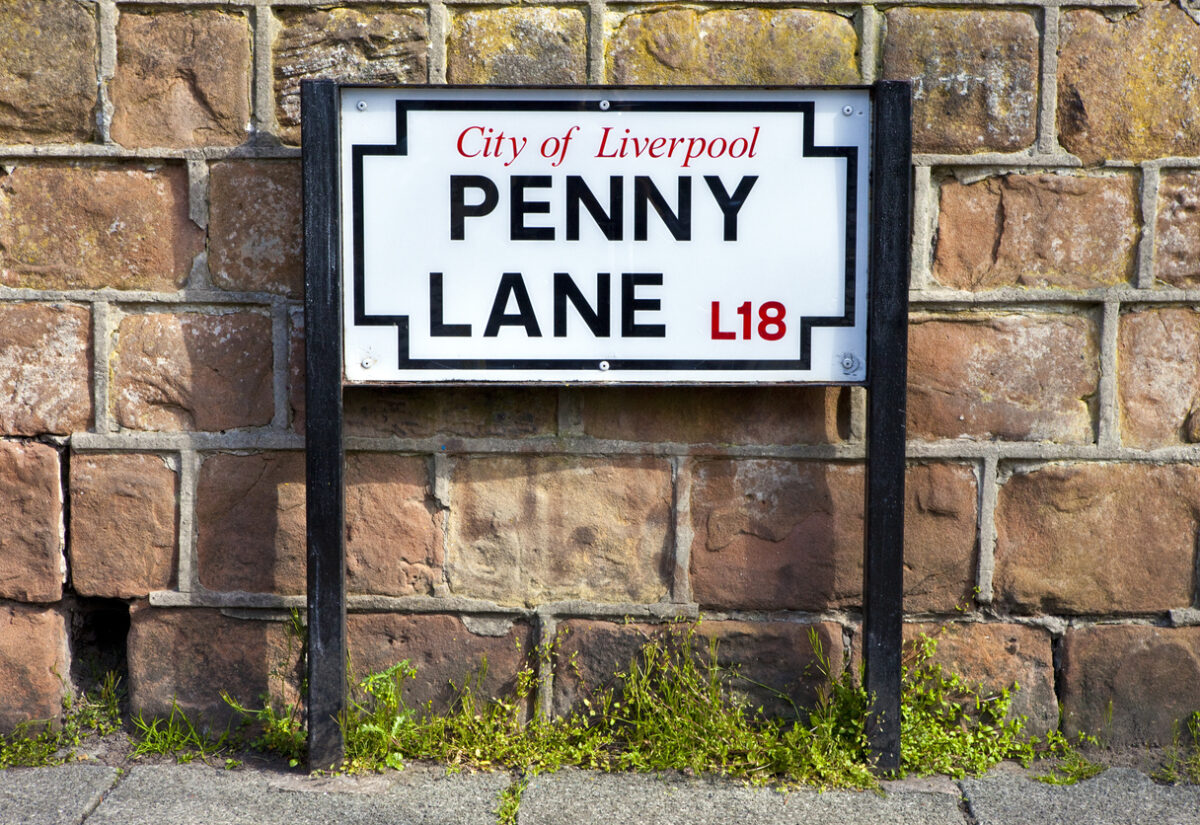
Penny Lane, Liverpool
Thanks to The Beatles, Penny Lane sounds whimsical and nostalgic. But its possible origins are anything but light-hearted. Historians have long debated whether the street is named after James Penny, an 18th-century slave trader who defended the slave trade to Parliament and made a fortune through it.
Liverpool was a major hub in the transatlantic slave trade, and many of its street names are linked to men who profited directly from slavery. Although a 2020 investigation by the International Slavery Museum found no definitive link between Penny Lane and James Penny, the broader context of the city’s street names remains deeply entwined with this dark history.
Gropec.nt Lane (multiple locations)
It sounds made up, but it’s real. In medieval England, “Gropec.nt Lane” was a common street name for red-light districts, found in places like Oxford, London, Bristol, and York. The name was shockingly literal—these were areas where sex work took place, and language was far less sanitised.
Most of these streets were eventually renamed to something more palatable, like “Grapc.ntlane” or “Grope Lane.” One of the last surviving examples is “Grape Lane” in York, which many believe was simply cleaned up for modern sensibilities. It’s a glimpse into a very different approach to public language—and a reminder that not all history is subtle.
Black Boy Lane, London
Located in Tottenham, Black Boy Lane sparked years of debate over its name, which many found offensive due to its racial overtones. Some defenders claimed it referred to 17th-century pub signs featuring King Charles II, who was nicknamed “the black boy” due to his dark hair and complexion.
But for many residents, the name felt dehumanising and tied to Britain’s racial history. After much public discussion, the name was officially changed to “La Rose Lane” in 2023, in honour of poet and activist John La Rose. The controversy highlighted how even everyday street signs can carry deep emotional and historical weight.
Slag Lane, Wigan
It’s easy to laugh at Slag Lane—until you realise the term refers to the waste material from coal mining. Wigan was once a major coal town, and heaps of slag were a common part of the landscape. The name is a stark reminder of the town’s industrial heritage, including the environmental damage and health issues that came with it.
Mining communities like Wigan, Barnsley, and Durham still bear the scars of that era. Slag Lane may sound crude, but it’s part of a much bigger story about class, labour, and the long-term impact of heavy industry in Britain.
India Street, Glasgow
India Street sounds like a celebration of international trade, but it’s also a nod to Britain’s imperial past. Glasgow was deeply involved in colonial commerce, including trade with British-ruled India. Behind the scenes, that often meant exploitation, cultural suppression, and resource extraction on a massive scale.
Streets named after former colonies or trading partners—India, Jamaica, or even “Empire Road”—are scattered throughout British cities. While they might not reference specific atrocities, they reflect a time when imperial domination was something to be celebrated publicly.
Hanging Sword Alley, London
This grim-sounding street, tucked away near Fleet Street, once had a reputation that matched its name. In the 17th century, it was a place associated with duels, shady taverns, and crime. The “hanging sword” may have referred to a fencing school that operated in the area—or it might have been more literal.
Over time, the area became known for brothels and violence. Though it now looks like a quiet passageway, Hanging Sword Alley still carries the imprint of its more dangerous past.
Deadman’s Lane, Canterbury
There’s more than one Deadman’s Lane in Britain, but the one in Canterbury is particularly notorious. Its name likely comes from its use as a route to the gallows—or from the burial of plague victims nearby. Either way, the name speaks to a morbid past.
As you walk the narrow lane today, it’s hard not to imagine the footsteps of prisoners or the toll of a death cart. It’s a stark contrast to the tourist charm of much of Canterbury, but it’s also a reminder of how public death once was.
Cawnpore Street, Belfast
Named after the Indian city of Kanpur (then called Cawnpore), this street references the 1857 Indian Rebellion—a brutal uprising against British colonial rule. British forces suffered heavy losses at Cawnpore, and the massacre of British women and children there was widely publicised back home.
What’s often left out of the story is the savage retaliation that followed, with mass executions and brutal crackdowns. Naming a street after Cawnpore reflects how Britain commemorated its imperial narratives—not necessarily the suffering of its colonies, but its own losses.
We often walk past street names without a second thought, but many carry echoes of slavery, violence, empire, and exploitation. Looking into them isn’t about erasing history—it’s about understanding it. These names are part of a broader story that shaped the country and still affects how we live in it. Sometimes, the past really is written on the street signs.