 Unsplash/Erik McLean
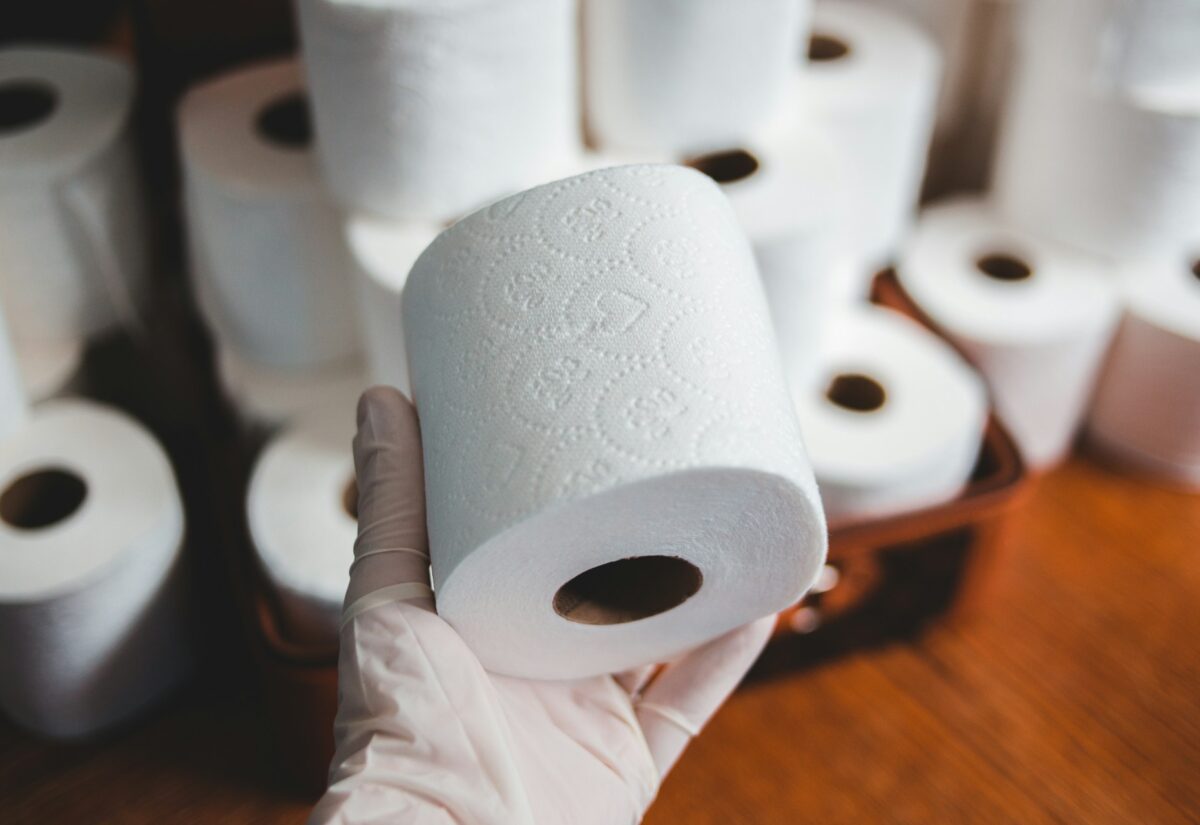
Toilet paper is a relatively modern invention, and one we tend to take for granted. Before it became widely available (and mass produced), people around the world had to rely on all sorts of materials to handle the most basic of human needs. What’s fascinating isn’t just the range of items used, but how those choices reflected geography, culture, class, and available resources. Some methods sound ingenious. Others, frankly, make you wince.
Here are some of the most bizarre—and occasionally brilliant—historical alternatives to toilet paper.
Roman hygiene sticks (tersorium)
In ancient Rome, public latrines were equipped with a tersorium, which was basically a sponge attached to a stick. After doing your business, you’d dip the sponge in water or vinegar to clean yourself. These sponges were communal, cleaned between uses (in theory), and stored in channels of running water. While effective in a rudimentary way, it’s fair to say modern sanitation standards would have a few things to say about the hygiene of it all. There’s a great overview of this practice here.
Corn cobs in early America
In 18th and 19th-century rural America, dried corn cobs were a popular choice, especially in farming communities where they were abundant. The texture was surprisingly effective (if slightly horrifying), and they could be reused several times. Some sources even suggest that people hung them in outhouses on strings for easy access.
Broken pottery shards (ostraca) in ancient Greece
The ancient Greeks sometimes used pieces of broken ceramic, known as ostraca. These were usually small, flat shards—and yes, they were used to wipe. Given the risk of cuts or discomfort, it was probably a last resort or a method reserved for when no softer alternatives were available. Interestingly, some ostraca were inscribed with the names of unpopular figures—a practice that might’ve doubled as political commentary.
Wool and rosewater for the wealthy in the Islamic Golden Age
In regions of the Middle East during the Islamic Golden Age, personal hygiene was taken very seriously, and water was the preferred method. But for wealthier households, soft wool soaked in rosewater was sometimes used as a more luxurious option. It reflected not just affluence but a broader cultural emphasis on cleanliness.
Shells in coastal communities
Coastal communities in Asia and the Pacific Islands made use of what was naturally abundant, including large seashells. Smooth shells (like oyster or clam) were cleaned and used to scrape or scoop, much like a primitive bidet tool. While it sounds painful by today’s standards, it likely worked well enough with the right technique.
Leaves and plant matter in many regions
Throughout history, people have turned to what was available in their local environment. In many forested areas, including parts of medieval Europe, ancient India, and indigenous America—large, soft leaves were a go-to choice. Options like mullein and lamb’s ear were favoured for their gentle texture. Today, wild campers still sometimes refer to mullein as “nature’s toilet paper.”
Sand in desert regions
In desert cultures, where water and vegetation were scarce, sand was commonly used for cleaning. Though it seems counterintuitive, dry sand has natural abrasive properties that can work for cleaning. Nomadic peoples across North Africa and the Middle East used it alongside water or on its own, depending on availability.
Snow in cold climates
For Arctic communities like the Inuit, snow wasn’t just a necessity, it was a resource. Fresh snow was used for cleaning after defecation and served the dual purpose of cleansing and cooling. When available, moss or soft tundra plants might also have been used, but snow was reliable and always on hand during the long winters. You can read more about these kinds of adaptations in this cultural study.
Newspaper and catalogue pages
Before modern toilet roll became affordable and widespread, many households in Britain and America used pages from newspapers, catalogues, and even phone books. The infamous Sears Roebuck catalogue was a common sight in American outhouses. In Britain, the Radio Times or even the Argos catalogue found second lives.
It was practical and accessible, though some inks left smudges or irritated the skin. Still, it beat going without.
The bidet—a civilised evolution
Though not an alternative in the traditional sense, the bidet deserves mention. Originating in France in the 17th century, the bidet became a staple in parts of Europe and the Middle East. It was designed for washing after using the toilet and reflected a different cultural view of cleanliness.
While it wasn’t bizarre in function, the early bidets looked more like small sinks or washbasins, often ornately decorated. For people used to paper, the concept might’ve seemed odd at first, but many now swear by it as a cleaner, more environmentally friendly method. There’s even a history of the bidet if you fancy a deeper dive.
Toilet paper might feel like a universal necessity today, but it’s only been standard in wealthy countries for the past hundred years or so. And even now, many cultures prefer water or other methods. Looking at history, it’s clear that people have always found creative, if sometimes questionable, ways to stay clean.
Whether it was shells, wool, sand, or snow, each solution tells us something about the values, resources, and ingenuity of the people who used them. And honestly? Some of these might not be as far-fetched as they seem.