 Unsplash/Galt Museum
Long before colonial borders were drawn, long before globalisation had a name, Indigenous peoples across the world were already engaged in complex, expansive trade networks. These weren’t random exchanges between neighbouring villages, either. They were far-reaching systems, some spanning thousands of miles, involving goods, knowledge, culture, and innovation. Many of these networks were so well-established that colonial powers later used them to further their own agendas.
Let’s look at some of the most impressive Indigenous trading networks in history, and how they connected continents in ways many people don’t realise.
The North American Hopewell exchange system
The Hopewell tradition, which thrived in the eastern woodlands of North America between roughly 200 BCE and 500 CE, was based on a vast trade network. Hopewell societies exchanged obsidian from the Rocky Mountains, copper from the Great Lakes, shells from the Gulf Coast, and mica from the Appalachian region.
These goods travelled over thousands of kilometres, often moved via rivers and footpaths. What’s remarkable is that the trade wasn’t only about resources. It also helped to spread religious ideas, artistic styles, and social structures. Archaeological evidence shows that these links were consistent and organised, not sporadic or accidental.
The Aboriginal songlines and trading routes
In Australia, Aboriginal groups had a system of long-distance trade that relied on songlines, which were oral maps passed down through generations. These songlines weren’t just spiritual or cultural; they were practical navigational tools, helping people travel vast distances across the continent.
Through these routes, items such as ochre, stone tools, spears, and even foodstuffs were exchanged between groups living in drastically different climates and terrains. Studies of Indigenous trade show that some trade routes spanned thousands of kilometres, linking communities from coastal regions to the outback.
The Mississippian networks and Cahokia
At its peak around 1100 CE, Cahokia (in present-day Illinois) was a sprawling city larger than London at the time. It was the centre of a massive Mississippian culture, supported by extensive trade networks that reached as far as the Great Plains, the Gulf of Mexico, and the Great Lakes.
Copper, marine shells, mica, flint, and even non-local foodstuffs flowed in and out of Cahokia. The city was also a hub of political and religious influence, and its mounds suggest a level of social organisation and trade coordination that rivalled any European state of the time.
The Incan road and relay system
The Inca Empire, which spanned a large swathe of South America, had one of the most impressive pre-modern transportation systems in the world. Their 40,000-kilometre road network allowed for the rapid movement of goods, messages, and people across incredibly tough terrain, from mountain ranges to coastal deserts.
Messages were carried by runners known as chasquis, and tambos (way stations) stored food, textiles, and supplies for travellers. Trade within the empire was tightly controlled, but the movement of goods like potatoes, maize, coca, and textiles helped link diverse ecological zones and cultures. This network stretched across what is now Peru, Ecuador, Bolivia, Chile, and Argentina.
The maritime trade of Pacific Islanders
Indigenous peoples of the Pacific were master navigators and seafarers. Long before European ships arrived, Polynesians had established complex trade and migration routes between islands separated by thousands of miles of open ocean. They travelled in double-hulled canoes, guided by stars, swells, and bird flight patterns.
Goods like obsidian, taro, sweet potatoes, and intricately crafted tools moved between islands. Cultural practices and shared languages across vast distances, from Hawaii to New Zealand to Easter Island, show just how interconnected these societies were. These maritime networks are now being reappraised as some of the most sophisticated in the ancient world.
The trans-Saharan networks of Indigenous African groups
While the trans-Saharan trade is often remembered in the context of Arab traders and empires like Mali and Ghana, it began with and relied on Indigenous African groups who knew the desert routes and managed long-distance caravan trade. These networks moved salt, gold, ivory, and kola nuts across vast distances, linking West Africa to North Africa and eventually the Mediterranean world.
Berber and Tuareg communities played essential roles, not just as middlemen but as architects of these networks. Their knowledge of terrain, watering holes, and desert navigation was passed down through oral tradition and ensured the survival of these trade routes for centuries.
The Andean vertical archipelago
Unlike horizontal trade routes, the Andean concept of the “vertical archipelago” involved trading goods between ecological zones at different altitudes. Indigenous Andean societies, including the Aymara and Quechua, established colonies or trade partnerships in lowland, highland, and coastal areas, allowing them to access diverse resources.
Maize from the coast, potatoes from the highlands, and tropical fruits from the lowlands were all exchanged regularly. This system required careful coordination and long-standing social ties, and it’s still reflected in Andean food distribution patterns today.
The Indigenous trade routes of the Pacific Northwest
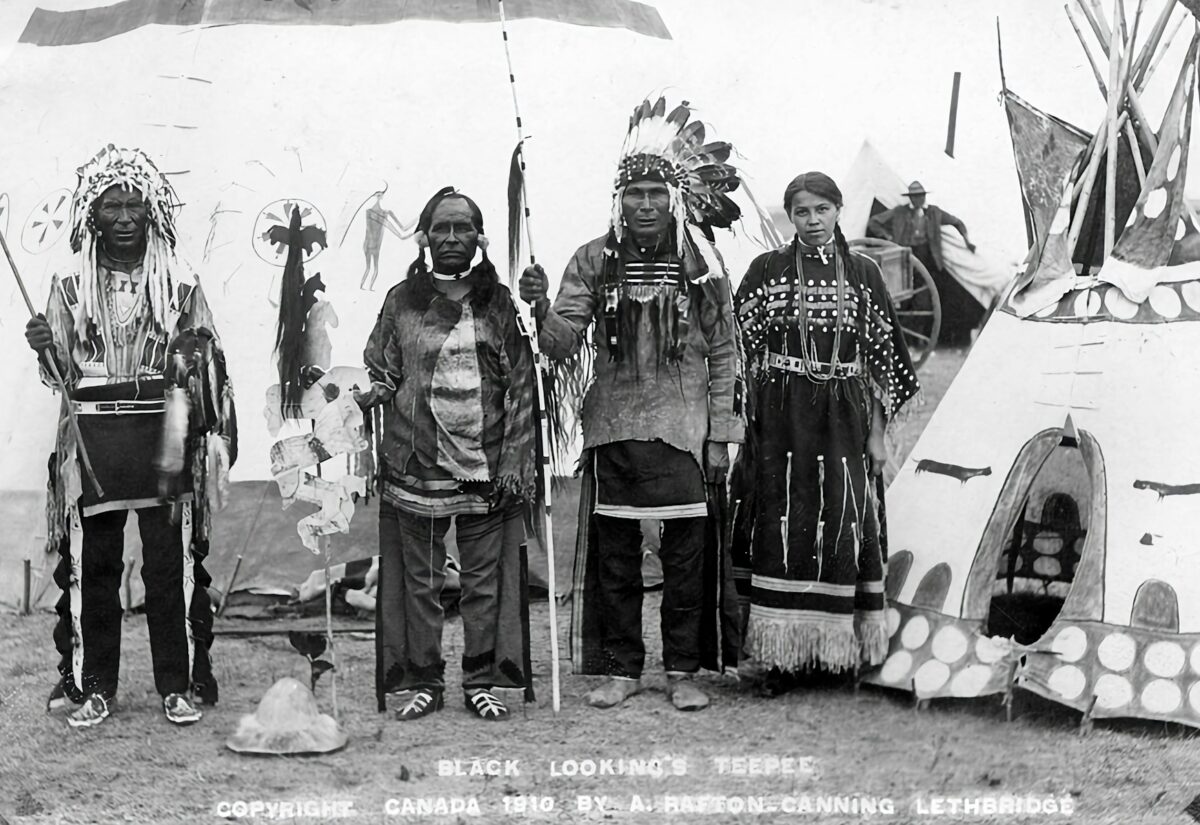
Among the Coast Salish, Haida, Tlingit, and other Indigenous peoples of what is now British Columbia and the Pacific Northwest of the US, trade was fundamental to social and economic life. These communities had robust networks along rivers and coastal routes, exchanging items like copper, dried fish, cedar bark, and carved items.
The potlatch ceremony, often misunderstood or historically outlawed by colonial governments, played a key role in redistributing wealth and reinforcing trade relationships. Goods weren’t just exchanged—they were part of a larger cultural and social contract that bound communities together.
The Native American turquoise trail
Turquoise was highly valued among Indigenous peoples in the American Southwest, particularly among the Puebloan peoples. The material was traded extensively from the mines in what is now New Mexico and Arizona all the way into Mesoamerica. Archaeological finds show turquoise beads in Mayan and Aztec sites, suggesting a far longer trade route than once believed.
These exchanges likely involved more than just minerals. Cultural symbols, beliefs, and technologies, including agricultural practices and architectural ideas, flowed along with the physical goods.
The Mi’kmaq and Wabanaki trading networks in the northeast
In the northeastern parts of what’s now Canada and the United States, the Mi’kmaq and Wabanaki peoples were part of a complex web of seasonal trade. Goods such as furs, canoes, fish, and plant medicines were exchanged through routes that followed river systems and coastlines.
These networks not only facilitated trade but helped maintain peace and communication across large distances. When Europeans arrived, they often depended on these Indigenous networks to establish their own supply lines and alliances.
The idea that precolonial societies were isolated, static, or technologically backwards couldn’t be further from the truth.
These trading systems were sophisticated, resilient, and rooted in deep cultural knowledge. They spanned deserts, mountains, rivers, and oceans, and they shaped human development long before modern borders existed.
In many cases, they continue to inform how Indigenous communities trade, travel, and relate to one another today. As historians and archaeologists continue to uncover more about these networks, the scope and intelligence of these ancient systems become harder and harder to ignore.