 Nathaniel Currier, Public domain, via Wikimedia Commons
The history of trade isn’t just about goods, ports, and profits. It’s also filled with rules that, to modern eyes, seem utterly ridiculous. While these laws were often rooted in very real concerns of the time, they reveal a lot about the priorities, prejudices, and power struggles of earlier societies. These laws in particular would make today’s lawmakers do a double take.
England’s ban on importing dyed cloth (1533)
Under Henry VIII, a law was passed banning the import of dyed cloth. English merchants could bring in unfinished fabric, but all dyeing had to be done in England. This wasn’t about quality; it was about propping up the local dyeing industry.
The idea was to keep the profits (and jobs) from finishing textiles within the country. While it gave English dyers a boost, it frustrated merchants who were used to importing finished luxury goods from the Low Countries. It was protectionism in its purest form, and a source of headaches for anyone dealing in fashion.
France’s ban on calico (1686)
In a panic over the popularity of colourful Indian cottons known as calico, France passed a sweeping ban on importing or wearing them. The law was an attempt to protect domestic silk and wool industries, which couldn’t compete with lightweight, affordable cotton.
The ban got so extreme that it applied not just to imported cottons, but to any clothing made from the fabric. Wearing calico could earn you fines, or worse. Smuggling continued anyway, and eventually the demand forced the law to be repealed. But for decades, a simple summer dress could make you a criminal.
The Tea Act (1773)
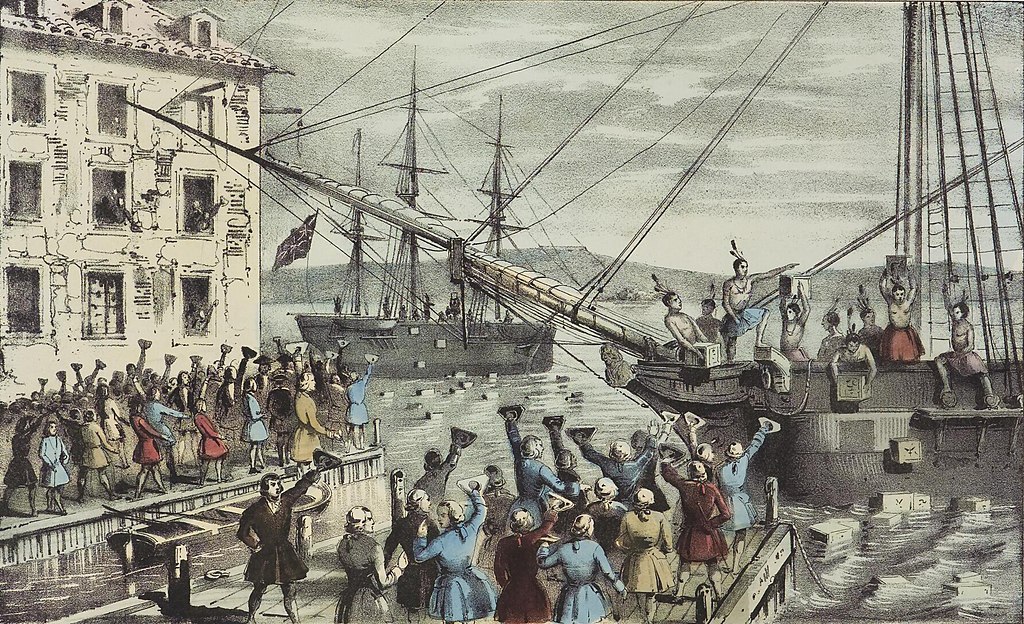
The infamous Tea Act wasn’t just a tax, it was a law giving the British East India Company the exclusive right to sell tea in the American colonies, cutting out colonial merchants entirely. While the tea was actually cheaper under the new rules, the monopoly enraged American traders.
This law led directly to the Boston Tea Party and fanned the flames of revolution. It wasn’t absurd in its time. Britain wanted to save a struggling company, but the fallout made it one of history’s most famously backfired trade laws.
China’s restriction to Canton (1757)
Under the Qing dynasty, foreign trade was restricted to a single port, Canton (now Guangzhou), and only certain Chinese merchants could interact with foreign traders. The system was known as the Canton System, and it severely limited how, where, and with whom foreigners could do business.
While designed to maintain control over foreign influence, it stifled trade and frustrated European powers, particularly Britain. Eventually, this system helped spark the Opium Wars. Today, the idea of funnelling all international trade through one city sounds almost comically inefficient.
Medieval England’s staple towns
In medieval England, certain towns were declared “staple towns,” meaning all exports of specific goods like wool or leather had to pass through them. Merchants were legally required to transport their goods to these towns and sell them there, often through designated middlemen.
The goal was to control taxation and quality, but the system created delays, increased costs, and bred corruption. Merchants often went out of their way to dodge the law, and smugglers thrived. It was bureaucracy with a crown on top.
Sumptuary trade laws in Renaissance Italy
Various Italian city-states had trade laws that didn’t just control what merchants could sell, but who could buy it. Florence, for example, imposed rules that limited how much luxury fabric a person could wear based on their social status. Merchants had to comply or risk penalties.
These laws turned trading into a game of social gatekeeping. Tailors and shopkeepers were caught in the middle, forced to navigate the murky waters of class-based fashion policing. Try enforcing that on Oxford Street today.
Japan’s Sakoku policy (1630s)
Under the Tokugawa shogunate, Japan enacted a policy known as “sakoku,” or closed country. Foreign trade was strictly limited to just a few Chinese and Dutch merchants on an artificial island near Nagasaki. Japanese citizens were forbidden from leaving the country, and returning expats could face execution.
Trade wasn’t just restricted, it was criminalised. The idea was to prevent foreign influence, especially Christian missionary work. While it worked for over two centuries, the law eventually collapsed under Western pressure. Imagine banning all international business just to preserve cultural identity.
Venice’s spice inspection rules
As a major hub in the spice trade, Venice had strict rules on weighing and inspecting exotic goods. Official inspectors could seize and destroy any goods that didn’t meet standards, even if they were perfectly usable. This included re-weighing peppercorns and sniff-testing saffron.
Merchants could be fined for short weights, poor quality, or even trying to hide minor blemishes on goods. While intended to protect the city’s trading reputation, the rules often veered into the absurd, especially when traders were penalised for things like slightly off-colour nutmeg.
Colonial American molasses laws
To control trade in the colonies, Britain imposed laws like the Molasses Act (1733), taxing non-British molasses imported into North America. The goal was to force the colonies to buy from British West Indies producers, but American traders just ignored the law.
The tax was widely evaded through smuggling and bribery. At one point, customs officials estimated that three-quarters of molasses was smuggled. The law was so impossible to enforce it became a joke, and one that helped inspire the call for independence.
Russia’s beard trade tax
In 17th-century Russia, Peter the Great modernised his empire by introducing a beard tax. Men had to pay for the right to keep their facial hair, and traders who dealt in razors, oils, or shaving goods were subject to new rules and inspections.
The law was part of a wider campaign to force Russian society to adopt Western grooming standards. While not a trade law in the conventional sense, it disrupted entire industries and pushed merchants to cater to state-imposed trends. Imagine HMRC asking how many razors you sold last year and demanding to know if your customers were clean-shaven.
These historical trading laws may seem absurd now, but they reflected the logic (or paranoia) of their times. Whether designed to protect industries, control influence, or uphold social norms, they offer a glimpse into how seriously past societies took trade. And they remind us that every economic rule we follow today might look just as strange to future generations.