 Lowell Thomas (photographer), Public domain
The British Empire prided itself on order, hierarchy, and control. So when one of its own switched allegiances, it caused no small amount of outrage and confusion. A handful of British colonial officials not only sympathised with the people they were meant to rule but actively adopted local customs, embraced local causes, and in some cases, turned against the empire entirely. These figures complicated the story of empire by refusing to toe the line; some even paid the price for it.
Charles “Hindoo” Stuart
An officer in the British East India Company, Stuart was posted to Bengal in the late 1700s and quickly fell in love with Indian culture. He wore Indian clothes, spoke multiple Indian languages, and even took part in Hindu religious rituals. Unlike many of his contemporaries, Stuart believed British and Indian culture could co-exist without domination.
He famously defended the practice of sati (the ritual burning of widows), not because he supported the violence, but because he believed the British were wrong to interfere in religious customs. He was buried in Indian attire, with Hindu symbols on his tomb. His legacy is a complicated one, seen by some as a cultural bridge, by others as a colonial apologist.
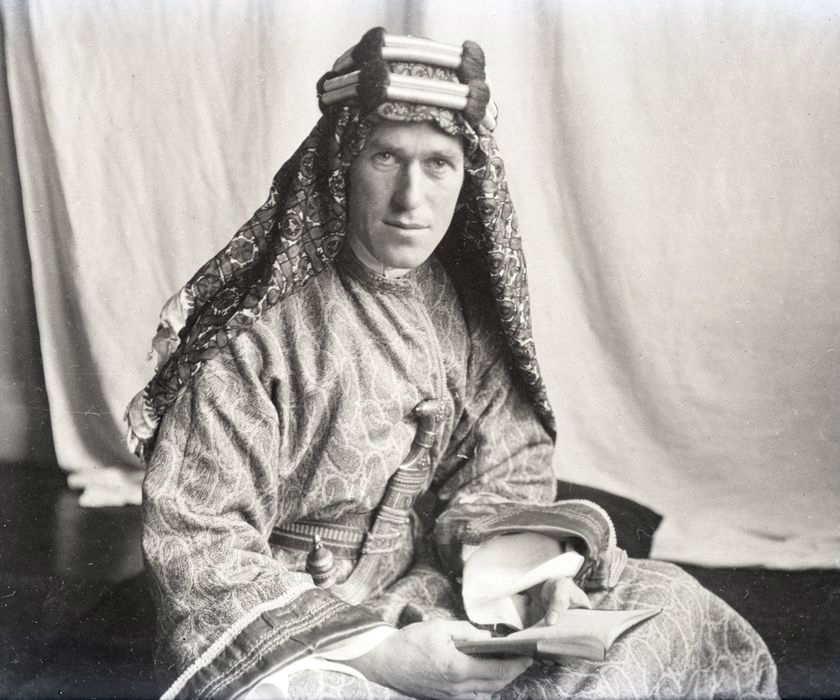
T.E. Lawrence (Lawrence of Arabia)
One of the most famous examples, Thomas Edward Lawrence was a British officer during World War I who played a key role in the Arab Revolt against the Ottoman Empire. Fluent in Arabic and dressed in traditional Arab clothing, he built close relationships with Arab leaders and became a powerful symbol of pan-Arab resistance.
Lawrence didn’t exactly switch sides, but he did begin to question the British promises to the Arabs, particularly when it became clear that post-war plans would divide up the region under European control. He later became disillusioned with imperial policy, retreating into a quieter life under a false name.
Richard Burton
The explorer and linguist Sir Richard Burton was one of the most eccentric, and boundary-breaking, figures in the British colonial world. Unlike many colonial officials, he made genuine efforts to understand the cultures he encountered. He spoke over 20 languages and is most famous for travelling to Mecca disguised as a Muslim pilgrim, an act punishable by death.
Burton’s writings often challenged the superiority complex of Victorian Britain. He criticised missionary zeal, questioned racial hierarchies, and respected the religious and cultural traditions of the regions he explored. Though he remained officially loyal to the empire, his work undermined many of its core justifications.
Alexander Burnes
Burnes was a British political officer in India and Afghanistan in the early 19th century. He learned Persian and Urdu, travelled extensively in disguise, and built strong ties with Afghan leaders. Burnes argued for diplomacy and understanding rather than invasion or coercion.
When British policy shifted toward military intervention in Afghanistan, Burnes was sidelined, and later murdered during an uprising in Kabul. Some saw him as too sympathetic to the locals; others believed his assassination was the result of betrayal by both sides. Either way, his fate marked a turning point in Britain’s disastrous first war in Afghanistan.
John Nicholson
Nicholson was a military man with a fearsome reputation during the British conquest of India, but he also absorbed local customs in ways that baffled his peers. He was worshipped as a god by a cult known as the “Nikal Seyn” sect, and while he didn’t create the cult himself, he didn’t discourage it either.
He learned local languages and earned respect from many Indian troops, but his contradictory image, as both brutal enforcer and local idol, makes him a complicated figure. His story reflects the strange grey area between colonial dominance and cultural entanglement.
William Henry Sleeman
Sleeman is best known for his role in suppressing the Thuggee cult in India, but he also became one of the rare British officials to advocate for understanding India on its own terms. He spoke several Indian languages, married an Indian woman, and wrote extensively on Indian culture with a level of nuance uncommon for his time.
Though still very much a man of empire, Sleeman’s views often clashed with those of his superiors. He criticised the wholesale application of British systems to Indian society and argued that understanding local customs was key to stable governance. His approach was quietly radical in a world that preferred domination to diplomacy.
James Achilles Kirkpatrick
The British Resident at Hyderabad in the late 18th century, Kirkpatrick defied expectations by marrying a noblewoman from a prominent Muslim family. He converted to Islam, adopted Indian dress, and fully immersed himself in local culture. His marriage, though scandalous in British circles, was accepted locally and produced children who were raised partly in Indian traditions.
Kirkpatrick’s story was largely hidden or glossed over in official histories, but letters and personal documents later revealed the depth of his integration into Hyderabadi life. His defiance of both social and professional norms makes him one of the more compelling examples of a British official who genuinely crossed cultural lines.
These British officials defied the rigid expectations of their time.
Some were driven by curiosity, others by conviction, but all ended up blurring the line between ruler and ruled. Their lives raise uncomfortable questions about identity, loyalty, and the limits of empire. Far from being footnotes, they remind us that colonial history wasn’t just a story of domination. It was also shaped by those who refused to follow the script.