 Public domain, via Wikimedia Commons
The story of colonialism is often told from the perspective of empires—maps redrawn, resources seized, and territories claimed. But across the globe, many Indigenous leaders resisted, survived, and sometimes outmanoeuvred their colonisers with wit, strategy, and resilience. These are the figures who stood their ground in the face of overwhelming power, using diplomacy, local knowledge, and sharp political thinking to protect their people. Their legacies continue to inspire movements for justice and sovereignty to this day.
Te Rauparaha – New Zealand
Te Rauparaha was a chief of the Ngāti Toa people during the early 19th century in what’s now New Zealand. At a time when rival Māori iwi (tribes) and European settlers were jostling for power and land, he played both sides with remarkable foresight. He was quick to adopt European firearms and tactics but kept his cultural identity and strategic independence firmly intact.
His most famous legacy is the haka “Ka Mate,” composed after narrowly escaping death at the hands of rival tribes. Beyond cultural influence, Te Rauparaha orchestrated major migrations and expanded Ngāti Toa territory significantly. He engaged in trade, forged timely alliances, and managed to maintain autonomy during the early colonial push—something few managed to do for long. His story is a powerful reminder of how local knowledge and timing can shift the balance, even against colonial powers.
Red Cloud – United States
A chief of the Oglala Lakota, Red Cloud was one of the few Native American leaders to win a war against the United States. His leadership during what became known as Red Cloud’s War in the 1860s was defined by a rare military success. He united various tribes to oppose the construction of U.S. forts along the Bozeman Trail, which crossed sacred Lakota territory in modern-day Wyoming and Montana.
After a series of successful ambushes and sieges, the U.S. government was forced into negotiation. The result was the Fort Laramie Treaty of 1868, which saw the U.S. agree to abandon the forts and recognise Lakota control over the Black Hills. While later treaties were violated, Red Cloud’s strategic patience and sharp leadership created one of the only clear-cut military victories over the U.S. Army during the so-called Indian Wars. His success was absolutely unprecedented.
Oba Ovonramwen – Nigeria
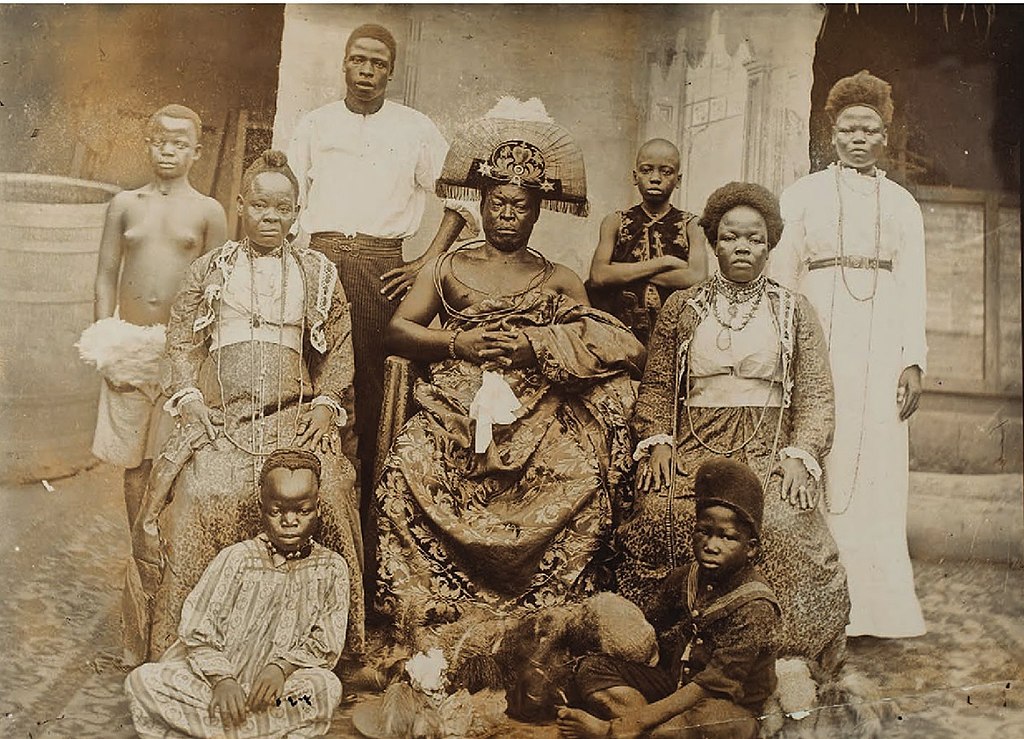
The Oba of Benin ruled over a powerful, organised kingdom in what is now southern Nigeria, known for its advanced art, architecture, and political systems. In the late 19th century, as British imperial interests moved aggressively into West Africa, Oba Ovonramwen attempted to maintain his kingdom’s sovereignty through diplomacy and measured resistance.
In 1897, a British delegation arrived in Benin City without approval and was ambushed, whether on orders from the Oba or not is still debated. The British retaliated with the so-called Punitive Expedition, razing the city and looting thousands of priceless artefacts, including the famous Benin Bronzes. The Oba evaded capture for several months by moving through a network of loyal villages. Though eventually exiled, his elusiveness and political agility continue to be remembered, and the international pressure to return the stolen Bronzes, now housed in institutions like the British Museum, remains ongoing.
Glooscap – Eastern Canada (Mi’kmaq legend)
While Glooscap isn’t a historical leader in the literal sense, he holds a central place in the oral traditions of the Mi’kmaq and other Wabanaki peoples in Eastern Canada. Glooscap stories acted as cultural glue, preserving Indigenous knowledge and identity during generations of colonisation, forced assimilation, and displacement.
In these tales, Glooscap outwits tricksters, tames chaotic forces, and restores harmony, often using wisdom rather than brute force. His stories were passed down as a form of resistance, keeping community values and teachings alive when formal political power was stripped away. In many ways, this cultural endurance was itself an act of strategy, subversive and resilient in the face of colonial efforts to erase it.
Túpac Amaru II – Peru
Born José Gabriel Condorcanqui, Túpac Amaru II claimed descent from the last Inca emperor and led one of the most powerful uprisings against Spanish rule in colonial South America. In 1780, he rallied Indigenous communities, Afro-Peruvians, and poor mestizos across the Andes in a massive rebellion.
His movement wasn’t just military—it was political. He aimed to end forced labour and the brutal taxation system imposed on Indigenous people. Though eventually captured and executed, his campaign shook Spanish control and sparked future revolts. His name has lived on as a symbol of resistance, used by revolutionary groups and activists alike. Today, statues, towns, and political movements in Peru still carry his name.
Jandamarra – Australia
Jandamarra, a Bunuba man from Western Australia, offers one of the most remarkable stories of Indigenous resistance in Australian history. He was initially trained by colonists and worked as a police tracker, but eventually turned against them after seeing the violence inflicted on his people. Using his knowledge of both colonial operations and traditional lands, he waged a guerrilla-style resistance in the 1890s.
He led a small band that carried out strategic attacks on settler outposts and police patrols. Reports of his ability to vanish into the rugged Kimberley landscape gave him an almost mythic reputation. Some even believed he had magical powers. While he was eventually tracked and killed, his campaign caused significant disruption, and today he is remembered not only as a warrior, but as a clever tactician who refused to submit quietly.
Maʻafu – Tonga and Fiji
Though born in Tonga, Maʻafu became a powerful political and military figure in Fiji in the 19th century. At a time when the Pacific Islands were facing increasing European encroachment, Maʻafu played a sophisticated diplomatic game. He used both Tongan influence and Fijian alliances to consolidate power without direct confrontation with colonial authorities.
He negotiated treaties, adopted Western legal structures when it suited him, and gained recognition from both Fijian chiefs and foreign powers. Eventually, Britain declared Fiji a protectorate, but Maʻafu retained influence in the new political order. He outmanoeuvred rivals by adapting to the changing world without losing sight of his own authority.
Colonial history often frames Indigenous leaders as passive victims, but the truth is far more complex.
Across continents and centuries, many of these leaders showed extraordinary resilience, political skill, and vision. Some led armies, others preserved stories, and many walked a careful line between diplomacy and resistance. Their ability to adapt, outwit, and endure is part of why their legacies still matter today. Their stories are not just historical footnotes—they’re part of an ongoing narrative of survival, strength, and sovereignty.