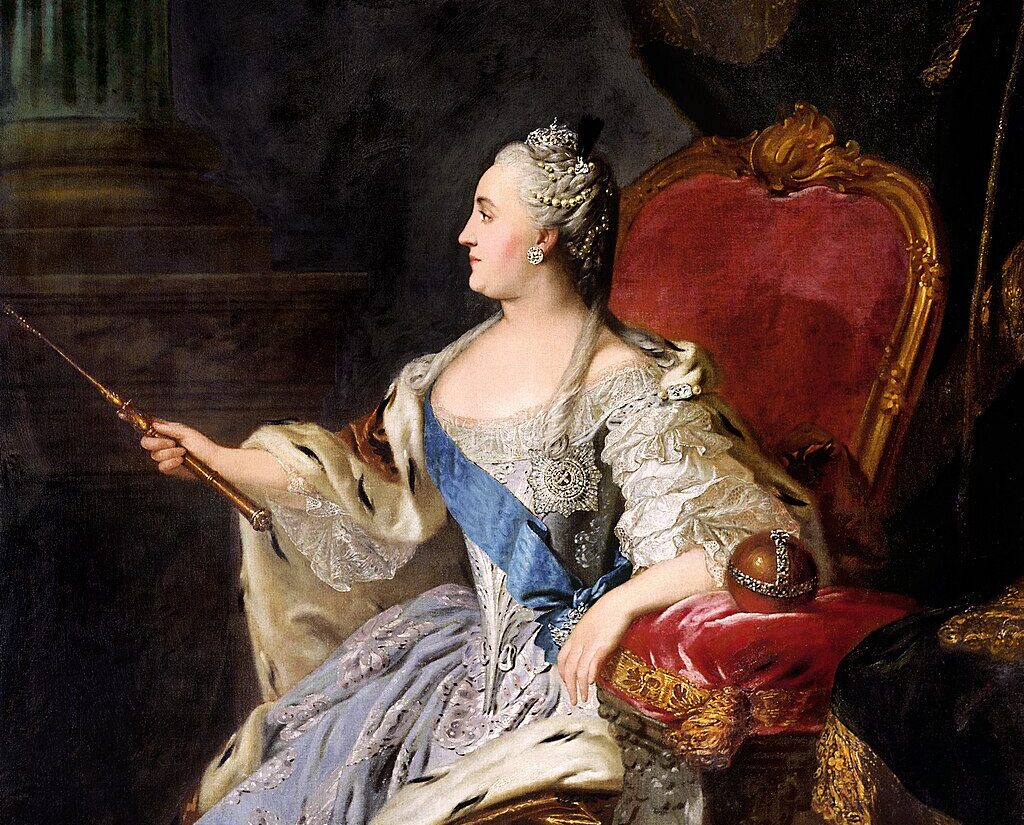
 Fyodor Rokotov, Public domain
Throughout history, royalty and nobility have often existed in their own closed-off worlds—guarded, privileged, and separated from the everyday lives of the people they ruled. However, not all of them were content to stay on their thrones. Some, out of curiosity, rebellion, or necessity, stepped beyond the palace walls to live, work, or mingle as commoners. These weren’t just romanticised stories—in several cases, we have the records to prove it. And in a few instances, their double lives didn’t just offer escape. They helped shape the course of history.
Whether it was to gain a better understanding of their subjects, evade danger, pursue personal freedom, or simply explore the world beyond the constraints of nobility, these powerful figures all took remarkable steps away from the life they were born into. Here are ten historical figures born into power who secretly led very different lives, often with consequences that rippled far beyond their lifetimes.
Peter the Great worked in a shipyard in disguise.
Tsar Peter I of Russia, better known as Peter the Great, was obsessed with modernising his country. But rather than just issue orders from his palace, he went on a “Grand Embassy,” a diplomatic tour across Europe, and spent part of it working incognito in a Dutch shipyard.
Under the alias of “Peter Mikhailov,” the Tsar laboured alongside ordinary craftsmen to learn naval engineering firsthand. He took on the duties of a low-ranking worker, including hauling timber and crafting ship parts by hand. His unusual stint helped lay the foundation for the Russian navy and influenced Russia’s emergence as a maritime power. His firsthand experience gave him unique insights that shaped his military and political reforms. You can read more about his journey in this detailed account from Britannica.
Queen Christina of Sweden roamed Europe as a man.
Christina abdicated the Swedish throne in 1654, converted to Catholicism, and travelled widely through Europe, often in male attire. Her intellect and rebellious nature made her both famous and controversial. She deliberately rejected the traditional role expected of her and pursued her own version of independence.
Although she never lived completely as a commoner, she distanced herself from court protocols and embraced a bohemian lifestyle. She frequently mingled with intellectuals and artists and was fascinated by theatre, science, and philosophy. She also forged connections with the Vatican, though she often resisted being defined by any institution. Her unconventional lifestyle defied expectations of royal behaviour at the time and remains a point of fascination in biographies and historical fiction.
Prince Hal mingled with commoners before becoming Henry V.
Before becoming one of England’s most celebrated warrior kings, Prince Hal, later Henry V, was known for keeping company with commoners, including tavern-goers and petty criminals. Shakespeare’s Henry IV immortalised this period, though the reality was likely less theatrical than portrayed on stage.
Still, historical accounts confirm that Henry’s early years were wild and unruly, filled with late-night escapades and clashes with authority. His familiarity with the lives of commoners, especially soldiers and working men, gave him an ease and charisma that served him well on the battlefield. His rousing speech at Agincourt and the loyalty of his troops can be traced back to this rapport with people outside the court.
Emperor Joseph II wandered Vienna in disguise.
The Holy Roman Emperor Joseph II was fascinated by Enlightenment ideals and reportedly disguised himself to walk among the people of Vienna. He wanted to see firsthand how his subjects lived, what they thought, and what problems they faced.
He visited hospitals, poorhouses, and marketplaces, sometimes engaging directly with citizens without revealing his identity. This insight helped inform his progressive policies, such as religious tolerance, the abolition of serfdom in some regions, and reforms in legal and healthcare systems. Though not all his reforms were popular or long-lasting, his willingness to leave the palace and see real life gave him a reputation as a ruler who genuinely cared about his people’s wellbeing.
Harun al-Rashid slipped out of the palace to mix with citizens.
The legendary Abbasid Caliph Harun al-Rashid ruled during the Islamic Golden Age and is frequently mentioned in One Thousand and One Nights. Historical sources suggest he had a habit of walking the streets of Baghdad in disguise, often with his vizier, to observe daily life and deliver justice where needed.
These excursions weren’t just theatrical. In a society with limited means of gathering honest public feedback, his undercover visits allowed him to see corruption and inequality for himself. They also fuelled the romanticism around his reign, portraying him as a ruler of wisdom and fairness. This overview of his reign offers more historical insight.
Marie Antoinette disguised herself to explore the countryside.
Long before the revolution swept through France, Marie Antoinette enjoyed playing at peasant life in her private hamlet at Versailles. But she also took it a step further, occasionally venturing out of the palace in disguise to see the countryside and escape court life.
These outings were both a means of escape and an attempt to experience a world she barely understood. Though they were short and likely limited in what she actually encountered, they became part of the narrative around her detachment from ordinary people. Critics viewed them as tone-deaf escapism rather than genuine attempts at understanding. In hindsight, her excursions have become part of the complicated legacy that helped erode public sympathy and contributed to her eventual downfall.
King Charles II wandered in disguise after the Battle of Worcester.
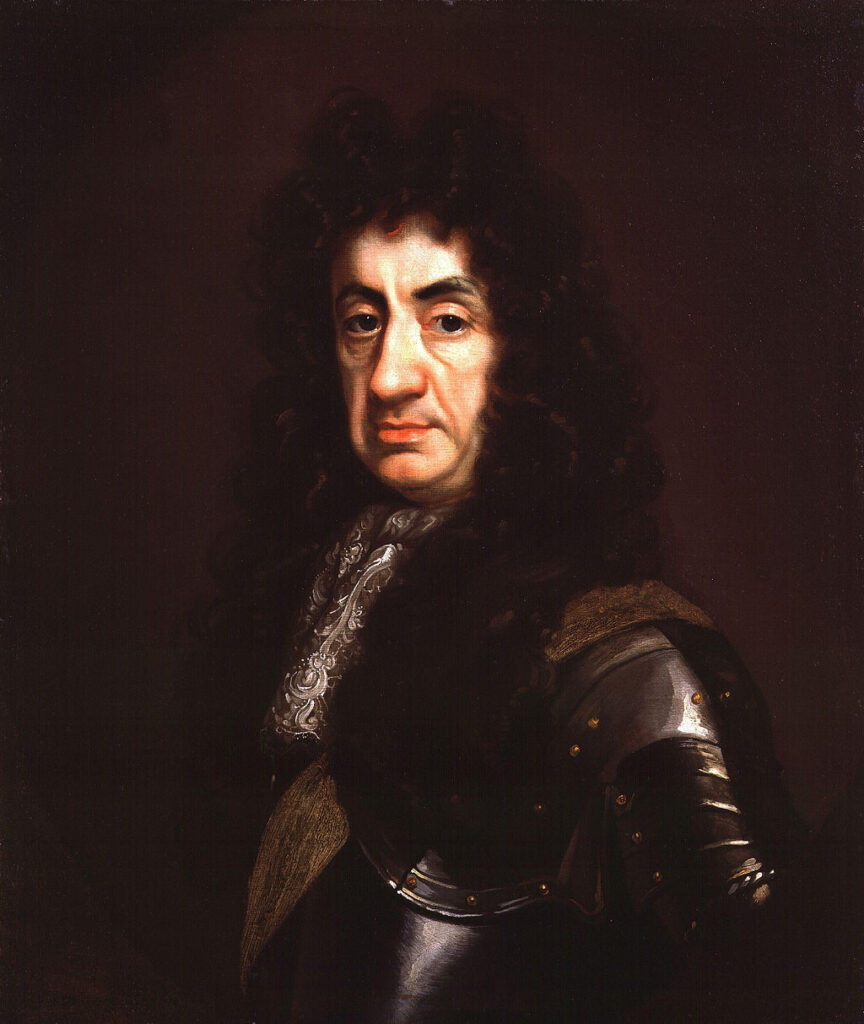 National Portrait Gallery, Public domain
 After his defeat at the Battle of Worcester in 1651, the future King Charles II of England spent weeks on the run. He disguised himself as a farm labourer, hid in oak trees, and relied on the help of loyal supporters to evade capture by Parliamentarian forces.
These weeks on the run were filled with close calls, secret handoffs, and uncomfortable hiding spots. He reportedly learned to rough it, taking on menial labour and enduring the sorts of conditions most royals would never face. These experiences turned him into a folk hero of sorts, and he never forgot the common people who helped him survive. His time in hiding was immortalised in countless stories, ballads, and even pub signs, becoming one of the most dramatic episodes in British royal history.
Empress Elisabeth of Austria escaped royal scrutiny through travel.
Known as “Sisi,” the Empress of Austria had a notoriously difficult relationship with court life. She often travelled under assumed names and took long, unchaperoned journeys throughout Europe, sometimes posing as a wealthy countess or noblewoman of lower rank.
These trips allowed her to experience a measure of freedom rarely afforded to a woman of her status. She walked among ordinary people, stayed in modest lodgings, and even went hunting on her own. Her avoidance of royal duties and love of anonymity allowed her to mix more freely with people outside the court bubble. Her complex personality and mysterious life have inspired countless books, operas, and films, and she remains one of the most enigmatic royals of her era.
Gustav III of Sweden visited theatres in disguise.
Gustav III was a patron of the arts and often attended performances at Stockholm’s opera house incognito. His disguises allowed him to experience the plays like a common citizen, not from the royal box but among the crowd.
He believed that theatre should be accessible and used his masked visits to assess public reaction without the filter of royal deference. He also hosted elaborate masquerade balls where he mingled freely in costume, sometimes without revealing his identity until later in the evening. Ironically, one such event, a masked ball, would be the site of his assassination in 1792, adding a tragic twist to his flair for disguise.
Catherine the Great reportedly mingled with peasants in disguise.
While it’s hard to confirm how often she did it, stories abound that Catherine the Great of Russia occasionally left the palace in disguise to observe rural life. These tales may be more symbolic than factual, but they fit with her image as a ruler interested in reform and empirical knowledge.
Catherine famously corresponded with Enlightenment thinkers like Voltaire and Diderot, and she was deeply invested in modernising Russian society. Whether or not she truly walked among her peasants in secret, the stories helped bolster her reputation as a monarch who valued education, reform, and connection with the people. The legend reinforced the idea that good governance could come from understanding, not just commanding.
You can’t always judge a book by its cover.
Whether driven by empathy, escapism, political strategy, or plain curiosity, these noble figures defied expectations by stepping into the shoes of the people they ruled. Their double lives—however brief, symbolic, or practical—helped shape how they governed, how they were perceived, and how they’re remembered today.
For some, these experiences informed progressive reforms and won them lasting loyalty. For others, they served as cautionary tales of disconnection and misunderstanding. But all of them remind us that even those born into immense privilege sometimes felt the need to step out of the palace and into the real world, with results that still echo through history.