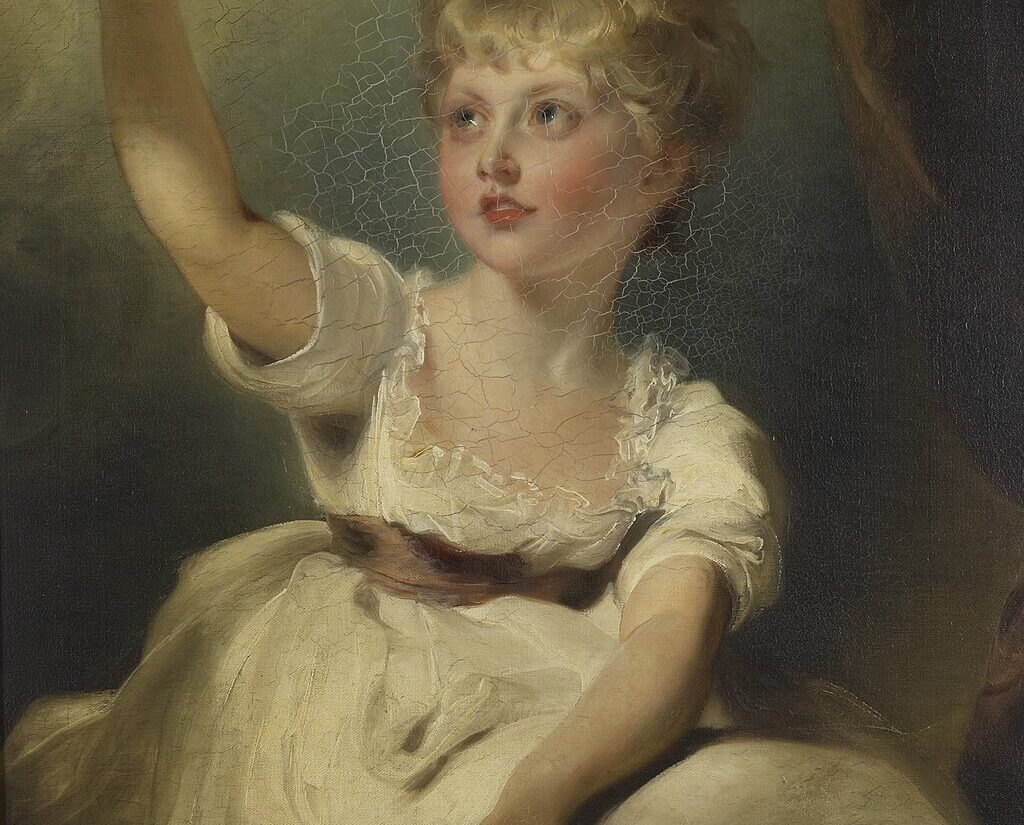
 Thomas Lawrence, Public domain, via Wikimedia Commons
Royal families are usually remembered for their heirs, their scandals, or their power plays, but what about the children who slipped through the cracks of historical memory? Some royal offspring were born into privilege but vanished from public consciousness, either through early death, political exile, or historical erasure. Yet, a handful of them were once poised to dramatically change the course of history. Here are some of the royal children who could have shaped nations if fate had dealt them a different hand.
Prince Arthur, the elder brother of Henry VIII
Before Henry VIII took the throne and launched the English Reformation, his elder brother Arthur was the heir to the Tudor dynasty. Groomed from birth to rule, Arthur married Catherine of Aragon in a political union meant to strengthen ties with Spain. But just months after the wedding, Arthur died suddenly at the age of 15.
His death changed everything. Catherine later married his younger brother, Henry, which eventually led to one of the most seismic religious and political shifts in English history. If Arthur had lived, England may never have broken with the Catholic Church, and the whole trajectory of Tudor history would have looked very different.
Princess Charlotte of Wales, the almost-queen
Born in 1796, Princess Charlotte was the only child of George IV and Caroline of Brunswick, and the only legitimate grandchild of George III. With no other clear heirs, she was expected to become queen after her grandfather and father. She was beloved by the public, seen as a promising future monarch with liberal leanings.
But in 1817, Charlotte died during childbirth at just 21 years old, along with her stillborn son. Her death triggered a frantic scramble among the remaining royal sons to produce an heir, eventually leading to the birth of Queen Victoria. Had Charlotte survived, the Victorian era as we know it might never have happened, and Britain’s 19th-century royal image could have taken a very different shape.
Prince John, the lost son of George V
Prince John, the youngest son of King George V and Queen Mary, was born in 1905 and lived with severe epilepsy and developmental issues. As his condition worsened, he was largely hidden from public life and spent his final years at a remote estate in Sandringham, cared for by a nanny. He died in 1919 at the age of 13.
Though unlikely to have ruled, Prince John’s erasure from the public eye sparked later discussions about how the royal family handled disability and mental health. His life could have forced the monarchy into an earlier reckoning with openness and inclusion, had it not been kept so firmly out of view.
Tsarevich Alexei Nikolaevich, the doomed Romanov heir
Alexei, the only son of Tsar Nicholas II and Empress Alexandra of Russia, was the heir to the Russian throne. But he suffered from haemophilia, a condition that left him extremely vulnerable to injury. His illness led to his mother’s reliance on Rasputin, a relationship that undermined the monarchy’s credibility.
During the Russian Revolution, Alexei was murdered alongside his family in 1918. Had he survived and eventually taken the throne, Russia’s transition from imperial rule to communist state might have unfolded in a completely different way. His death marked the abrupt end of the Romanov dynasty and helped shape modern Russian history.
Prince Louis of France, the son of Marie Antoinette
Louis Charles, also known as Louis XVII, was the second son of Louis XVI and Marie Antoinette. After the execution of his parents during the French Revolution, monarchists declared him king in exile. But in reality, he was imprisoned as a child and died at the age of 10 in harsh, neglected conditions.
His death left royalists without a legitimate rallying figure during the revolution’s most chaotic years. Had he been rescued and restored, the restoration of the French monarchy might have looked very different, and the revolution itself might have taken a less radical turn.
Duke of Albany’s haemophiliac son, Prince Charles Edward
Prince Leopold, Duke of Albany, was Queen Victoria’s youngest son. He passed on haemophilia to his son, Prince Charles Edward, who inherited the duchy of Saxe-Coburg and Gotha in Germany. Charles Edward was raised in Germany and eventually fought for the Germans in World War I, severing ties with Britain.
He became an ardent supporter of the Nazi Party and was later imprisoned by Allied forces. His descent into far-right politics is a strange historical footnote, but if his early life had followed a more conventional royal path in Britain, he might have become a very different figure, perhaps even a peacemaker between Germany and the UK during the war years.
History often remembers kings and queens, but the lives of royal children, especially those who died young, were sidelined, or ended up disgraced tell a different story. Each of these forgotten heirs had the potential to reshape their countries and influence world events. But their absence didn’t just leave a gap in the family tree. It altered the future in ways we’re still living with today.