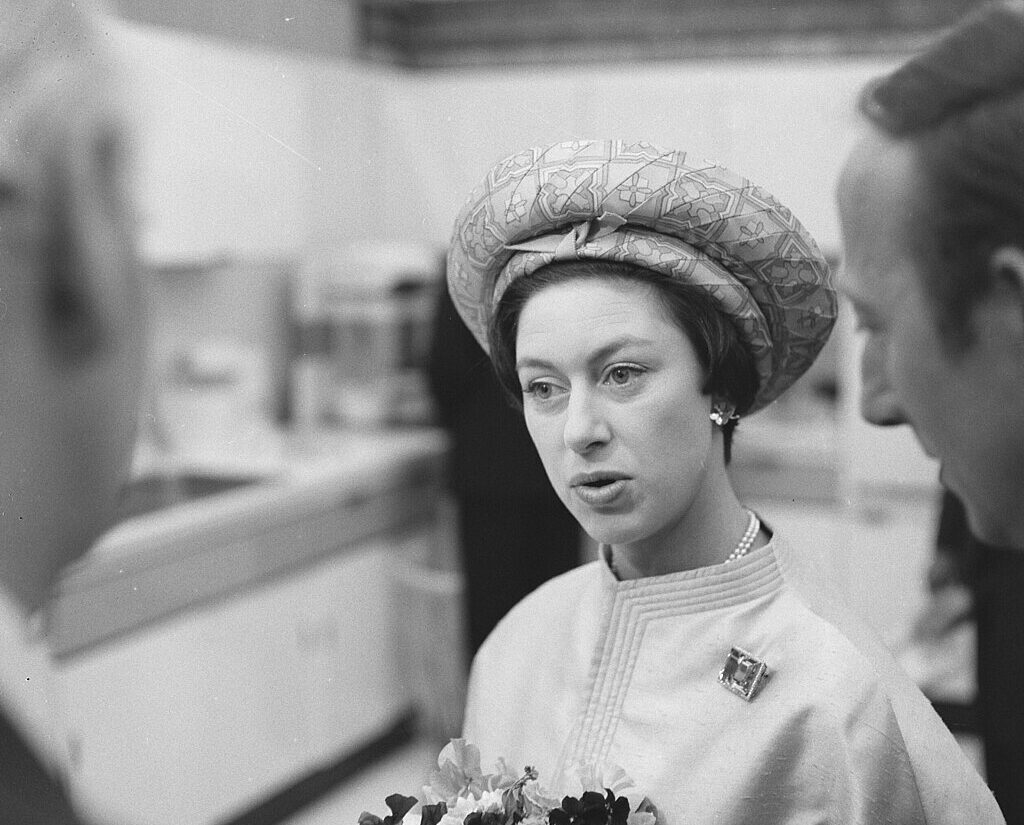
 Jack de Nijs for Anefo, CC0, via Wikimedia Commons
The British royal family is full of high-profile names known for major historical moments—Queen Victoria, Elizabeth I, George VI. But there’s another side to royal history: the quiet operators, underestimated siblings, and scandal-shrouded relatives who made decisions or took actions that left a lasting mark. These aren’t the headliners, but without them, history might have looked very different. They shaped foreign policy, public health, social expectations, and even the public’s relationship with the monarchy itself—often without ever sitting on the throne. Here are some royal British family members who changed history from the shadows.
Princess Alice of Battenberg
Mother of Prince Philip and great-granddaughter of Queen Victoria, Princess Alice is one of the royal family’s most extraordinary unsung heroes. During World War II, while living in Nazi-occupied Greece, she sheltered a Jewish family in her home, risking her life in the process. Deaf since childhood and often misunderstood, she used her perceived fragility as a kind of shield, allowing her to act with bravery while staying under the radar.
She also founded a Greek Orthodox nursing order and did much of her work in relative obscurity, particularly after suffering a breakdown and being institutionalised earlier in life. Her resilience and compassion re-emerged in later years through acts of defiance and service. Her wartime courage wasn’t publicly acknowledged for decades, but she’s now recognised as one of the “Righteous Among the Nations” by Yad Vashem. Without her quiet defiance, entire family lines might have been lost. She is now buried in Jerusalem, at her request, beside the people she risked everything to protect.
Prince Albert Victor, Duke of Clarence
The eldest son of Edward VII and second in line to the throne, Albert Victor’s early death in 1892 at age 28 changed the course of royal succession. His younger brother George, who wasn’t originally expected to become king, ended up reigning as George V—and helped steer the monarchy through World War I, the fall of several European monarchies, and the emergence of a more modern, less autocratic British state.
Albert Victor’s life was surrounded by scandal and rumour, including unfounded theories linking him to the Jack the Ripper case and suggestions of hidden relationships. But historically, the real impact came from his absence. His death opened the door to a different royal lineage—one that continued through George V to Edward VIII, then George VI, and ultimately to Queen Elizabeth II. That single moment changed everything about who would wear the crown across the 20th century.
Queen Caroline of Ansbach
Married to George II, Queen Caroline wasn’t just a consort—she was a sharp-minded political operator with deep intellectual interests. She corresponded with Enlightenment thinkers like Leibniz and Voltaire, supported scientific development, and influenced Cabinet decisions at a time when queens were expected to remain behind the curtain.
She often served as regent when George II was abroad, and she worked hard to strengthen the political position of Sir Robert Walpole, the first de facto Prime Minister. Without her subtle nudging, Britain’s early experiments with constitutional monarchy might have been far rockier. Queen Caroline also advocated for religious tolerance, and she used her position to soften harsh laws against dissenters. Her influence quietly nudged Britain toward becoming a more politically progressive and intellectually vibrant state.
Prince George, Duke of Kent
The younger brother of Edward VIII and George VI, Prince George had a colourful and often turbulent life. He trained as a naval officer, was the first royal to work in the civil service, and was deeply involved in the early days of commercial aviation. He’s also believed to have been more progressive in his personal politics and attitudes than many of his contemporaries.
Rumours swirled about his personal life—from affairs to possible struggles with addiction—but behind the headlines, he helped shape the royal family’s engagement with public communication. He worked closely with the BBC and supported more direct royal outreach through media. His mysterious death in a 1942 plane crash while on active duty remains a source of speculation, and it brought a premature end to what may have been a very modernising royal role.
Princess Margaret
Often cast as the rebellious sister of Queen Elizabeth II, Princess Margaret’s real impact came through her embodiment of a new kind of royal image. Glamorous, independent, and often turbulent, she offered a counterpoint to the Queen’s restraint. Her controversial romance with Peter Townsend, a divorced man, put the monarchy in a public bind—testing its relationship with tradition, the Church of England, and modern views on love.
While her life was often picked apart in the tabloids, Margaret showed the world that royals could be flawed and complex. She brought emotional realism to an institution often seen as aloof. In doing so, she paved the way for future generations—like Princess Diana and Prince Harry—to speak more openly about personal challenges, relationships, and mental health.
Prince Leopold, Duke of Albany
The youngest son of Queen Victoria, Prince Leopold was intelligent, sensitive, and afflicted by haemophilia. His condition, inherited from his mother, was largely hidden from the public but had profound consequences. Not only did it limit his own life—he died at age 30—but it introduced haemophilia into several European royal families, earning it the nickname “the royal disease.”
Leopold used his position to support education, science, and the arts, and he helped bring attention—albeit indirectly—to the realities of hereditary conditions and disability in elite circles. His life subtly changed how the monarchy approached medical transparency and set the stage for future conversations about royal health, privacy, and vulnerability.
Prince Arthur, Duke of Connaught
Often overshadowed by his more famous siblings, Prince Arthur—the third son of Queen Victoria—quietly shaped British influence abroad. A career soldier, he served across the empire and became Governor General of Canada. During his tenure (1911–1916), he helped strengthen Canada’s sense of national identity and connection to the Crown, during a time of growing independence movements.
He also played an understated diplomatic role, representing Britain at state events and military campaigns across Europe and India. His commitment to duty and empire helped maintain royal visibility and support at a time when republican sentiments were spreading. Without him, Britain’s image abroad might have looked less stable in a time of global change.
History often spotlights monarchs and figureheads, but the British royal family has long been shaped by its quieter members.
That means those who worked behind the scenes, challenged norms, or altered succession by accident or design. From queens who steered politics from behind the curtain to princes who modernised the monarchy without ever sitting on the throne, their influence has rippled through centuries. They might not always be the names in the textbooks, but the impact they had on succession, policy, public perception, and the very survival of the monarchy still echoes today.