 Getty Images
Long before the glories of ancient Egypt reached their peak, the Nubians, living just south of Egypt in what is now Sudan, had already developed their own sophisticated architectural style. For centuries, Nubia and Egypt influenced one another in trade, religion, and design, but what often gets overlooked is how much Egyptian architecture borrowed from the innovations of Nubian builders. Far from being passive neighbours, the Nubians were architects of their own power, and some of their design choices directly shaped what we now think of as distinctly Egyptian.
This piece explores the remarkable construction methods, design details, and building philosophies that Nubians brought to the table, and how those ideas found their way into the architectural DNA of ancient Egypt.
Nubian pyramids predated some Egyptian ones
The most famous pyramids in the world are, of course, the ones at Giza. But the Nubians were building their own smaller, steeper pyramids in large numbers centuries later, particularly during the Kushite period when Nubian pharaohs ruled over Egypt in the 25th Dynasty. More than 200 pyramids still stand at sites like Meroë and Nuri.
While the Giza pyramids came earlier, it’s these later Nubian pyramids that show architectural evolution, built from locally sourced sandstone with narrow bases and steep angles, often grouped tightly together. Egyptian pyramid design had long gone out of fashion by this point, but the Nubians revived and reinterpreted it in a way that deeply influenced temple architecture and tomb designs during the later dynasties. UNESCO has recognised Meroë as a World Heritage Site for its extraordinary concentration of pyramid structures.
The use of mudbrick as a structural norm
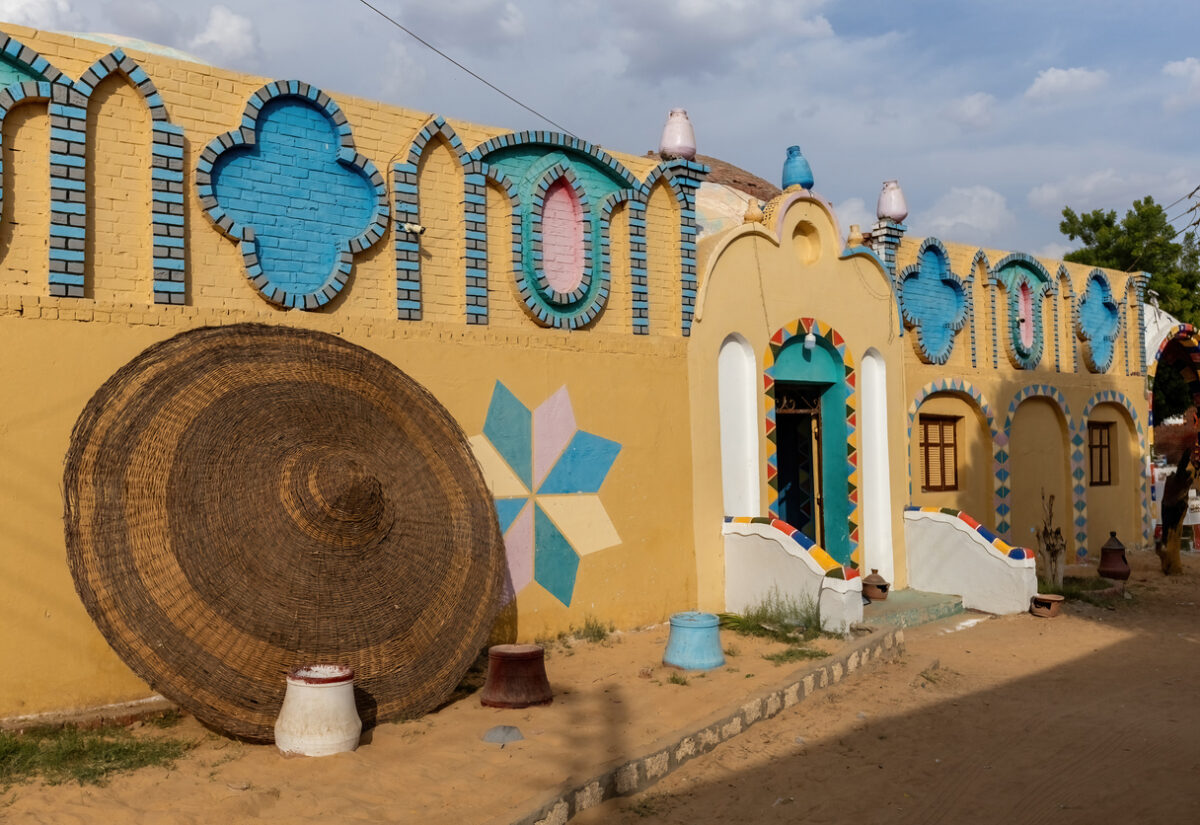
While stone gets most of the attention in monumental architecture, mudbrick was the everyday building material across both Egypt and Nubia. What stands out is how the Nubians refined the use of mudbrick for fortresses, granaries, and homes, creating sophisticated layouts that could survive harsh climates.
Nubian builders layered bricks in staggered formations to reinforce strength and used curved wall designs to better withstand flooding and wind. Egyptian engineers adopted many of these methods, particularly in Lower Nubia and Aswan, where mixed settlements and shared knowledge were common.
Wattle and daub roofing systems
Nubians were known for using wattle and daub—a technique of weaving sticks and reeds, then covering them with mud—to create arched roofs and shaded courtyards. This created homes that were cool in the searing heat and insulated against cold desert nights.
The Egyptians, especially in their southern provinces, began to mimic these Nubian roofing styles in village dwellings and even temple outbuildings. The technique offered a practical, resource-efficient way to deal with environmental challenges.
Fortified hilltop settlements
One of Nubia’s unique contributions to defensive architecture was its hilltop settlements, which used natural elevation and built fortifications to provide safety and control over trade routes. These weren’t just military outposts—they were planned towns, with homes, storage rooms, and ceremonial areas.
Egyptian military planners took cues from these layouts, especially during times when southern borders needed stronger defence. Even the famous Egyptian fortresses at Buhen and Semna showed signs of Nubian spatial planning and earthwork techniques.
Nubian kerma vaults and granaries
The city of Kerma, capital of the Kingdom of Kush, featured huge vaulted mudbrick structures, often interpreted as granaries or religious buildings. These barrel-vaulted buildings used a rare self-supporting technique that didn’t rely on wooden beams, which were a scarce resource in the region.
Egyptian builders later applied similar vaulting techniques in food storage and temple construction, particularly during the New Kingdom, when Egypt had greater political control over Nubia and borrowed heavily from its architectural playbook. Archaeological studies led by the British Museum have revealed just how technically advanced these Kerma structures were.
Circular and oval floor plans
While most Egyptian architecture favoured square or rectangular floor plans, early Nubian buildings, especially in domestic settings, used circular and oval foundations. These shapes were better suited to their nomadic traditions and provided better heat circulation in round huts.
These circular designs influenced Egyptian workmen’s villages, such as Deir el-Medina, where round silos and work huts show this architectural blending. It wasn’t just symbolic. It made practical sense in desert life.
Temple alignment with celestial bodies
While Egyptians are famous for aligning temples and pyramids with the stars, Nubians had their own traditions of celestial alignment, particularly in their temples dedicated to Amun. The Temple of Amun at Jebel Barkal, for example, is aligned to capture the sun during solstices, similar to Luxor and Karnak.
This shared cosmological outlook wasn’t coincidental. Many Nubian priests were educated in Egypt, and during the Kushite rule, temple alignment became a politically charged architectural feature, meant to show divine legitimacy on both sides of the border.
Monumental mudbrick structures
While Egypt’s grand temples were often built in stone, Nubia produced equally monumental structures in mudbrick, such as the Western Deffufa at Kerma. Towering over the flat plains, these buildings combined religious and administrative functions and demonstrated that durable architecture wasn’t exclusive to quarried stone.
Their design—layered, high-walled, and centralised—served as a model for temple platforms and mastaba evolution in Upper Egypt.
Water management and Nile-side planning
Finally, Nubian architects showed impressive foresight in managing seasonal flooding. They built homes and ceremonial structures on slightly elevated platforms or natural rock outcrops, and they developed canals and drainage systems long before Egyptian records note similar efforts.
Many settlements in Lower Nubia were designed to avoid Nile encroachment—lessons that Egyptian planners adopted in the south, especially during the construction of desert temples that needed to survive the yearly rise of the Nile.
A legacy of shared innovation
The architectural relationship between Nubia and Egypt was anything but one-sided. For centuries, Nubians weren’t just influenced by their northern neighbours—they were influencing them right back. Their clever use of materials, structural foresight, and symbolic alignment left an imprint on Egyptian design that endures to this day. And as archaeological work in Sudan continues to expand, we’re only beginning to appreciate just how much Egypt owed to its southern neighbours.