 Tris T7, CC BY-SA 4.0 , via Wikimedia Commons
We tend to think of monarchs as people born into power—brought up behind palace walls, handed crowns they barely had to lift a finger for. But history has a surprising number of stories about ordinary people who somehow managed to rise to the very top. Some clawed their way up from slavery, others from poverty or obscurity. They weren’t raised to rule, but they ended up shaping the course of nations anyway. And what they lacked in lineage, they made up for in drive, grit, and often an uncanny sense of timing. Here are some of the most fascinating historical monarchs who began their lives as commoners—and how they defied expectations to rule the world’s most powerful realms.
Napoleon Bonaparte wasn’t born royal, but he made himself emperor.
Napoleon was born in Corsica in 1769, just months after France annexed the island. His family had minor noble status, but they were far from wealthy or influential. In fact, they were viewed as backwater provincials by most of the French elite. He spoke French with a thick Corsican accent, was mocked at school for his outsider status, and never quite fit in. Still, he was clever, fiercely ambitious, and exceptionally disciplined.
He studied military strategy, climbed the ranks rapidly during the French Revolution, and seized opportunities wherever he found them. By 1799, he’d engineered a coup. Five years later, he crowned himself Emperor of the French. He didn’t just take the throne—he built an entire empire around himself. His rise reshaped Europe and left a legacy that still sparks debate today.
Catherine I of Russia started out as a servant.
Catherine’s origin story is straight out of historical fiction. Born Marta Samuilovna Skavronskaya, she came from a poor peasant background in what’s now Latvia or Lithuania. She was orphaned young, worked as a laundress, and had no formal education. Her life changed when she was captured by Russian forces during the Great Northern War and became a servant in a military household.
Eventually, she caught the eye of Tsar Peter the Great. She became his mistress, then his wife—and when he died, she succeeded him as Empress of Russia in 1725. Despite her humble beginnings and complete lack of royal blood, she ruled a vast empire. She’s the only Russian monarch who started life as a domestic worker, which makes her reign all the more remarkable.
Justin I went from goat herder to Byzantine emperor.
Justin was born into a peasant family in a remote village in what’s now North Macedonia. His early years were spent herding goats, and he had no formal education. Desperate for opportunity, he travelled to Constantinople with a group of fellow villagers, reportedly with just the clothes on his back. He joined the army, learned to read and write later in life, and steadily worked his way up through the ranks.
His rise was slow but steady. By the time the emperor died in 518 CE, Justin was commander of the imperial guard. Despite his background—and some say, because of his loyal military base—he was chosen as the next emperor. His reign marked a turning point in the Byzantine Empire’s history, and he prepared the ground for his nephew, Justinian I, one of the greatest emperors of the era.
Henry VII was a political exile with a shaky claim to the crown.
Henry Tudor was born to a teenage widow and had only a tenuous claim to the English throne through his mother’s side. During the Wars of the Roses, he spent most of his youth in exile in Brittany, watching events unfold from a distance. While he had some noble blood, he had no real army, no royal favour, and no expectation of ruling.
But history has a funny way of opening doors when the competition wipes itself out. In 1485, Henry returned to England with a modest force, defeated Richard III at the Battle of Bosworth, and claimed the crown. He founded the Tudor dynasty, brought an end to the dynastic civil war, and laid the groundwork for one of the most famous reigns in English history: that of his son, Henry VIII.
Baibars was sold into slavery before becoming sultan.
Baibars was born in the 13th century on the steppes north of the Black Sea, possibly in modern-day Kazakhstan or southern Russia. As a child, he was captured by Mongol raiders and sold into slavery. He ended up in Egypt, where he became part of the Mamluk military class—a group of enslaved boys trained to become elite warriors.
Baibars proved himself to be not only a brilliant tactician but also a charismatic leader. He played a crucial role in the defeat of the Seventh Crusade and eventually led a coup that put him in charge. In 1260, he became Sultan of Egypt and Syria. Under his leadership, the Mamluks crushed the Mongols at Ain Jalut—a key turning point in world history. His rule ushered in a golden era for the region.
Empress Wu Zetian started in the lowest rank of the royal court.
Wu Zetian’s journey to power was filled with twists and political intrigue. She was born to a relatively privileged family, but when she entered the imperial court, she started at the very bottom—as a low-ranking concubine to Emperor Taizong. When he died, she was supposed to retire to a Buddhist convent. Instead, she returned to court under his son and rose through charm, intelligence, and a calculated ruthlessness.
Eventually, she became the emperor’s consort and then the de facto ruler. In 690 CE, she declared herself Emperor of China, founding her own Zhou dynasty. She ruled directly and with a firm hand, introducing reforms and promoting talented officials regardless of background. She remains the only woman in Chinese history to officially take the title of Emperor in her own right.
Agathocles went from potter’s apprentice to king.
Agathocles was born in a working-class family in Sicily around 361 BCE. His father was a potter, and Agathocles learned the trade as a boy. But he wanted more. He joined the army, climbed through the ranks, and eventually seized control of Syracuse, one of the most important city-states in the region.
His rise wasn’t exactly graceful—he betrayed allies, shifted loyalties, and used plenty of brute force—but it worked. Agathocles declared himself king and ruled with a mix of terror and tactical genius. He fought off Carthaginian invasions and expanded his influence throughout the Mediterranean. From shaping clay to shaping politics, his life was anything but predictable.
Samuel of Bulgaria wasn’t born royal, but he built an empire.
Samuel’s background is murky. He may have belonged to a minor noble family or possibly a provincial military clan, but he certainly wasn’t born to rule. During a chaotic period in Bulgarian history, he seized the moment, gathered support, and declared himself Tsar.
He led fierce resistance against Byzantine encroachment and carved out a powerful kingdom that lasted for decades. Though eventually defeated by the Byzantines, Samuel was remembered as a fierce and determined leader who stood up to a dominant empire and gave his people a new sense of national identity. For a man without a crown in his youth, that’s no small legacy.
Qin Shi Huang unified China, but started far from the top.
Ying Zheng, who became Qin Shi Huang, was the son of a noble—not a king. He inherited rule of the Qin state when he was still a child, and his early years were dominated by court intrigue and power struggles. What made him stand out was what he did with the power once he had it.
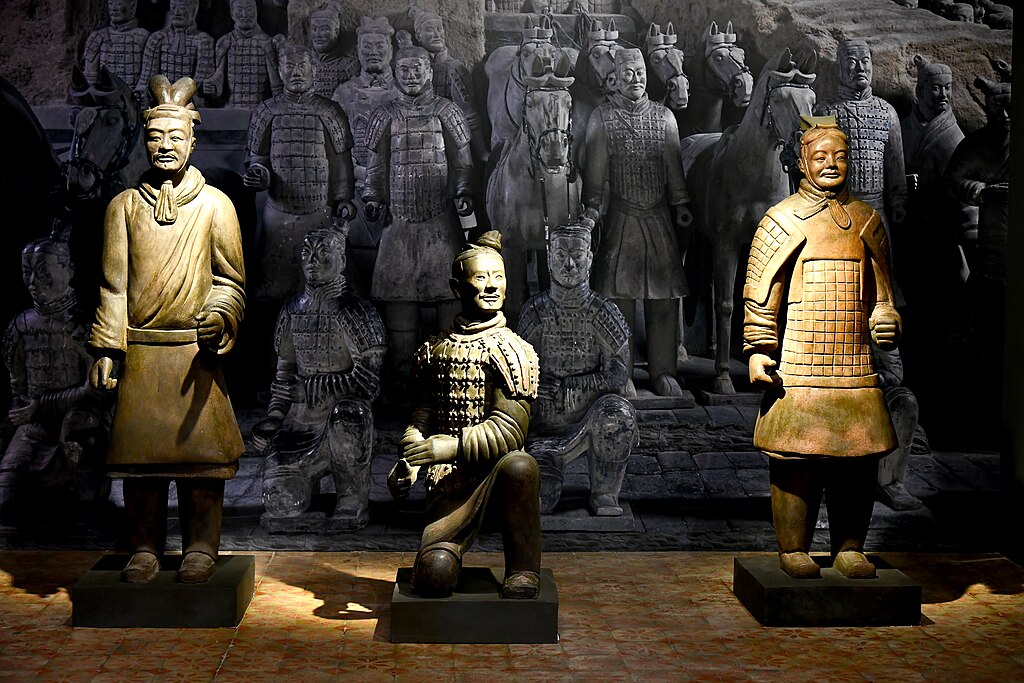
Through a campaign of ruthless conquests and radical reforms, he united the warring states of China and proclaimed himself the first emperor in 221 BCE. His reign standardised weights, measures, and even the writing system. The Great Wall began under his orders, and the Terracotta Army was buried with him. He wasn’t born an emperor—he invented the job and reshaped the map to fit it.
Haile Selassie wasn’t next in line, but he claimed the crown.
Haile Selassie, born Tafari Makonnen, came from a noble family in Ethiopia but was not expected to rise to the top. Through a combination of diplomacy, strategic alliances, and administrative skill, he became regent in 1916 and was crowned emperor in 1930.
He modernised Ethiopia’s infrastructure, pushed for education reform, and stood up to Italian fascist aggression in the 1930s. His defiant speech to the League of Nations in 1936 is still cited as one of the earliest global calls for collective security. For many, especially in the Rastafari movement, his role goes beyond politics—he’s seen as a divine figure, per BBC. His legacy is complex but undeniably powerful.
Not every ruler was born with a silver spoon in their mouth—or a crown on their head.
History is filled with examples of people who came from modest beginnings and still managed to grab the reins of power. Whether they rose through military brilliance, sheer luck, clever politics, or a mix of all three, these monarchs rewrote the rules of what it meant to rule. They didn’t wait to be chosen. They found a way to take the throne—and left a lasting mark on the world because of it.