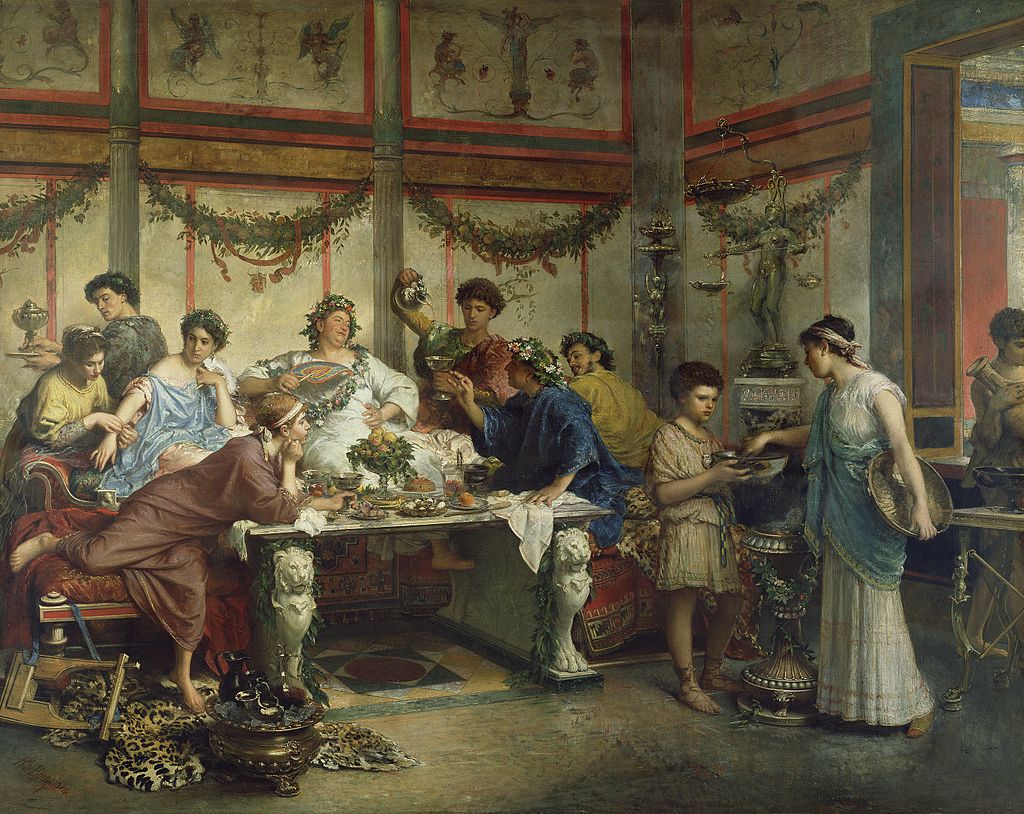
 Roberto Bompiani, Public domain, via Wikimedia Commons
Food trends come and go, but some ingredients and dishes from history have disappeared entirely, either due to extinction, overharvesting, or changing tastes. For our ancestors, these foods weren’t just novelty items—they were everyday staples, indulgent treats, or markers of cultural identity. And now, they’re lost to time.
Here are the long-gone foods that once graced tables across the world, and what made them so special.
Silphium: the ancient Roman wonder herb
Silphium was so prized in the ancient Mediterranean that it was worth its weight in silver. Used by the Greeks and Romans as both a flavouring agent and a medicinal remedy (including as a form of birth control), it had a unique taste said to fall somewhere between garlic and asafoetida.
It was so heavily harvested in the region of Cyrenaica (modern-day Libya) that by the first century CE, it had been driven to extinction. Pliny the Elder even wrote about how the last known stalk was given to Emperor Nero. Despite attempts to cultivate it elsewhere, it never thrived outside its native habitat. Modern historians and botanists still debate its exact identity.
Red bananas of the Seychelles
Long before the common yellow Cavendish banana took over supermarket shelves, several localised varieties were widely eaten and culturally important. One such example is the red banana native to the Seychelles, known for its rich, almost raspberry-like flavour and deep red peel.
While a few related cultivars still exist in small numbers, the original wild version has disappeared, in part due to changes in land use, disease, and lack of commercial viability. Its extinction is a reminder of how monocultures in agriculture can lead to the loss of genetic diversity—a topic the Food and Agriculture Organization continues to monitor.
Passenger pigeon pie
Passenger pigeons once blackened the skies of North America with their vast flocks, up to five billion birds at their peak. These pigeons weren’t just hunted; they were commercially trapped, smoked, and baked into pies by early European settlers and working-class families alike.
By the early 20th century, overhunting and deforestation had decimated their numbers, and the species went extinct with the death of the last known bird, Martha, in 1914. Not only is the bird itself lost, but the gamey flavour and traditional dishes made from it are gone as well.
Mammoth meat
Our Palaeolithic ancestors hunted mammoths for their meat, bones, and hides. While we’ll never know exactly what mammoth meat tasted like, archaeological evidence shows it was an essential protein source for thousands of years. Some remains have been found remarkably preserved in Siberian permafrost, though they’re not fit for eating.
With the extinction of mammoths due to climate shifts and overhunting around 4,000 years ago, so too went their place in the human diet. While some scientists have flirted with the idea of de-extinction through cloning, it’s unlikely we’ll be roasting mammoth anytime soon.
Roman fish sauce (garum)
Garum was a fermented fish sauce made from the innards of various sea creatures, mixed with salt and left to cure in the sun. It was pungent, strong, and used as the base for countless Roman recipes. The taste has been compared to modern Asian fish sauces, but ancient garum had a more complex flavour profile due to its ingredients and fermentation method.
Though modern attempts have been made to recreate it based on archaeological finds, the original methods, and some of the specific fish used, are no longer possible to replicate due to marine population changes and environmental regulations. Researchers have uncovered amphorae with garum remnants in Pompeii and Herculaneum, revealing how widespread and varied the sauce once was.
Pepys’ “powdered beef” and preserved game
In 17th-century Britain, before refrigeration, meats were preserved with heavy salting, smoking, or jarring. Samuel Pepys’ diaries mention “powdered beef” (salted until nearly desiccated) and game birds buried in fat or butter to last the winter. These weren’t just survival foods. They were everyday fare for the well-off.
The texture and taste of such heavily preserved meats—salty, chewy, slightly sour—would be alien to modern palates. With our reliance on chilled storage and different preservation norms, these methods (and their resulting flavours) have mostly vanished.
Tree honey from extinct bees
Honey today comes from domesticated bee species, but in the past, people harvested wild honey from a variety of native bees, including some species now extinct due to habitat loss and pesticides. These wild honeys had unique floral notes based on the bees’ environment and foraging patterns.
In parts of ancient Europe and Africa, tree-dwelling bees produced honey with distinct textures and intense herbal tones, which are now impossible to replicate. Each extinct bee species took a unique flavour with it, along with centuries of beekeeping knowledge that’s no longer passed down.
Stuffed dormice of ancient Rome
Yes, dormice. A delicacy among the Roman elite, particularly those trying to impress at banquets. These small rodents were raised in special containers called gliraria, fed nuts and acorns, then stuffed with pork and herbs before being roasted.
Beyond the ethical questions (and modern disgust), the taste and texture of dormice meat is something we’ll never truly understand. The tradition disappeared with the fall of the Roman Empire and later food taboos in medieval Europe. Modern conservation laws now protect dormice in many parts of Europe.
Pickled walrus and fermented auk
In Arctic and sub-Arctic communities, people once preserved meats like walrus and seabirds through fermentation. The now-infamous fermented auk—where the birds were buried in sealskin and left to rot—was a traditional delicacy in Greenland and parts of northern Scandinavia.
Due to changing climates, shifting diets, and modern food safety standards, these preparation methods are all but gone. The pungent, sour, ammonia-heavy flavours are lost to most of the modern world—and probably not missed by many. But they speak volumes about ingenuity in extreme environments.
Lost fruits of the Amazon and Polynesia
Some fruits once common to Indigenous Amazonian and Polynesian diets have gone extinct or are so rare they’re virtually unknown today. These include varieties of wild papaya, sour guava, and certain now-lost jungle plums.
Deforestation, invasive species, and colonial agricultural disruption wiped out both the plants and the local knowledge of how to use them. And with the loss of oral traditions, even the memory of their taste has faded. Initiatives like Seeds of Change are trying to preserve heirloom plant varieties, but many are already lost.
These lost foods tell us something important about history: taste is tied to ecology, economy, and culture. Whether wiped out by overconsumption, climate change, or shifting sensibilities, these extinct foods offer a glimpse into the diets of the past—and a quiet warning about what we could still lose today.