 Unsplash/Greg Willson
It’s easy to look at a modern map and assume that national borders have always looked the way they do now. But across British history, the places we now think of as thoroughly British—parts of England, Wales, Scotland, and Northern Ireland—were once independent kingdoms, principalities, or fully separate entities with their own languages, rulers, and legal systems. Some of these lasted for centuries before being absorbed or conquered, and others fought tooth and nail to maintain their identity. Here are just some of the once-sovereign places that were eventually pulled into the idea of “Britain.”
Strathclyde
Long before the idea of a united Scotland, the Kingdom of Strathclyde was an independent realm stretching across parts of modern southwest Scotland and northern England. Centred around Dumbarton Rock, it was a stronghold of the Brittonic-speaking people, culturally closer to the Welsh than to the Gaels or Picts.
It survived for centuries after the fall of Rome, fighting off Viking raids and Saxon encroachment. Eventually, it was absorbed into the Kingdom of Scotland in the 11th century, but for a long time it stood as a proud, distinct kingdom with its own rulers and political alliances.
Gwynedd
The kingdom of Gwynedd was one of the most powerful and long-lasting of the Welsh kingdoms. Centred in the mountains of north-west Wales, Gwynedd resisted Anglo-Saxon and later Norman invasions with impressive tenacity. Its most famous ruler, Llywelyn ap Gruffudd, was recognised as Prince of Wales by the English crown, though the title came with conditions.
After Edward I’s brutal conquest of Wales in the late 13th century, Gwynedd was brought under English control. But for centuries before that, it had been a fiercely independent state with its own laws, language, and royal lineage.
The Isles of Scilly
Though technically under the Crown’s rule, the Isles of Scilly had a strange and semi-independent status for a long time. Their remoteness and maritime importance meant that local governance often operated autonomously. In fact, they were ruled for centuries by the Godolphin family almost as a personal fiefdom.
At one point in the 17th century, the Isles were even involved in a rather absurd “war” with the Netherlands that wasn’t officially ended until 1986. Their quirky political history reflects how even tiny corners of Britain had complex and sometimes independent pasts.
The Isle of Man
While it’s still not technically part of the United Kingdom, the Isle of Man is often lumped in with Britain. But it has its own parliament (the Tynwald, one of the oldest continuous parliaments in the world), its own laws, and a long history of independence.
Historically, it passed between Norse and Scottish control before ending up under the British Crown. However, its internal governance remains separate, and even today it has a special status as a Crown Dependency. Calling it fully “British” misses the mark.
Orkney and Shetland
These remote northern isles weren’t always Scottish, or even British. They were part of the Norse world for centuries, under Norwegian and Danish control. They only became part of Scotland in the 15th century as part of a dowry arrangement when Margaret of Denmark married James III of Scotland.
Culturally and linguistically, the islands retained their Norse character for a long time. Even today, names and traditions in Orkney and Shetland still reflect this unique heritage. Their absorption into Scotland was political rather than cultural, and their earlier independence is often overlooked.
Cornwall
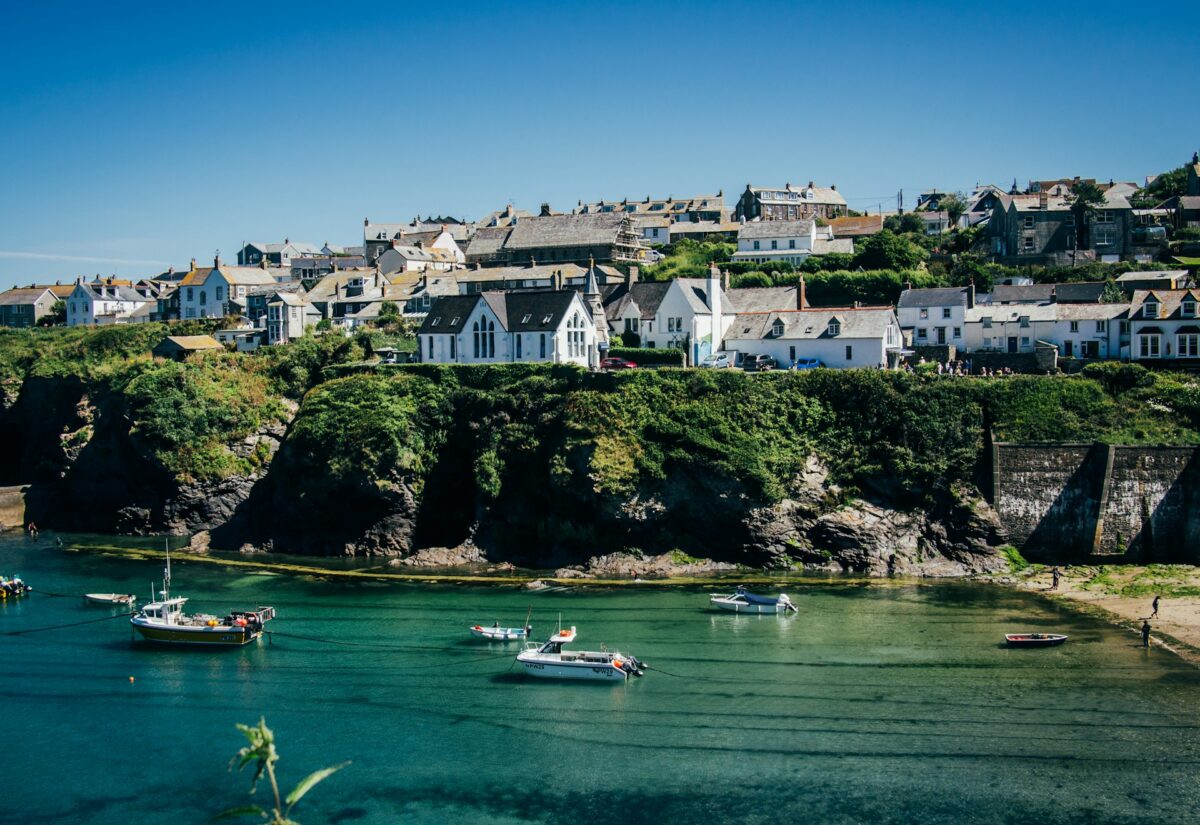
Though now firmly part of England, Cornwall has always maintained a distinct identity, and for centuries it operated as something closer to a separate nation. With its own language, customs, and a strong sense of regional pride, Cornwall was historically ruled by its own kings and tribal leaders.
The English Crown never fully crushed Cornish independence in a single moment, but gradually absorbed it. Even after it became part of the English kingdom, Cornwall retained certain special privileges, including the Duchy of Cornwall, which still provides income for the Prince of Wales.
The Kingdom of Northumbria
Stretching from the River Humber to the Firth of Forth, the Kingdom of Northumbria was one of the dominant powers in early medieval Britain. In its prime, it was a centre of religious, political, and cultural influence, home to figures like Bede and Cuthbert and places like Lindisfarne and Jarrow.
It was eventually fractured by Viking invasions and later absorbed into the emerging Kingdom of England, but for centuries it operated as a fully-fledged kingdom with international clout. Its legacy lingers in the distinct identity of the north-east today.
The Kingdom of Dál Riata
This Gaelic kingdom straddled what is now western Scotland and north-eastern Ireland. Dál Riata was a seafaring kingdom, culturally closer to Ireland than to Pictish or British kingdoms nearby. It played a major role in the spread of Christianity in Britain, especially through monastic centres like Iona.
It eventually merged with the Pictish kingdom to form Alba, the early name for Scotland, but its independent legacy lives on in Scottish culture, especially in the Highlands and Islands. It’s a reminder that not all “British” places began with Britain in mind.
What we now think of as “British” territory is a patchwork of once-independent lands, each with its own history, identity, and story of resistance or assimilation. These places weren’t always eager to join a greater whole, and many still preserve cultural memories of their independence. Recognising their separate pasts doesn’t weaken British history; it makes it far richer and more interesting.