 Getty Images/iStockphoto
Before the invention of mechanical clocks, people relied on surprisingly creative, complex, and sometimes downright bizarre methods to tell the time. These weren’t just rough guesses—they were vital for religious rituals, agricultural cycles, city planning, daily chores, and a shared understanding of when to eat, pray, or sleep. Many of these systems were rooted in careful observation, deep local knowledge, and whatever materials were at hand. Some were ingenious, others were more hit-and-miss, and a few were so oddly specific they sound more like superstition than science. Here are some of the strangest and most fascinating ways people used to keep track of time before the tick of the clock took over.
Candle clocks
In medieval Europe and parts of Asia, candle clocks were a simple but surprisingly effective method for tracking time, especially in low-light conditions. Long, evenly shaped candles were marked with notches or lines at intervals down their length. As the candle burned, the wax melted down past the lines, offering a visual guide to how much time had passed. In some versions, small metal balls or pins were inserted at the notches; as the candle burned down, they would drop into a metal tray, offering an audible signal that a set amount of time had elapsed.
Candle clocks were especially popular in monasteries, where regular prayer times required accurate timekeeping through the night. Scholars and early scientists also used them to measure study periods. Still, they weren’t perfect. Air drafts, impurities in the wax, and temperature could all affect the burn rate. Nevertheless, in the absence of better alternatives, they offered a flickering but steady sense of the hours.
Water clocks (clepsydras)
Water clocks—known as clepsydras—are some of the oldest known timekeeping devices, dating back to ancient Babylon and Egypt. They worked by allowing water to drip at a consistent rate from one vessel to another, with the rising or falling water level used to mark time. Early Greek and Roman designs became increasingly complex, featuring floating dials, overflow spouts, and mechanical bells.
In ancient China, water clocks were elevated to true engineering marvels. Inventors like Su Song created towering contraptions combining clepsydras with gears and astronomical features. These clocks were often used in royal courts and observatories, and could track time quite accurately—provided the water didn’t freeze or evaporate too quickly. Even small fluctuations in humidity or sediment could throw off the readings.
Shadow clocks and sundials
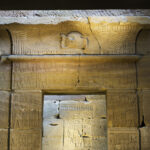
Sundials were a staple of timekeeping in ancient Egypt, Greece, Rome, and beyond. A vertical stick or gnomon cast a shadow onto a flat surface marked with hour lines. As the sun moved across the sky, the shadow shifted, indicating the time of day. Egyptians even used towering obelisks as large-scale public sundials.
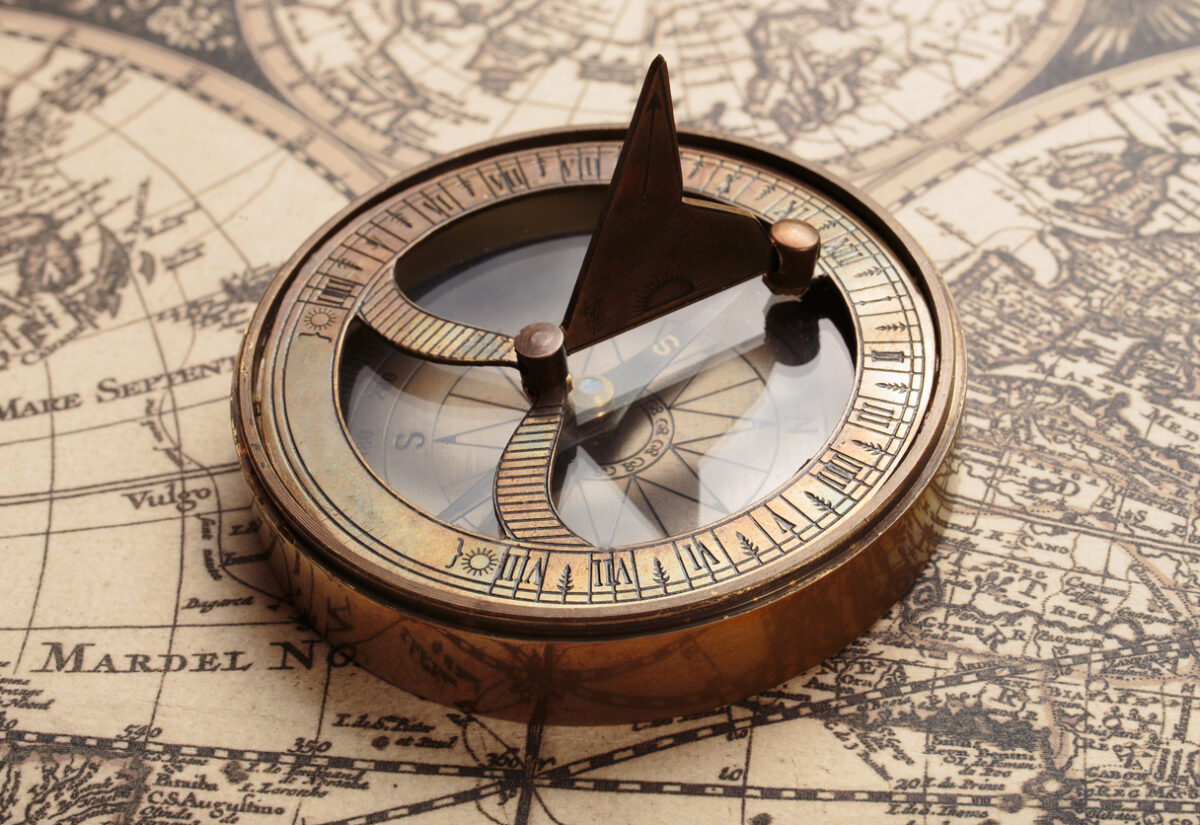
The beauty of sundials lies in their simplicity—but that simplicity came with drawbacks. They only worked on sunny days, were useless at night, and had to be carefully calibrated based on latitude. Despite that, they remained a mainstay for centuries. Portable versions were carried by travellers, and grand stone sundials were placed in town squares and monastery gardens.
Incense clocks
In East Asia, particularly in China and Japan, incense clocks were used in temples, homes, and scholarly retreats. These weren’t just for fragrance—carefully made sticks or spirals of incense were crafted to burn at a precise, predictable rate. Some were even embedded with different scents or coloured markers to indicate specific time intervals as they burned.
In Buddhist temples, incense clocks were particularly useful during meditation, when silence and stillness were essential. The passage of time was marked not by sound or shadow but by scent. More elaborate incense clocks included ceramic dragons or towers that released scent through a series of chambers. These devices show how timekeeping could also be a sensory and even spiritual experience.
Timekeeping by animal calls
Before bells and buzzers, people often relied on nature’s own rhythms. Roosters crowing at dawn are the most obvious example, but in rural areas, other animal sounds served a similar purpose. Certain birds chirp at predictable times of day, and even frogs and crickets can signal dusk and evening depending on their patterns of calling.
People with a deep understanding of local wildlife could tell time to a surprising degree of accuracy. In some parts of the world, shepherds, farmers, and fishermen continued to use these natural cues well into the modern era. While far from precise, this organic method of timekeeping offered a comforting sense of order and connection to the landscape.
The burning rope clock
Used in parts of East Asia and later adapted in Europe, the burning rope clock worked on a simple principle: soak a thick rope in oil or resin, knot it at intervals, and then light it at one end. As the rope burned, each knot would disintegrate at regular intervals—often around 30 minutes apart—signalling the passage of time.
It was portable, didn’t rely on sunlight or water, and could be used indoors or outdoors. However, like candles, ropes didn’t always burn evenly. Changes in wind, rope density, and moisture could skew the timing. Still, for people on the move or in remote areas, it was an efficient and easily replaceable tool.
Hourglasses
The hourglass—two glass bulbs connected by a narrow neck, filled with fine sand—is iconic today, but it was once a cutting-edge innovation. It appeared in Europe during the Middle Ages, likely developed from earlier water timers. Sailors embraced the hourglass because it worked in conditions where water clocks didn’t—like on a swaying ship.
They were also used in churches, workshops, and kitchens. A half-hourglass might measure sermon length; a five-minute version might time the boiling of an egg. But they weren’t infallible. Sand could clump, moisture could affect flow, and the bulbs had to be turned manually. Still, hourglasses offered a level of portability and consistency that made them hugely popular.
Timekeeping by prayer cycles
In medieval monasteries and convents, time wasn’t measured in hours—it was measured in devotion. The canonical hours structured monastic life: Matins, Lauds, Prime, Terce, Sext, None, Vespers, and Compline. These were based on the natural division of the day and reinforced by regular rituals, bell tolls, and chants.
Many religious communities relied on nature—sunlight, animal sounds, or temperature shifts—to judge when to pray. Others used water or candle clocks to keep prayer punctual. This form of timekeeping didn’t demand scientific precision. Instead, it reinforced spiritual discipline and provided a rhythm to life that blended time with meaning.
Human timekeepers
Before standardised devices, timekeeping was often someone’s literal job. In ancient courts and temples, timekeepers were responsible for maintaining the operation of clepsydras or monitoring the burn rate of candles. Some announced hours with gongs, bells, or shouts. Others maintained elaborate mechanical devices.
In large cities, the role evolved into the town crier, who would announce hours or public notices. In Islamic regions, the muezzin called believers to prayer at specific times, often relying on natural cues or astronomical observation. Human timekeepers were trusted, trained, and essential to the workings of complex societies.
The knocker-up
Fast-forward to 19th and early 20th-century Britain, and you’ll find one of the most charmingly bizarre remnants of human-based timekeeping: the knocker-up. Before affordable alarm clocks, people paid knocker-ups to wake them for work. Armed with long sticks or pea-shooters, they tapped on windows until the client stirred.
This job became especially common during the Industrial Revolution, when punctuality became more important than ever. Knocker-ups often memorised dozens of wake-up times and followed tightly timed routes. Some became minor local celebrities. In a world before digital alerts, this was the human version of a snooze button.
Star tracking and moon cycles
In many ancient cultures, the stars and moon were key to tracking not just months and seasons—but also hours of the night. The movement of constellations across the sky could be used to divide the night into rough time segments. In places like Mesopotamia, sky-watching was not only a scientific pursuit but also a sacred duty.
Even sailors used star positions to estimate the time and navigate long journeys. In polar regions or during long nights, familiarity with stellar movement was sometimes the only reliable guide to the passage of time.