 Public domain
Throughout history, animals have been part of legal systems in ways that now seem utterly bizarre. In the ancient world and through the Middle Ages, courts and lawmakers didn’t just regulate how people used animals—they sometimes treated the animals themselves as if they were people. Livestock, pets, pests, and even insects could be held accountable for crimes. Some animals were granted legal protection, others faced trial, and a few even had legal representation. Here’s a look at the strange ways the law once blurred the line between person and beast.
Animals stood trial for crimes.
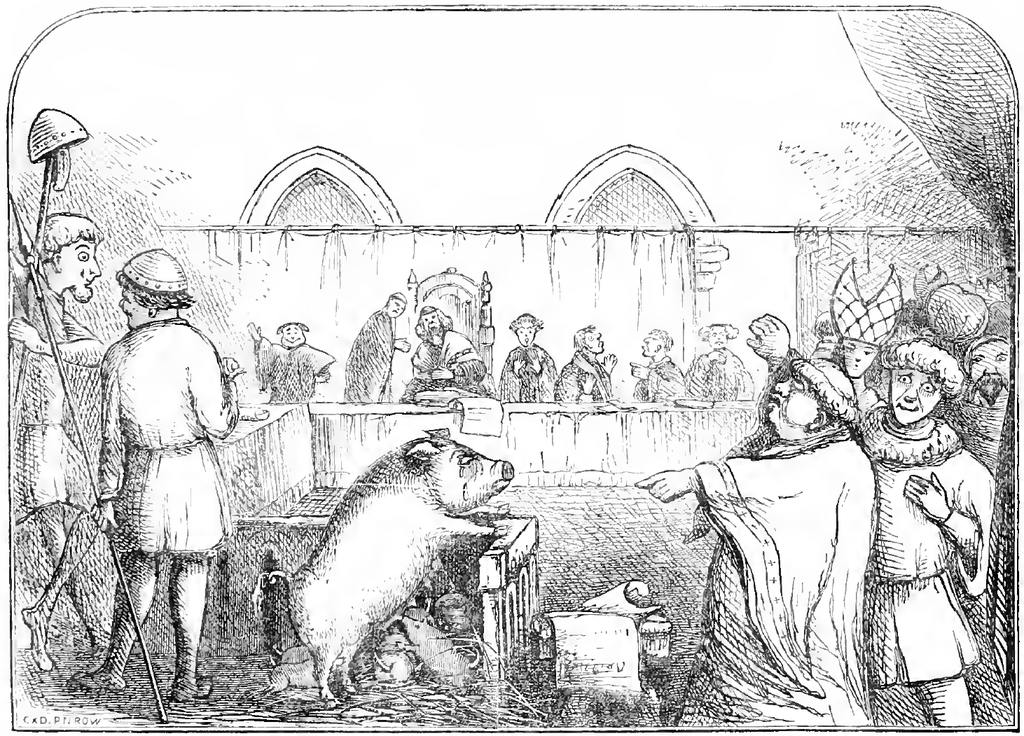
In parts of medieval Europe, it wasn’t unheard of for animals to be put on trial, complete with witnesses, judges, and legal arguments. Pigs were the most common offenders, particularly in France, where they were often blamed for attacks on children. These weren’t metaphorical charges—pigs were genuinely arrested, sometimes dressed in human clothing, tried in formal court, and sentenced to death if found guilty. In one 14th-century case, a pig was executed in Falaise for allegedly killing a child, and the local executioner was paid extra to dress the animal in a waistcoat and trousers.
Rats and insects were summoned to court.
Insects, too, occasionally found themselves at the mercy of the law. In 16th-century France, a group of rats accused of destroying barley crops was summoned to court. The rats didn’t show up, unsurprisingly, so the defence lawyer argued they couldn’t attend because of the unsafe roads and the threat of cats along the way. It sounds ridiculous now, but the legal system at the time treated the case as legitimate. Similar proceedings were brought against weevils, locusts, and other pests accused of ruining crops and causing famine.
Some animals had legal guardians.
In certain parts of ancient India, animals, especially elephants and cows, were so highly valued that they were assigned caretakers who had legal obligations. If a sacred cow was mistreated or died due to negligence, the person responsible could be fined or punished. These protections weren’t just cultural—they were encoded into law. Ancient texts like the Manusmriti laid out legal rights and protections for animals, particularly those seen as spiritually important.
Dogs and horses had rights in early Irish law.
Early Brehon law in Ireland, dating back to the early medieval period, had a surprisingly complex view of animal rights and responsibilities. Dogs, for instance, could be considered valuable property but were also subject to laws if they bit someone. Owners were held responsible, and compensation had to be paid to the injured party. Horses used in farming or transport also had legal status. If mistreated, the person responsible could be penalised, and in some cases, the animals themselves were considered to have a right to rest and food.
Cats in Islamic law were treated with respect.
In many Islamic traditions, cats were treated with a level of dignity rarely afforded to animals in medieval Europe. Influenced by stories about the Prophet Muhammad’s love for cats, they were seen as clean, intelligent creatures. In some cases, cats were allowed to enter mosques and roam freely, and harming them could result in social and legal consequences. While not “legal persons,” cats were often protected under both religious and civic guidelines, and many towns supported them with designated feeding areas and water sources.
Legal records show donkeys and mules being fined.
In Renaissance Italy, donkeys and mules were sometimes held responsible for causing injury or damage, particularly in crowded towns. If a donkey kicked someone, there could be a formal investigation, and the owner might be required to pay a fine or even have the animal confiscated. Some court records describe incidents where the animal was symbolically punished, such as being paraded or marked, almost as a way of shaming it. The idea wasn’t just to discipline the owner, but to suggest the animal itself had crossed a line.
Sacred animals were tried for sacrilege.
In ancient Egypt and parts of Mesopotamia, some animals were considered divine or sacred, and killing one, even by accident, could be seen as a major offence. Crocodiles, cats, and ibis birds held particular spiritual importance. If someone harmed one, they could be sentenced to death. But the reverse was also occasionally true: if a sacred animal caused harm, there might be a ritual or legal process to determine guilt or absolution. These weren’t always criminal trials in the modern sense, but they showed how seriously ancient societies viewed their relationship with animals.
Laws about animals tell us how people saw the world.
While it might seem absurd now to put a pig on trial or summon rats to court, these laws reflected genuine beliefs about order, morality, and justice. In a world where the line between human and animal was often fluid, the legal system tried to make sense of it in the only way it knew how—by using the same rules for both. These cases reveal not just curiosity, but an evolving sense of responsibility, ownership, and even ethics. And in their own strange way, they laid the groundwork for some of the animal welfare principles we recognise today.