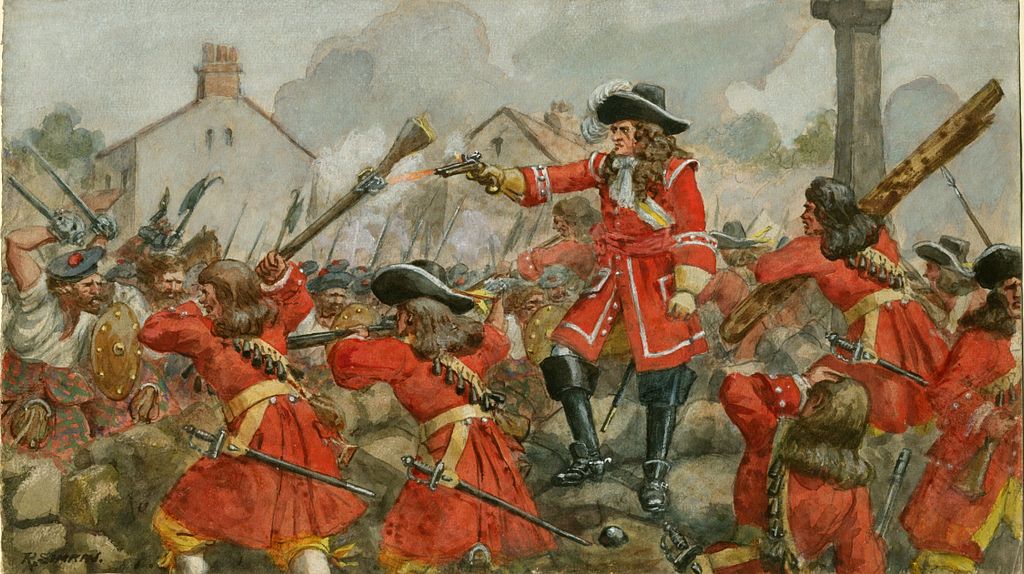
 Richard Simkin, Public domain
Britain may never have experienced a full-scale revolution like France or Russia, but that doesn’t mean the country hasn’t come close. While the Glorious Revolution of 1688 and the Civil War of the 17th century get most of the historical limelight, there have been numerous lesser-known moments when revolution seemed not only possible, but probable. These were times of serious unrest, real danger to the establishment, and widespread belief that radical change was imminent.
Here are 10 pivotal moments in British history where things teetered on the edge, and could easily have turned into full-blown revolution.
1. The Pilgrimage of Grace (1536)
Often overshadowed by the dramas of Henry VIII’s personal life, the Pilgrimage of Grace was a huge and coordinated uprising in the north of England. Tens of thousands of rebels, mainly ordinary people and disaffected nobles, protested against the dissolution of the monasteries and the sweeping religious changes the king was forcing through.
Led by lawyer Robert Aske, the rebels occupied York and demanded a return to traditional Catholicism. Henry VIII initially promised a pardon and reforms, but once the rebellion lost steam, he had the leaders arrested and executed. It was the largest uprising of Tudor England, and had it spread further south, it could have posed a serious threat to the monarchy. Britannica‘s offers an in-depth look at how close this came to spiralling further.
2. The Leveller Movement (1640s)
In the middle of the English Civil War, a radical political group emerged among soldiers and civilians: the Levellers. They called for popular sovereignty, extended suffrage, equality before the law, and religious tolerance—all ideas considered deeply dangerous to the ruling elite.
The Putney Debates of 1647 saw Leveller leaders argue their case directly with Oliver Cromwell and the army leadership. Though ultimately suppressed, their ideas influenced later democratic thought. If the army had fractured or Cromwell had been overthrown, the Levellers might well have pushed through a far more revolutionary transformation.
3. The Jacobite Rising of 1745
Often romanticised as a doomed military campaign, the ’45 Rebellion under Bonnie Prince Charlie was actually a very real threat to the Hanoverian regime. The Jacobites, supporters of the exiled Stuart line, managed to march deep into England and even reached as far as Derby.
For a brief moment, it looked as though London might be in danger. Panic spread, and government forces scrambled to respond. But lack of support from the English population and internal divisions forced the Jacobites to retreat. The defeat at Culloden the following year ended the cause, but for a while, Britain’s political future hung in the balance.
4. The Gordon Riots (1780)
What began as an anti-Catholic protest quickly turned into one of the most destructive uprisings in London’s history. Sparked by the Papists Act of 1778, which relaxed restrictions on Catholics, the riots spiralled into widespread looting, arson, and violence.
Over several days, London descended into chaos. Prisons were broken open, the Bank of England was attacked, and government troops had to fire on the crowds. Roughly 700 people were killed. It shocked the ruling classes and was seen as a warning that mob rule, and perhaps revolution, was not as far-fetched in Britain as they liked to think.
5. The Luddite Movement (1811–1816)
In the early 19th century, groups of skilled textile workers began destroying the machines they believed were putting them out of work. These were the Luddites, and while often dismissed today as anti-progress, their movement was rooted in desperation and a lack of legal recourse.
The Luddite uprisings were especially intense in Nottinghamshire and Yorkshire. Government troops were deployed in force, and harsh crackdowns followed. The fear among the elite wasn’t just about machines; it was about a growing, angry working class that might organise into something much bigger. Some modern historians argue it was a proto-labour movement that could’ve led to wider rebellion had conditions worsened.
6. The Peterloo Massacre (1819)
A peaceful protest demanding parliamentary reform took place in Manchester’s St Peter’s Field in August 1819. It drew around 60,000 people, including families, calling for greater representation and better rights.
Local magistrates panicked and sent in the cavalry. The result was chaos: 18 people were killed and hundreds injured. Far from quelling unrest, the Peterloo Massacre sparked nationwide outrage. Reformers became more organised, and radical newspapers gained popularity. Though the immediate aftermath was a clampdown on protest, it lit a fire that would eventually contribute to broader electoral reforms.
7. The Chartist Movement (1838–1857)
Chartism was a mass movement calling for political reforms including universal male suffrage, secret ballots, and payment for MPs. With millions of supporters across Britain, it was arguably the most organised working-class movement of the 19th century.
At its height in 1848, Chartists gathered on Kennington Common to present a huge petition to Parliament. While the government mobilised troops and the day passed without violence, fears of a working-class uprising were real. Had the Chartists resorted to armed rebellion, or had there been a violent government crackdown, things might have escalated very differently. The UK Parliament archives provide a thorough breakdown of this pivotal moment.
8. The General Strike of 1926
This was the closest Britain came to a class-based national uprising in the 20th century. Sparked by wage cuts and worsening conditions for coal miners, the Trades Union Congress (TUC) called a general strike in support. Around 1.7 million workers walked out, paralysing key industries.
Though it lasted only nine days, the strike caused panic in the government. Emergency powers were invoked, and the army was put on standby. While the TUC ultimately backed down, the strike exposed deep rifts in British society, and had it been sustained, it might have changed the balance of power between labour and capital permanently.
9. The Troubles spreading to the mainland (1970s–80s)
While not a revolution in the traditional sense, the period of political violence related to the Northern Irish conflict did lead to significant instability on the British mainland. IRA bombings in cities like London, Birmingham, and Manchester created widespread fear and a sense that the British state was under siege.
The response included mass surveillance, new police powers, and increased militarisation, raising concerns about civil liberties. The threat wasn’t just physical; it was political. Had the violence escalated or gained wider support in Britain itself, it could have pushed the state towards more extreme responses or even constitutional reform.
10. The Poll Tax Riots (1990)
The introduction of the Community Charge, better known as the Poll Tax, by Margaret Thatcher’s government triggered mass protests across the UK. The most infamous was the March 1990 demonstration in London’s Trafalgar Square, which turned violent and chaotic.
Protesters clashed with police, property was damaged, and more than 100 people were injured. The backlash was so fierce that it contributed directly to Thatcher’s resignation later that year. While it didn’t overturn the system entirely, it showed how mass mobilisation could upend political leadership and policy in modern Britain.
Britain’s reputation for gradual change and parliamentary process often masks just how close the country has come to radical upheaval.
These near-revolutions didn’t always result in regime change, but they shook the foundations of power, sometimes permanently. From medieval uprisings to industrial unrest and modern street protests, these episodes remind us that British history isn’t just a story of stable institutions and quiet reforms. It’s also full of volatile moments when real transformation seemed possible, and, had a few things gone differently, might well have happened.