 Getty Images/iStockphoto
When people think of ancient civilisations, their minds often go to Egypt, Greece, or Rome. But southern Africa is home to a rich and layered history that’s often overlooked. Among the most compelling stories are those of the kingdoms that flourished around Great Zimbabwe, once powerful centres of trade, culture, and political strength that are barely acknowledged in mainstream historical narratives. These were not small or isolated settlements; they were sophisticated societies that connected with global networks, left behind striking architecture, and shaped regional power for centuries.
Great Zimbabwe
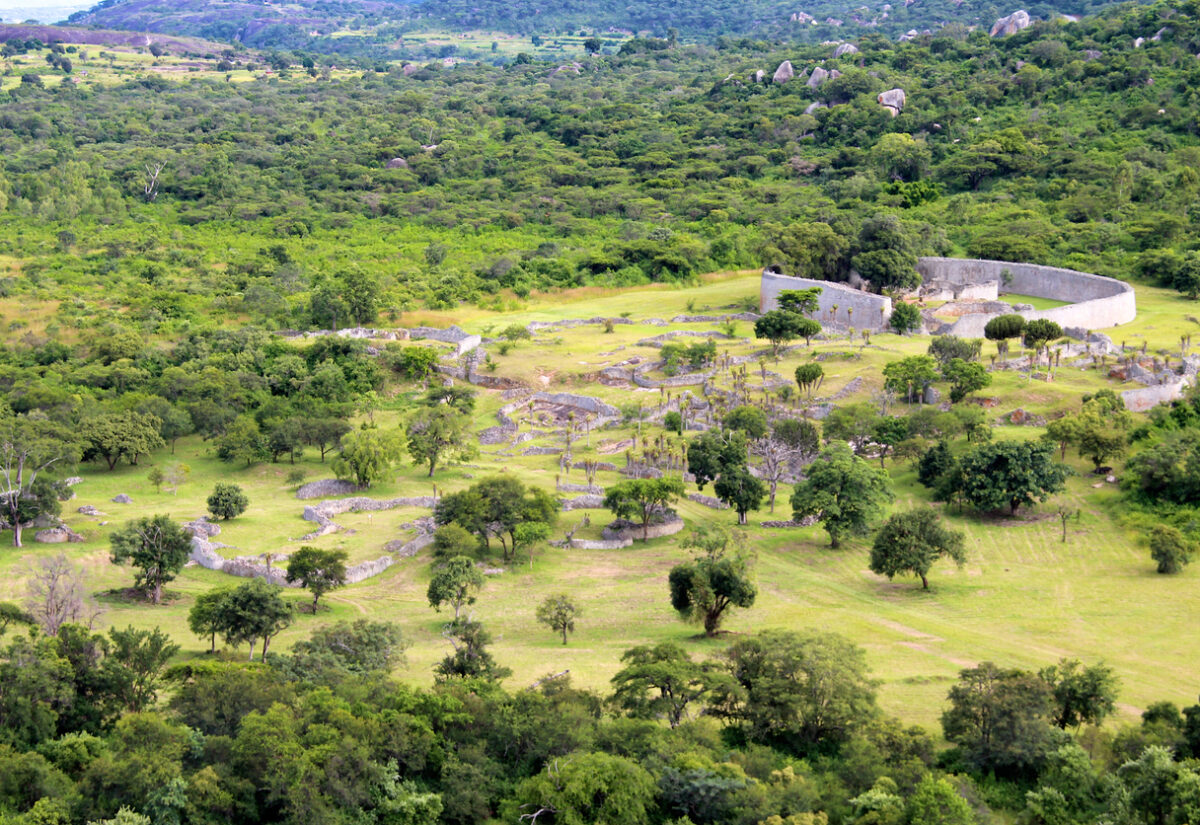
At the heart of this history is Great Zimbabwe itself. Built between the 11th and 15th centuries, it was the capital of the Kingdom of Zimbabwe and one of the most impressive ancient cities in sub-Saharan Africa. The massive stone walls, some over 10 metres high and made without mortar, still stand today and give a sense of the city’s scale and organisation.
Great Zimbabwe was a major trading hub, linked to coastal cities like Sofala and Kilwa Kisiwani. Archaeological finds include Chinese porcelain, Arab coins, and glass beads, indicating strong long-distance trade ties. At its peak, it may have housed up to 18,000 people. Despite early colonial efforts to attribute the site to outsiders, it is now well established that it was built by the ancestors of the Shona people.
The Kingdom of Mapungubwe
Before Great Zimbabwe rose to prominence, the Kingdom of Mapungubwe thrived further south near the Limpopo and Shashe rivers, at the borders of present-day South Africa, Zimbabwe, and Botswana. At its peak in the 11th to 13th centuries, Mapungubwe was a powerful and stratified society with elite rulers, evidence of religious practices, and international trade links.
The famous golden rhinoceros discovered at the site speaks to the kingdom’s wealth and skilled craftsmanship. Much like Great Zimbabwe, Mapungubwe engaged in trade with Arab and Indian merchants, dealing in gold, ivory, and other goods. The city was abandoned by the 14th century, but its legacy carried on in successor states.
The Kingdom of Mutapa
As Great Zimbabwe declined, the Kingdom of Mutapa (also known as the Mwene Mutapa or Monomotapa Empire) rose in the north. Founded in the 15th century by a former prince of Great Zimbabwe, it expanded into modern-day Zimbabwe and Mozambique. The Mutapa controlled vast stretches of land rich in gold and became key players in the regional trade networks.
They negotiated and clashed with Portuguese traders and colonisers, who were drawn to the region’s mineral wealth. The Mutapa maintained their sovereignty for over two centuries, navigating complex diplomacy and internal politics. Their influence eventually waned under colonial pressure, but the kingdom’s endurance is a testament to its strength.
The Rozvi Empire
Emerging from the ashes of the Mutapa Empire in the late 17th century, the Rozvi Empire was another Shona-speaking kingdom that exerted control over much of what is now Zimbabwe. Known for their military strength and use of firearms (acquired through trade), the Rozvi resisted Portuguese influence and maintained a decentralised but formidable state.
They built new stone cities in the Zimbabwean plateau and revitalised stone-working traditions. The Rozvi were also skilled administrators, collecting tribute from local chiefs and managing a diverse and agriculturally productive territory. Their influence persisted into the 19th century before succumbing to internal conflict and external invasions.
The Kingdom of Butua
Butua was a regional power in the south-west of modern Zimbabwe, with its capital believed to be Khami, another impressive stone-built city. Khami emerged after the decline of Great Zimbabwe and was inhabited from around the 15th to the 17th century. The layout and craftsmanship at Khami show continuity with Great Zimbabwe but also innovations in design and materials.
Butua was an important part of the gold trade network and had links to the Indian Ocean economy through coastal intermediaries. The kingdom played a key role in the regional politics of the time and helped sustain the broader culture of monumental stone architecture that defined the region.
Legacy and loss
These kingdoms were not footnotes in history they were major players in their time. Yet colonial narratives long dismissed or downplayed their achievements, often crediting outside influences for their accomplishments. The reality is that these societies developed complex political systems, traded internationally, and produced remarkable architecture entirely on their own terms.
Their ruins still stand as a quiet rebuke to the idea that Africa lacked great civilisations. From the walls of Great Zimbabwe to the terraces of Khami and the legends of Mutapa, this region was home to dynamic cultures that deserve more recognition in global history.
As modern archaeologists continue to study these sites, we’re learning more about just how advanced and interconnected they were. And with each discovery, the historical map of the world grows a little more honest, and a lot more interesting.