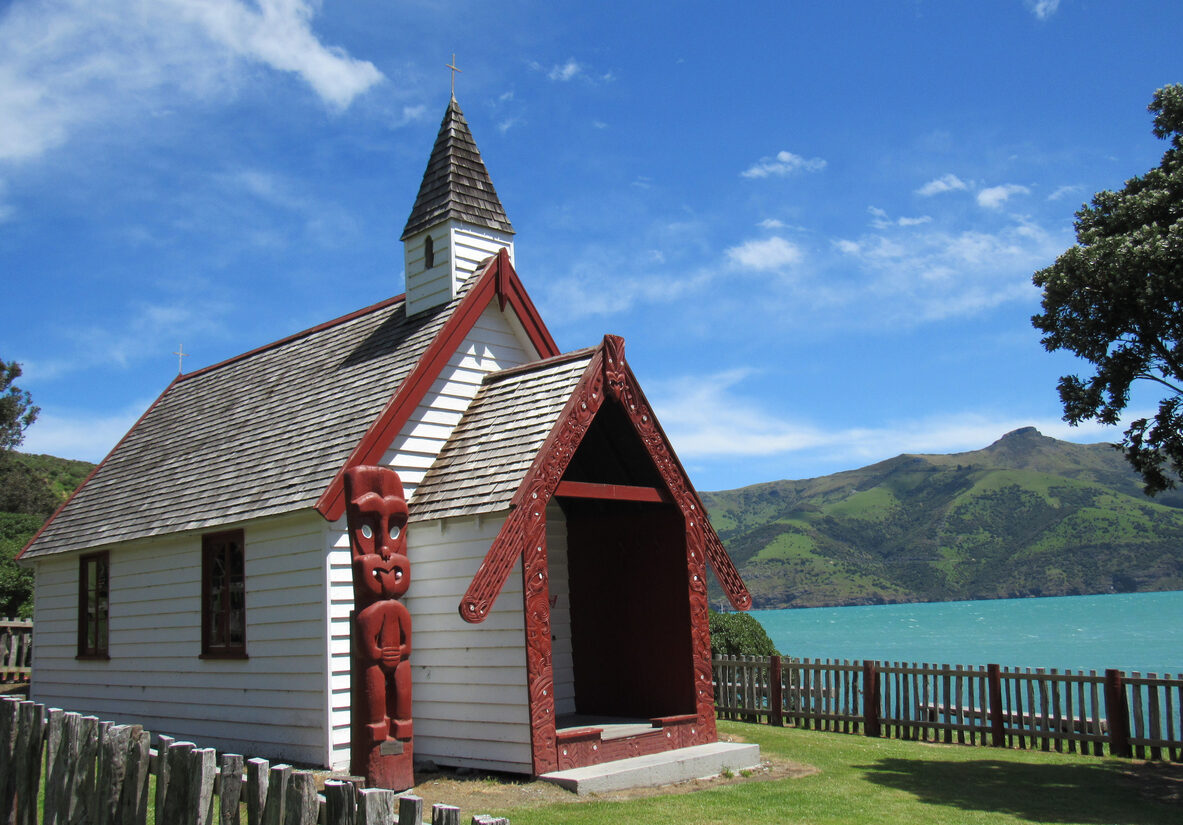
 Getty Images
When people think about architectural innovation, ancient Polynesian design might not be the first thing that comes to mind. But the Māori of Aotearoa (New Zealand) developed an incredibly smart and responsive architectural tradition long before modern environmental science was a thing. Their buildings weren’t just shelters—they were part of a living relationship with the land, the weather, and the wider natural world. From how they handled storms to how they managed seasonal shifts, here are some of the remarkable ways Māori architecture adapted to environmental challenges.
Buildings were low to the ground to resist harsh winds.
Aotearoa is known for its wild weather, especially in coastal and alpine regions, where wind can be relentless. Māori buildings, particularly sleeping houses (wharenui) and food storage huts (pātaka), were built low and compact. This design wasn’t just about keeping warm; it also helped reduce the impact of strong winds.
Keeping buildings low to the ground provided extra stability and meant there was less surface area for the wind to batter. These structures were often partially sunken or built with earth mounding around them for insulation and anchoring. The results were homes that could hold their ground during storms without losing heat.
Natural materials offered insulation and flexibility.
Māori builders used what was available in their environment, but they did so with purpose. Harakeke (New Zealand flax), raupō (bulrush), and toetoe grasses were commonly used in thatching, and totara and kauri wood were prized for their strength. These materials provided natural insulation but also had enough give to flex slightly in bad weather rather than snapping or collapsing.
Raupō panels, for example, were lightweight but excellent at holding warmth. Using local resources also meant damaged parts could be replaced relatively easily. So instead of trying to fight the elements with rigid, heavy materials, Māori builders leaned into what worked with the climate. Te Ara – The Encyclopedia of New Zealand outlines traditional housing methods here.
Roofs were steeply pitched to shed rain.
New Zealand is no stranger to rain, and traditional Māori buildings were well aware of it. Steeply pitched roofs were a key feature, designed to let rainwater run off quickly rather than pool and cause rot or leaks. The angles of the roof were carefully calculated, not just to keep out the wet, but to extend the life of the structure.
The use of thick thatching layered over these roofs created a double effect: keeping water out while trapping heat in. In some cases, thatching was up to 30 centimetres thick. It was practical, renewable, and impressively durable for the climate.
Pātaka were raised to keep out pests and moisture.
One of the most instantly recognisable elements of Māori architecture is the raised food store, or pātaka. Built on stilts with carved front boards, these small buildings weren’t just about looking impressive—their elevation was deliberate.
Lifting food stores off the ground helped protect kai (food) from rodents and moisture. Rain-soaked ground or flooding could easily ruin stored food, so keeping it high and dry was critical. Some pātaka even had slanted posts or flat discs to stop rats from climbing up. It’s a simple idea, but one that reflects a deep understanding of climate and pest behaviour.
Orientation of buildings worked with the sun and wind.
Māori builders didn’t just plonk buildings wherever there was space. The orientation of each whare was carefully chosen to take advantage of the sun’s warmth and avoid prevailing winds. Entranceways typically faced east to greet the rising sun, bringing both warmth and light into the building first thing in the morning.
At the same time, turning the back of the building to the prevailing south-westerlies helped reduce exposure to cold, damp winds. It’s the kind of passive design approach that modern architects often charge a premium for, but Māori communities had been doing it instinctively for generations.
Earth floors retained warmth.
While they might seem basic by today’s standards, earth floors were a clever feature in many traditional Māori homes. They held onto heat, particularly when combined with insulating wall panels and thick thatched roofs. In colder regions, stones might be heated in fires and placed along the floor to radiate warmth during the night.
There was also a cultural aspect to earth floors—staying grounded, literally and spiritually. But from a purely environmental standpoint, it was an efficient way to keep warm without relying on fireplaces or other heating methods that weren’t always practical.
Carvings told environmental stories.
This one might seem more decorative than structural, but carvings on Māori buildings often contained environmental warnings or stories about the land. For example, a wharenui might be adorned with carvings that tell of a local flood, earthquake, or dangerous hunting ground.
These stories weren’t just symbolic; they were a way of passing on practical survival knowledge. In that sense, architecture served as a kind of living archive, built into the wood and walls rather than stored in a book.
Wharenui design supported communal warmth.
Sleeping houses were usually shared spaces, and this wasn’t just about social closeness. The communal layout helped maintain body heat, especially during colder months. Rather than individual rooms which lose heat faster, one large space allowed for warmth to be shared and retained.
There was an understanding that bodies heat rooms, and grouping people together in one well-insulated space was far more efficient than separating everyone into colder compartments. This design worked hand in hand with thick thatching and minimal ventilation during winter.
Seasonal shelters were used for different needs.
Māori architectural knowledge wasn’t static. Communities built different types of shelters depending on the season and the need. In summer, temporary structures might be built with more ventilation or open sides to keep cool. In winter, heavier materials and enclosed designs were favoured.
Rather than forcing one building to do everything, the idea was to let each space do one job well. It made things more flexible and meant that shelter could be rebuilt or adjusted based on the immediate environment. That adaptability was a key part of survival.
Fortified pā settlements used natural defences.
Some of the most dramatic examples of Māori architectural adaptation are found in pā sites—fortified villages built on ridgelines, cliffs, or steep hills. These locations were chosen not just for visibility, but for their natural defences. A steep slope made it much harder for enemies to attack.
On top of that, trenches and palisades were added for extra protection, but always in harmony with the terrain. Water drainage, food storage, and shelter were all carefully balanced, showing a sophisticated understanding of how to use the land to your advantage.
Knowledge was passed on through oral tradition and hands-on learning.
Perhaps one of the most sustainable aspects of Māori architectural tradition was how knowledge was passed on. Building wasn’t done from blueprints; it was taught by watching, doing, and listening to the wisdom of elders. Every builder understood not just the materials, but the reasoning behind each design choice.
This hands-on tradition meant that skills were rooted in lived experience. It also allowed designs to evolve naturally over time as the environment and needs changed. In that sense, Māori architecture was a living, breathing process, never static.
Architecture aligned with whakapapa and whenua.
Finally, the most profound way that Māori architecture adapted to the environment wasn’t just about staying dry or warm. It was rooted in the deep connection between whakapapa (genealogy) and whenua (land). Buildings weren’t separate from the land; they were an extension of it. That meant respecting natural boundaries, honouring resources, and building with a sense of stewardship rather than ownership.
That outlook made wastefulness unthinkable. It meant every piece of wood, every strip of flax, and every design decision carried weight. In today’s world of disposable materials and overconsumption, it’s a perspective worth revisiting.
Māori architecture wasn’t flashy or over-engineered, but it was intelligent, responsive, and deeply rooted in place. It worked with the land, not against it. And in a world now grappling with climate change, flooding, and sustainability, there’s a lot we could learn from the way Māori communities designed their homes and villages. These buildings tell a story of adaptation, respect, and resilience, and that story still matters today.