 Public domain
History has no shortage of tyrants, conquerors, and extremists, but what makes some of them especially unnerving is that they genuinely thought they were doing the right thing. Some of the most infamous names in history weren’t out to be villains. In their own minds, they were saving their countries, restoring order, or even lifting up the downtrodden. Here are some of the most notorious historical figures who saw themselves as heroes, even as their actions left chaos in their wake.
Robespierre believed terror was a path to justice.
Maximilien Robespierre wasn’t born a monster. He started out as a lawyer and idealist, advocating for equality, democracy and an end to feudal privilege during the French Revolution. But when he rose to power in the late 1790s, he became the face of the Reign of Terror. Under his leadership, thousands were guillotined, including former allies, often on flimsy charges.
What’s chilling is that Robespierre didn’t see this as tyranny. He believed terror was necessary to defend virtue and democracy. In one of his famous speeches, he said, “Terror is nothing else than swift, severe, indomitable justice.” His downfall came swiftly in 1794 when he himself was executed without trial, condemned by the same revolutionary system he helped build.
Hernán Cortés saw conquest as a divine mission.
To many, Hernán Cortés is remembered as the Spanish conquistador who led the bloody fall of the Aztec Empire. He oversaw mass killings, the destruction of ancient cities, and the forced conversion of indigenous peoples. However, to himself—and his supporters—he was a servant of God and the Spanish Crown.
Cortés believed he was bringing civilisation, Christianity, and European values to what he saw as a “savage” land. He wrote extensively about his justifications, portraying himself as a man of purpose rather than greed. The reality, of course, was far messier. The conquest destroyed centuries of culture and displaced entire populations, but Cortés remained convinced it was righteous. His letters to the king are full of religious fervour and imperial pride.
Oliver Cromwell thought he was saving England.
To royalists, Oliver Cromwell was a tyrant who cancelled Christmas, banned dancing, and had King Charles I executed. But Cromwell saw himself as England’s protector. A deeply religious man, he believed God had chosen him to rescue the country from the perceived corruption of monarchy.
As Lord Protector during the Interregnum, he enforced strict Puritan laws, crushed uprisings, and led brutal military campaigns, particularly in Ireland. His actions there are still controversial, especially the massacres at Drogheda and Wexford. Yet Cromwell saw these campaigns as righteous purges, part of a divine plan. He died in 1658 believing he’d preserved liberty and restored moral order, even as many saw him as a power-hungry dictator.
For a closer look at how Cromwell justified his reign, the UK Parliament website offers detailed analysis of his writings and speeches.
Qin Shi Huang saw control as unification.
China’s first emperor, Qin Shi Huang, is famous for uniting the warring states into a single empire. But his methods were ruthless. He burned books, buried scholars alive, imposed strict laws, and crushed dissent with an iron fist. Still, in his eyes, it was all for the greater good.
He wanted to eliminate division and create a stable, lasting dynasty. By standardising weights, measures, currency, and even the script, he laid the foundations of imperial China. His tomb, guarded by the famed Terracotta Army, reflects how seriously he took his legacy. For Qin Shi Huang, harshness wasn’t cruelty—it was discipline in the name of progress.
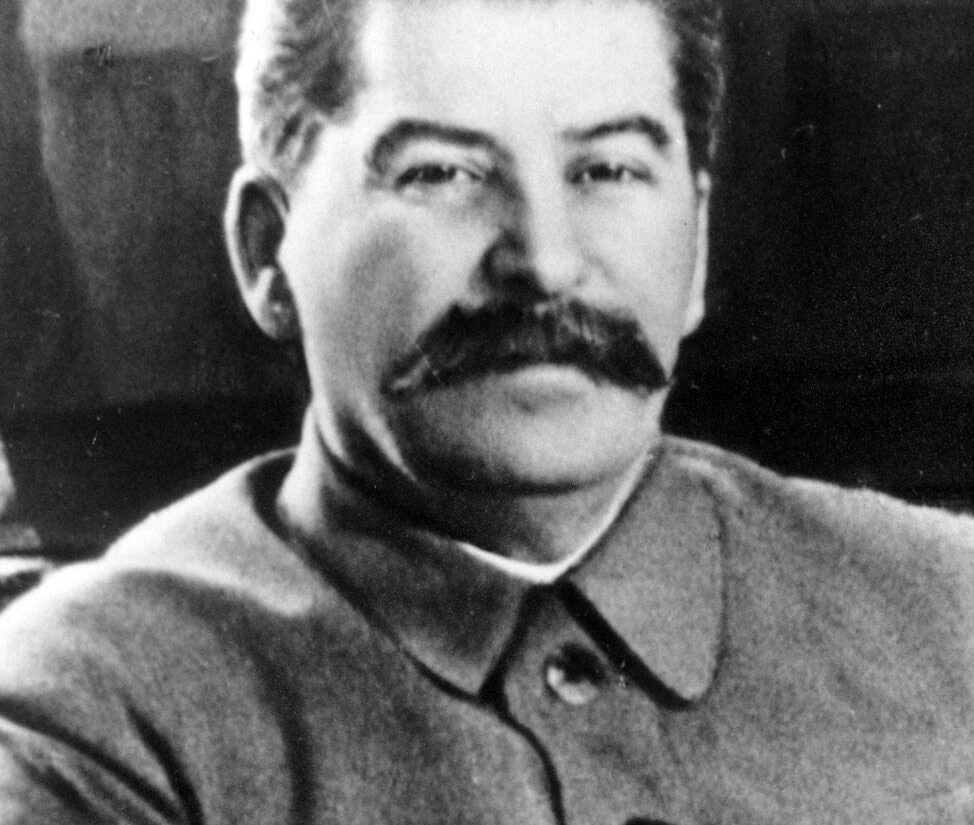
Joseph Stalin believed terror was necessary for socialism.
Joseph Stalin ruled the Soviet Union with unmatched brutality, sending millions to gulags, orchestrating purges, and overseeing famines that killed millions more. Yet Stalin wasn’t driven by pure sadism. He truly believed in the communist project, and in his mind, every arrest, execution, and policy disaster was a sacrifice for a better future.
He cultivated a messianic image, portraying himself as the father of the people and the defender of socialism against internal and external enemies. Even as people starved and suffered, Soviet propaganda continued to present him as a hero. The contrast between his self-image and the suffering he caused remains one of history’s darkest ironies.
Andrew Jackson claimed to defend democracy, while devastating Native communities.
Andrew Jackson, the seventh president of the United States, saw himself as a champion of the common man. He dismantled central banking, expanded voting rights for white men, and positioned himself as a populist outsider. But his presidency is also remembered for the Indian Removal Act, which forced tens of thousands of Native Americans from their homelands.
Jackson believed removal was necessary for American progress and justified it as humane, claiming it would protect Native tribes from extinction. The result was the Trail of Tears, a deadly forced migration that killed thousands. Jackson didn’t see it as genocide. He saw it as tough love, and that conviction has divided his legacy ever since.
Emperor Nero believed he was an artist and visionary.
Nero is one of Rome’s most infamous emperors, known for extravagance, cruelty, and possibly fiddling while Rome burned. But he wasn’t trying to be history’s villain. Nero fancied himself a poet, a musician, and a reformer. He saw Rome as backward and sought to elevate it through art, architecture, and what he considered enlightened leadership.
His obsession with performance and his lavish spending made him deeply unpopular, and his persecution of Christians earned him infamy. But Nero, to the end, insisted that he was misunderstood. His final words—“What an artist dies in me!”—speak volumes about how he viewed himself.
Francisco Franco believed he was saving Spain.
After leading a military coup that sparked the Spanish Civil War, Franco ruled Spain as a dictator from 1939 until his death in 1975. He crushed opposition, executed political enemies, and banned regional languages and identities. Yet Franco insisted he was protecting Spain from chaos and communism.
In his view, democracy had failed and Spain needed strong leadership to survive. He positioned himself as a guardian of tradition, faith and unity. While many saw him as a fascist, Franco viewed himself as a stabilising force, and his regime carefully curated a public image of moral authority and national strength.
Leopold II of Belgium claimed he was civilising the Congo.
Leopold II ruled over the Congo Free State as his personal colony from 1885 to 1908. During that time, millions of Congolese were subjected to forced labour, mutilation, and death under a brutal regime that demanded impossible rubber quotas and punished failure with horrific violence.
Despite the overwhelming cruelty, Leopold portrayed himself as a philanthropist. He claimed he was bringing Christianity, education, and progress to Central Africa. He created an elaborate public relations campaign in Europe to frame his actions as benevolent. But first-hand accounts and photographs—like those published by E. D. Morel and Roger Casement—eventually exposed the horrors, revealing the stark gap between Leopold’s self-image and the reality on the ground.
Ivan the Terrible saw himself as divinely chosen.
Ivan IV, known as Ivan the Terrible, ruled Russia with ruthless force in the 16th century. He created the Oprichnina, a state within a state, to crush dissent, executed nobles by the thousands, and even killed his own son in a fit of rage. Yet he truly believed he was doing God’s work.
Ivan saw himself as divinely appointed to cleanse Russia of corruption and disorder. His letters and proclamations are filled with religious references, and he frequently invoked divine justice to justify his actions. In his mind, cruelty was purification, and he was the one chosen to carry it out.
Villains don’t always wear black.
Many of history’s most chilling figures were convinced they were doing what was right, and perhaps even noble. It’s this disconnect between their intent and the reality of their actions that makes them so fascinating, and so terrifying. Because the danger lies not just in cruelty, but in conviction without question.