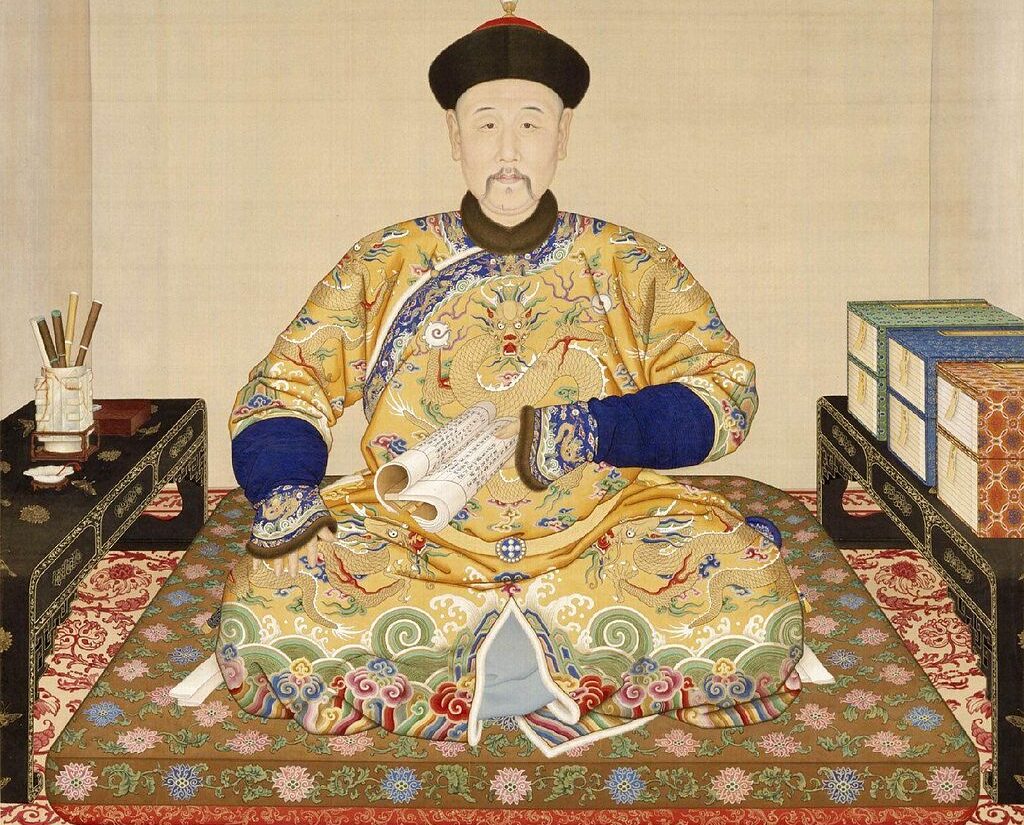
 An anonymous court painter of the Qing dynasty, Public domain, via Wikimedia Commons
Most of history is shaped by people who wanted to be remembered, through statues, books, victories, or infamy. However, not everyone craved recognition. Some people went out of their way to vanish from the record, erase their names, or disappear without explanation. Whether driven by shame, secrecy, personal choice, or political survival, these people took deliberate steps to remove themselves from the historical spotlight.
Sappho’s vanishing verses
Sappho, the famed lyric poet from the island of Lesbos, was once considered one of the greatest literary voices of ancient Greece. But almost nothing of her work survives today. While the disappearance of her poetry can largely be blamed on time and censorship, there are accounts suggesting that she herself may have ordered the destruction of some of her own writings.
She was known to be a private and selective figure, possibly wary of how future generations might interpret her deeply personal work. Whether by her hand or through later efforts to scrub her reputation, much of what we know about Sappho is pieced together from scraps. Her absence in full form feels curiously deliberate.
The mysterious case of Edward Mordake
Though his existence is debated, the tale of Edward Mordake, a 19th-century English nobleman said to have a second face on the back of his head, has persisted in medical folklore. According to stories, Mordake begged doctors to remove the face, which he claimed whispered awful things to him at night. They refused, and he eventually took his own life.
But here’s the strange part: no legitimate records of his life or death exist. It’s possible the story was entirely fabricated, but some theories suggest that if Mordake did exist, his family may have used their influence to erase any trace of him from official documentation, in an effort to bury a scandalous secret.
Emperor Yongzheng’s vanishing tomb
The Yongzheng Emperor of China’s Qing Dynasty ruled from 1722 to 1735 and was a meticulous, often paranoid ruler. He made several efforts during his reign to control how he would be remembered, editing records and restricting access to his own writings.
After his death, his tomb was carefully concealed and has never been conclusively located, unlike those of many other emperors. Some scholars believe this was intentional. He may have wanted to prevent tomb robbers or political rivals from desecrating his final resting place. In life and in death, he seemed determined to manage his legacy by keeping parts of it hidden.
Claude Cahun’s subversive self-erasure
Born Lucy Schwob, Claude Cahun was a French surrealist photographer, writer, and activist known for their gender-defying self-portraits and anti-Nazi resistance work. But Cahun deliberately distanced themselves from fame, publishing under a pseudonym and often avoiding public recognition for their art.
During the German occupation of Jersey in World War II, Cahun and their partner Marcel Moore led a two-person psychological resistance campaign, distributing anti-Nazi leaflets. They never sought acclaim for it. In fact, much of their life and work only gained attention decades after their death, thanks to a new wave of interest in queer and feminist art history. Cahun’s life was a paradox: publicly invisible, privately radical.
The man behind the Voynich Manuscript
The Voynich Manuscript is one of history’s great unsolved mysteries, a medieval codex written in an unknown language, filled with bizarre illustrations and unknown plants. Despite countless attempts to decode it, no one knows who created it or why. What is clear, though, is that whoever did so left no trace of their identity.
This was likely intentional. There are no signatures, initials, or references to its author anywhere in the document. Whether the manuscript was meant as a scientific text, an elaborate joke, or something else entirely, its creator took great care to remain anonymous, ensuring their role in one of history’s oddest puzzles would remain permanently obscured.
The writer behind Primary Colors
When the political novel Primary Colors was published in 1996, it sent shockwaves through the American press. A thinly veiled satire of Bill Clinton’s presidential campaign, it was published anonymously, and speculation about its author became a media obsession.
Eventually, journalist Joe Klein was outed as the writer. But what’s notable is the extent to which he went to hide his identity, even going so far as to publicly deny authorship. While not a historical figure in the traditional sense, Klein’s attempt to erase his connection to a wildly popular book is a modern example of self-removal from the record, at least for a time.
Jeanne Baret disguised herself to disappear
In the 18th century, Frenchwoman Jeanne Baret became the first woman to circumnavigate the globe, but only by disguising herself as a man. Women weren’t allowed on naval ships, so Baret took the name Jean and posed as an assistant to the botanist Philibert Commerson, with whom she was in a relationship.
She kept up the disguise for years, travelling across continents and collecting plant specimens. Once discovered, she vanished from public life for a while, returning to France quietly. Despite her remarkable journey, she left behind little documentation of her own story, and it was only long after her death that historians began piecing together just how groundbreaking her contribution was.
Whether for protection, control, or personal conviction, these people made a conscious effort to vanish from the record, or at least to downplay their role in it. In doing so, they shaped history not through visibility, but through absence. It’s a quieter form of influence, but no less intriguing.