 Getty Images/iStockphoto
History is full of bold personalities, epic clashes, and power struggles—but not all rivalries were face-to-face. Some of the most intriguing rivalries involved people who never actually met, and in some cases, weren’t even alive at the same time. Whether divided by geography, politics, ideology, or generations, these historical figures influenced each other’s reputations, legacies, and even personal philosophies without ever coming into contact. These rivalries weren’t just about direct competition—they were about influence, legacy, and a deep-seated need to define oneself against a looming, often intangible figure. Here are some of the most fascinating cases of secret rivalries from history, where admiration, jealousy, or competition simmered at a distance.
Nikola Tesla vs. Thomas Edison
Though they lived in the same era and occasionally crossed paths, Nikola Tesla and Thomas Edison never truly engaged in a public showdown. Still, their indirect rivalry—now often dubbed the “War of the Currents”—was fierce. Edison championed direct current (DC) electricity, while Tesla promoted alternating current (AC), a more efficient way to transmit power over long distances.
Tesla once worked for Edison but left under bitter circumstances, frustrated by Edison’s refusal to recognise or reward his innovative ideas. Their differing approaches to science, invention, and publicity reflected contrasting worldviews. Edison was the pragmatic showman and businessman, while Tesla was the visionary outsider. The public largely supported Edison in his lifetime, but in recent decades, Tesla has been re-evaluated as the unacknowledged genius.
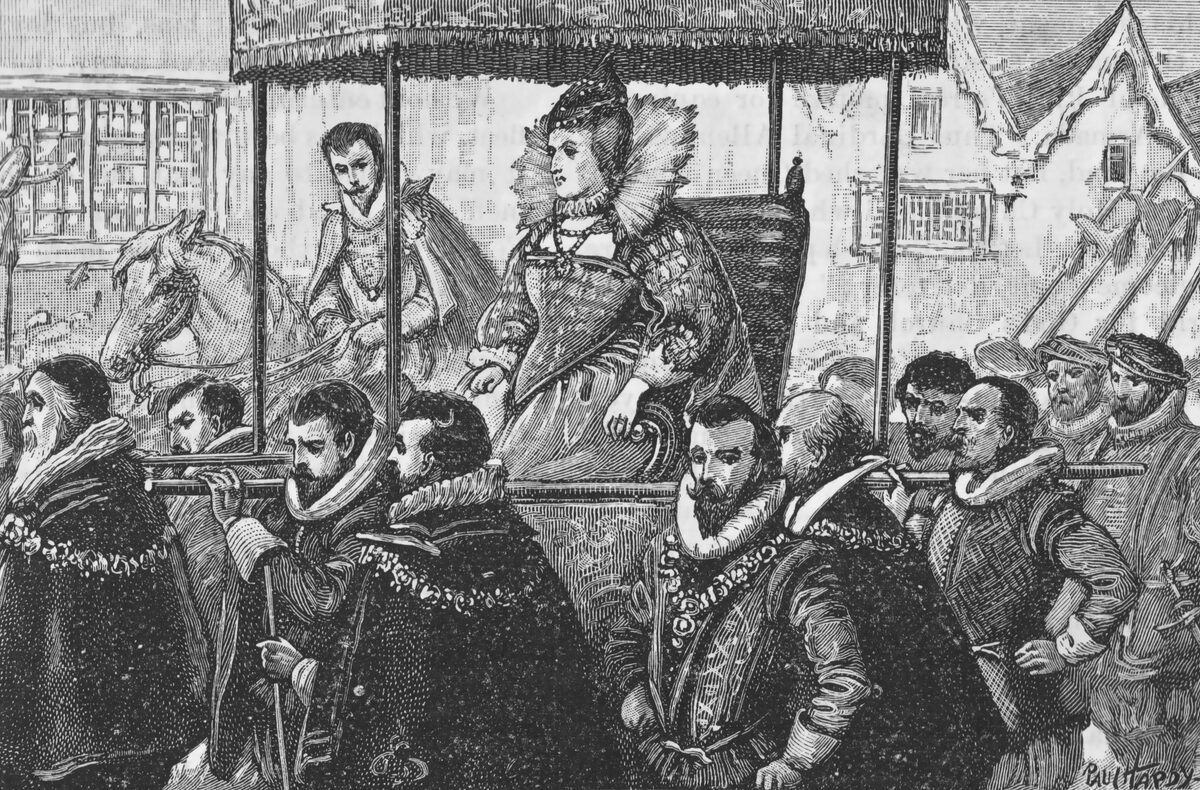
Elizabeth I vs. Mary, Queen of Scots
The rivalry between Elizabeth I and Mary, Queen of Scots was as complex as it was tragic. Though they never met in person, their lives and reigns were closely entangled. As cousins and queens ruling at the same time—one Protestant, the other Catholic—they represented not only religious and political opposites, but competing visions of monarchy itself.
Their correspondence was filled with veiled threats, passive aggression, and unspoken power dynamics. Mary claimed legitimacy to the English throne, while Elizabeth viewed Mary’s existence as a perpetual threat. Mary’s eventual execution in 1587 was a political decision Elizabeth delayed for years. It was a rivalry soaked in dynastic tension, feminine power, and the fate of nations.
Karl Marx vs. Adam Smith
They were separated by nearly a century, but Karl Marx and Adam Smith remain intellectual foils in economic thought. Smith, writing in the late 18th century, believed in the power of the free market and the benefits of competition. His idea of the “invisible hand” helping regulate economies remains central to capitalist theory.
Marx, writing in the 19th century, regarded capitalism as inherently exploitative. He acknowledged Smith’s role in shaping the field but believed Smith’s optimism about capitalism’s self-correcting nature was dangerously naive. Marx’s critiques formed the basis of socialism and communism, which gained enormous traction in the 20th century. Their rivalry plays out in economic debates to this day. Investopedia offers a helpful breakdown of their opposing philosophies.
Isaac Newton vs. Robert Hooke
Newton and Hooke did exchange letters, but they never clashed directly in person, and their relationship was laced with academic tension. Hooke believed Newton had used some of his ideas in developing theories of gravity and optics without proper credit. Newton, sensitive to criticism and deeply protective of his work, retaliated by marginalising Hooke’s contributions.
After Hooke’s death, Newton allegedly ensured that portraits and records of Hooke were quietly removed or ignored, further erasing his legacy. This passive-aggressive rivalry shaped the way scientific history was written and remembered. Royal Society archives document some of their correspondence and disputes.
Wolfgang Amadeus Mozart vs. Antonio Salieri
Their rivalry has been immortalised—if exaggerated—by film and theatre, but there’s no doubt that Salieri and Mozart were aware of each other and had complicated feelings. Salieri, a respected composer and court musician, lived in the shadow of Mozart’s unprecedented genius.
While some letters suggest cordial respect, other accounts and anecdotes hint at Salieri’s private frustrations. After Mozart’s death, rumours (mostly unfounded) swirled that Salieri had poisoned him. Though the historical record doesn’t support this, the notion of envy between the two has persisted.
Winston Churchill vs. Charles de Gaulle
Winston Churchill and Charles de Gaulle were technically allies during World War II, but their relationship was famously strained. De Gaulle saw himself as the rightful leader of Free France, while Churchill struggled to reconcile that with British strategic interests.
They often clashed over post-war visions, military decisions, and diplomatic protocol. Churchill respected de Gaulle’s tenacity but considered him obstinate and arrogant. De Gaulle, for his part, thought Churchill patronised him and failed to appreciate French sovereignty. Their rivalry helped shape the political landscape of post-war Europe and strained Anglo-French relations for decades.
Sigmund Freud vs. Carl Jung
Initially, Freud saw Carl Jung as the heir to his psychoanalytic empire. But their theories diverged, with Freud’s model rooted in sexuality and repressed desire, while Jung explored spiritual archetypes and collective unconsciousness. Their intellectual split became a very public feud, carried out in published works and lectures.
Though they once shared mutual admiration, their rivalry was ultimately about philosophical direction and intellectual independence. Jung rejected what he saw as Freud’s reductionism, while Freud viewed Jung as veering into mysticism. Their competing ideas continue to influence psychology and therapy. The Freud Museum outlines their friendship and fallout in more detail.
Pablo Picasso vs. Henri Matisse
These two giants of modern art may not have been personal enemies, but their rivalry shaped 20th-century painting. Picasso and Matisse kept close tabs on each other’s exhibitions and styles. When one adopted a new technique or colour palette, the other often responded in kind.
They only met occasionally, but both admitted to being creatively energised—and challenged—by the other. Picasso once remarked, “All things considered, there is only Matisse,” while Matisse said of Picasso, “Only one person has the right to criticise me. It’s Picasso.” Their mutual rivalry pushed the boundaries of innovation.
Charles Darwin vs. Jean-Baptiste Lamarck
Though Darwin was born after Lamarck died, their ideas remain inextricably linked in the history of evolutionary theory. Lamarck was one of the first to propose that organisms evolve over time, suggesting that traits acquired during an organism’s life could be passed on. Darwin, decades later, presented a more robust theory based on natural selection.
Darwin acknowledged Lamarck’s work, even if he dismissed parts of it. Still, modern evolutionary biology recognises that Lamarck wasn’t entirely wrong—epigenetics now shows that environmental factors can affect gene expression across generations. Their rivalry wasn’t direct, but it shaped how the theory of evolution was developed and debated.
Not all rivalries need shouting matches, duels, or battlefields. Some of the most fascinating rivalries in history happened quietly—through books, letters, art, ideas, and legacies. Whether these figures hated, admired, or simply couldn’t ignore one another, their unseen tensions shaped how we think about power, success, creativity, and human nature. And while they may have never met, their influence on each other—and on history—is undeniable.