 Getty Images/iStockphoto
History tends to spotlight kings, generals, presidents, and prime ministers—but some of the most profound shifts in the world’s story were triggered by people you’ve probably never heard of. These were ordinary people by title, background, or social standing, but their actions—sometimes intentional, sometimes completely accidental—had rippling effects that shaped nations, saved lives, or altered the course of global events. Here are some of the lesser-known, unassuming individuals who changed the world in ways that history classes often overlook.
1. Vasili Arkhipov, the man who stopped nuclear war
In 1962, during the Cuban Missile Crisis, a Soviet submarine called B-59 was lurking in the waters near Cuba. American naval forces, unaware that the sub was carrying a nuclear torpedo, began dropping signalling depth charges. The Soviet crew, cut off from Moscow and under immense pressure, believed war might have already begun.
Protocol required all three senior officers on board to agree to launch the nuclear weapon. Two of them gave the go-ahead. The third, Vasili Arkhipov, refused. His decision prevented what could have become World War III. He was a quiet officer with no political ambition—just a strong sense of reason. Today, historians credit him with literally saving the world.
2. Claudette Colvin, the teenager who sparked a movement
Everyone knows the story of Rosa Parks refusing to give up her seat in Montgomery, Alabama. But nine months earlier, a 15-year-old girl named Claudette Colvin did the very same thing. On her way home from school, she was told to move for a white passenger. She said no—and was arrested.
Civil rights leaders decided not to use her case to challenge segregation laws, partly because she was young and pregnant at the time. But Colvin’s brave stand laid important groundwork. Years later, she would be one of the plaintiffs in the legal case that struck down bus segregation in Alabama. Her story is a reminder that movements often begin with someone whose name doesn’t make the headlines.
3. Stanislav Petrov, the man who ignored the warning
In 1983, Soviet early-warning systems reported that several American missiles had been launched toward the USSR. Lieutenant Colonel Stanislav Petrov was the officer on duty. The protocols said he should pass the alert up the chain—and that could have led to a full nuclear retaliation.
But something didn’t feel right to Petrov. He trusted his instincts and classified the alert as a false alarm. It was. A malfunction in the satellite detection system had misread sunlight reflecting off clouds. Petrov’s choice to wait, to question, possibly prevented a catastrophic nuclear exchange. He later said he didn’t think of himself as a hero—but history might disagree.
4. Ignaz Semmelweis, the doctor who washed his hands
In the 1840s, maternity wards in Vienna were plagued with high rates of death from puerperal fever. Dr. Ignaz Semmelweis noticed that doctors who had just come from autopsies were delivering babies without washing their hands. He mandated handwashing with chlorinated lime and the death rates dropped dramatically.
Despite the evidence, his ideas were widely ridiculed and dismissed. It took decades—and the work of Louis Pasteur and Joseph Lister—for germ theory to be accepted. Semmelweis died in a mental institution, largely forgotten. But today, he’s remembered as the pioneer of antiseptic procedures, and modern medicine owes him more than it knows.
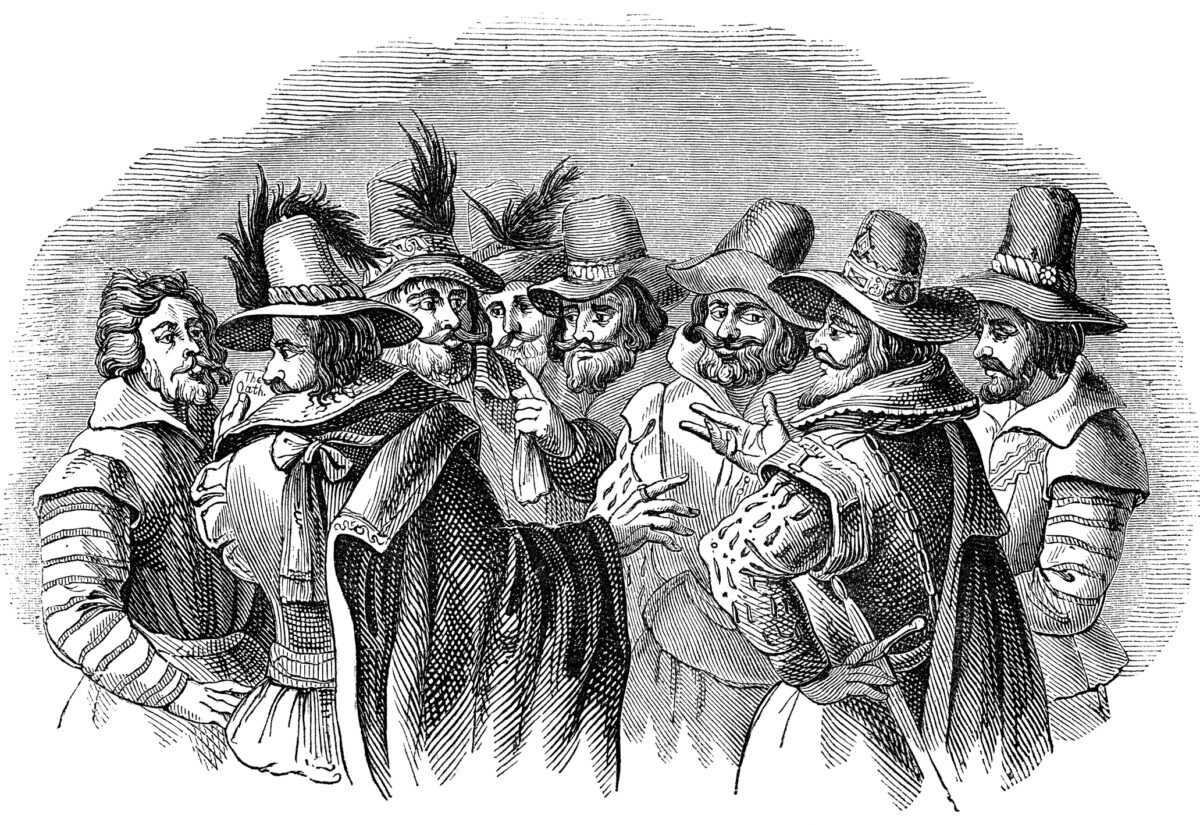
5. Guy Fawkes, the man who failed but left a legacy
In 1605, Guy Fawkes was caught guarding explosives placed beneath the House of Lords. He and a group of English Catholics had plotted to blow up Parliament and assassinate King James I. The plan failed, but the fallout changed the landscape of British politics and religious tolerance.
Fawkes was tortured and executed, but the government’s reaction helped cement Protestant dominance in England. Ironically, his face became a symbol of rebellion centuries later, particularly after being popularised by the film V for Vendetta. Fawkes didn’t change history the way he intended—but he changed it all the same.
6. Edith Wilson, the First Lady who quietly ran a country
After President Woodrow Wilson suffered a massive stroke in 1919, his wife Edith effectively became the acting president of the United States—for over a year. She managed access to him, decided which issues to bring to his attention, and screened all communications.
Though she claimed she was merely a “steward,” many historians believe she played a critical role in running the executive branch during that time. She had no official authority and no constitutional backing—but she stepped in and kept the country functioning during a leadership vacuum. It remains one of the most remarkable—and quiet—power grabs in U.S. history.
7. Marcel Ravidat, the boy who found the past
In 1940, a teenager named Marcel Ravidat was walking his dog in southwestern France when he noticed a hole in the ground. Curious, he returned with friends and discovered the entrance to the Lascaux Caves—home to some of the most stunning prehistoric cave art ever found.
The discovery gave historians and archaeologists an unparalleled look at Upper Palaeolithic life and creativity. It was a window into a world that had remained hidden for 17,000 years. Marcel wasn’t a scholar or explorer—just a curious kid with a dog. But his discovery shifted the understanding of early human culture forever.
8. Mary Anning, the fossil hunter who reshaped science
Born into a poor family in Lyme Regis in the early 1800s, Mary Anning spent her days searching the cliffs for fossils to sell to tourists. What she found, however, were some of the most important palaeontological discoveries of the 19th century—including the first correctly identified ichthyosaur and plesiosaur skeletons.
Her work helped shape the emerging field of palaeontology and challenged long-held beliefs about the natural world. As a woman of working-class background, she was excluded from scientific circles. Yet, modern scientists credit her with laying the foundations of the science we now take for granted.
9. Leo Major, the one-eyed soldier who liberated a city
Leo Major was a French-Canadian soldier in World War II who had lost one eye in battle but refused to be sent home. In 1945, he single-handedly liberated the Dutch city of Zwolle by convincing the German garrison that a full-scale attack was underway. He used stealth, explosives, and bluffs to cause panic among the troops.
By morning, the Germans had abandoned the city. Major’s actions saved countless civilian lives and won him the Distinguished Conduct Medal. He later went on to fight in the Korean War. Despite his extraordinary bravery, his story remains relatively unknown outside military history circles.
10. Rosalind Franklin, the woman behind the double helix
Rosalind Franklin was a brilliant chemist and X-ray crystallographer whose work was critical in uncovering the structure of DNA. Her photographs—particularly the famous “Photo 51″—provided the data James Watson and Francis Crick used to propose the double-helix model.
Franklin was never fully credited in her lifetime. She died young, at 37, and only decades later did the scientific community begin to acknowledge her contribution. Today, she’s recognised as a pivotal figure in molecular biology, a reminder of how crucial—and overlooked—some people can be in the making of history.